



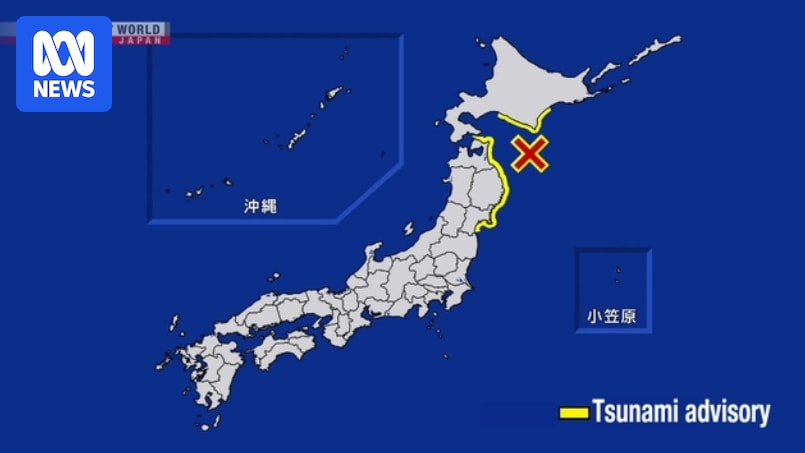
The Japan Meteorological Agency (JMA) has lifted a tsunami advisory for the northeastern region of Japan following a magnitude 6.9 earthquake that struck earlier on Friday. The earthquake, initially reported with a preliminary magnitude of 6.7, occurred off the east coast of Aomori prefecture, located in the north of Honshu, Japan’s main island. The tremor was recorded at a depth of 20 kilometers at 11:44 am Tokyo time.
In response to the quake, officials urged residents in coastal areas to evacuate to higher ground as a precautionary measure. The city of Sendai, situated in the northeastern prefecture of Miyagi, issued an evacuation order. This seismic event follows a stronger 7.5 magnitude earthquake earlier in the week that resulted in injuries, light structural damage, and a tsunami affecting Pacific coastal communities.
Recent Seismic Activity in Japan
Friday’s earthquake comes on the heels of Monday’s significant seismic activity, which prompted the government to issue a special advisory. Residents from Hokkaido in the north to Chiba, east of Tokyo, were advised to remain vigilant for the possibility of another powerful earthquake within the week. Japan’s susceptibility to earthquakes is well-documented, with the country experiencing a tremor approximately every five minutes.
Japan accounts for about 20 percent of the world’s earthquakes that reach a magnitude of 6.0 or greater. This constant seismic activity is a result of the country’s location along the Pacific Ring of Fire, a region known for its intense geological activity.
Historical Context and Safety Measures
Japan’s history with earthquakes is marked by significant events, such as the devastating 2011 earthquake and tsunami that struck just north of the current quake’s location. The 2011 disaster, with a magnitude of 9.0, resulted in nearly 20,000 fatalities and widespread destruction. This event highlighted the importance of Japan’s rigorous earthquake preparedness measures, which include strict building codes and public education campaigns.
According to experts, these measures have significantly reduced the potential for casualties and damage in the event of major seismic activities. Dr. Hiroshi Nakamura, a seismologist at the University of Tokyo, noted, “Japan’s proactive approach to earthquake preparedness has set a global standard. The country’s ability to quickly respond to seismic events is crucial in minimizing the impact on its population.”
Implications and Future Preparedness
The recent earthquakes serve as a reminder of the ever-present threat posed by seismic activity in Japan. The government’s swift response in issuing and lifting advisories underscores the effectiveness of its monitoring systems. However, the events also highlight the need for continuous vigilance and preparedness among residents.
Moving forward, authorities will likely continue to emphasize the importance of earthquake drills and the readiness of emergency services. The JMA and other agencies remain committed to improving their predictive capabilities and ensuring that the public is well-informed about potential risks.
As Japan navigates the aftermath of these recent quakes, the focus remains on safety and resilience. The country’s experience and preparedness serve as a model for other earthquake-prone regions around the world.