
Throughout his political career, Donald Trump campaigned on a straightforward foreign policy agenda: to prevent America from engaging in overseas conflicts. This promise was pivotal in swaying many undecided voters to support the Republican candidate. Trump consistently accused his Democratic opponents of edging closer to initiating a war with Iran.
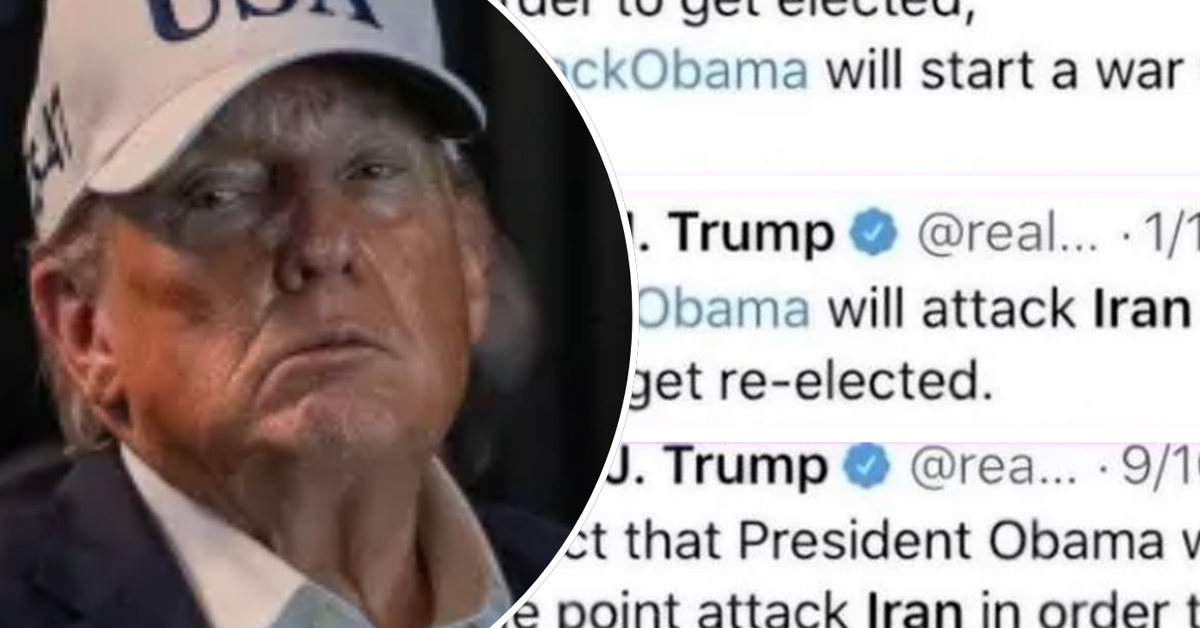
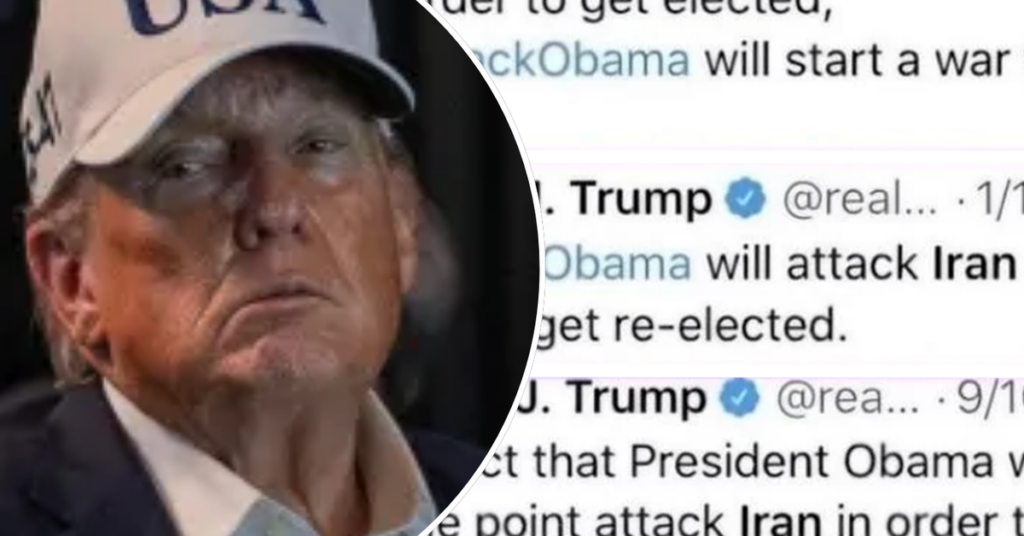
In a series of tweets dating back to 2011, Trump predicted that then-President Barack Obama would attack Iran due to what he described as a lack of negotiation skills. “Remember that I predicted a long time ago that President Obama will attack Iran because of his inability to negotiate properly — not skilled,” he tweeted in 2013. In 2012, he suggested, “Now that Obama’s poll numbers are in tailspin – watch for him to launch a strike in Libya or Iran. He is desperate.” A year earlier, he claimed, “In order to get elected, Barack Obama will start a war with Iran.”
These assertions were not limited to Obama. Days before the 2024 election, Trump stated, “Kamala and her warmonger cabinet will invade the Middle East, get millions of Muslims killed.” Yet, contrary to Trump’s claims, Obama successfully negotiated a deal with Iran that halted the nation’s nuclear weapons program. This agreement was dismantled during Trump’s first term, leading to the resumption of Iran’s nuclear activities.
Trump’s Anti-War Image
Trump’s supporters have frequently highlighted his non-interventionist stance. Before being selected as Trump’s running mate, JD Vance authored an editorial for the Wall Street Journal titled, “Trump’s Best Foreign Policy? Not Starting Any Wars.” Vance expressed his support for Trump in 2024, stating, “He has my support in 2024 because I know he won’t recklessly send Americans to fight overseas.”
Vance was not alone in this sentiment. Tulsi Gabbard, Director of National Intelligence, remarked, “A vote for Kamala Harris is a vote for Dick Cheney and a vote for war, war and more war. A vote for Donald Trump is a vote to end wars, not start them.”
Public Opinion and Political Fallout
However, recent developments have challenged this narrative. Following the U.S.’s military action against Iran, public opinion has shifted. According to a CNN poll, 59 percent of Americans opposed military action in Iran. Similarly, a Washington Post survey found that 52 percent were against the strike, with only 39 percent in favor.
Kamala Harris, who has long denied any intention of pursuing war with Iran, issued a statement condemning Trump’s actions. “Donald Trump is dragging the United States into a war the American people do not want,” she declared. “Let me be clear: I am opposed to a regime-change war in Iran, and our troops are being put in harm’s way for the sake of Trump’s war of choice.”
Six American service members have now been confirmed dead in Iranian retaliations of the US attack. The death toll in Iran is estimated at more than 500, including Ayatollah Ali Khamenei.
Historical Context and Expert Opinions
The current situation draws parallels to previous U.S. military engagements in the Middle East, where initial actions led to prolonged conflicts. Experts suggest that the consequences of the recent strike could escalate tensions further.
Dr. Emily Thompson, a Middle East policy analyst, noted, “The decision to engage militarily with Iran could have long-lasting repercussions. History has shown us that such actions often lead to unintended consequences, both regionally and globally.”
Meanwhile, political analysts are debating the potential impact on Trump’s re-election campaign. With public sentiment largely against military intervention, the president’s decision may influence voter perceptions in the upcoming election.
As the situation unfolds, the international community watches closely, with many urging restraint and a return to diplomatic negotiations. The coming weeks will be crucial in determining the trajectory of U.S.-Iran relations and the broader implications for global stability.