



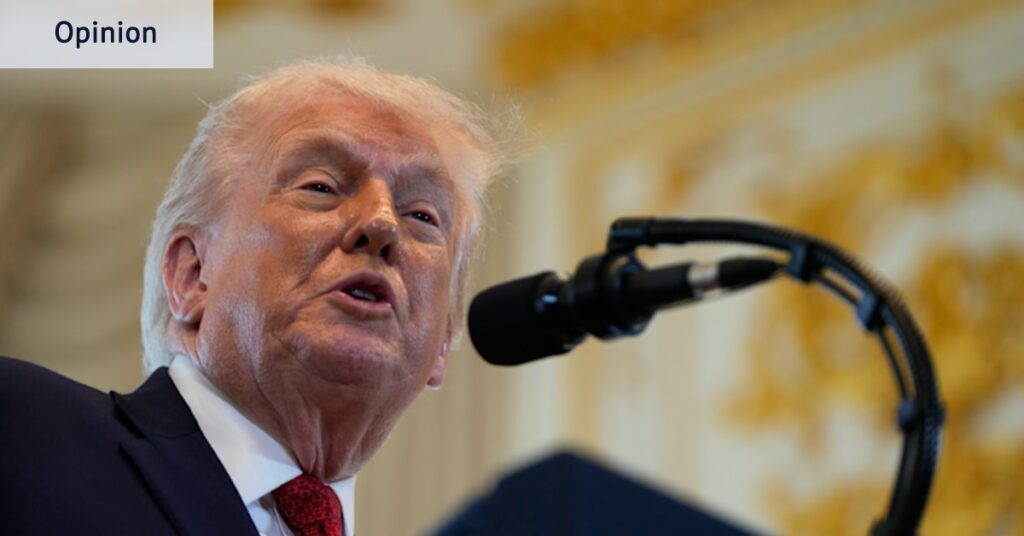
Some of the world’s largest banks are gearing up for a significant showdown in the United States, prompted by a social media post from former President Donald Trump. Trump recently called for a 10 percent cap on credit card interest rates, a move that has sent ripples through the financial sector.
Last week, Trump alarmed investors in major U.S. banks by declaring that he would no longer allow Americans to be “ripped off” by credit card interest rates ranging from 20 to 30 percent. However, the most intriguing aspect of this issue is not Trump’s proposal itself—considered challenging to implement—nor the predictable concern from banks. What is surprising is the bipartisan support for this idea, which transcends the often-divisive U.S. political landscape.
Political Crossroads: Uniting Unlikely Allies
Trump’s stance on capping credit card interest rates aligns him with some of his political adversaries. Progressive politicians, including Democrat Elizabeth Warren and independent Bernie Sanders, have also advocated for similar measures. This unusual coalition highlights the growing wave of populism and the widespread concern over high credit card interest rates, which often hover around 20 percent in the U.S. and Australia alike.
Credit card features, such as the ability to pay off minimal amounts monthly, can lead consumers into debt traps with exorbitant interest rates. The question arises: why are these rates so high, and would capping them truly benefit consumers?
The Economics Behind High Credit Card Interest Rates
The persistently high cost of credit card debt has long been a topic of political scrutiny. In Australia, for instance, banks faced a Senate inquiry in 2015, and regulatory bodies have closely examined the industry. Banks argue that high rates reflect the cost of providing unsecured credit, unlike home loans. Without collateral, banks face increased risk if borrowers default.
Moreover, credit cards offering perks, such as frequent flyer points, tend to have higher rates compared to “low rate” cards. Many consumers avoid paying interest by settling their full balance monthly, thus those who do pay interest effectively subsidize these customers.
Potential Impact of an Interest Rate Cap
While a 10 percent cap could save U.S. consumers approximately $100 billion annually, banks contend that such a cap would lead to reduced lending. This reduction could have significant economic repercussions, given that about 80 percent of American adults possess a credit card. There is also the risk that consumers might turn to unregulated credit sources, potentially exacerbating financial issues.
If a rate cap is impractical, what alternative measures could address credit card-related problems? Australia’s experience offers valuable insights.
Australia’s Approach: A Model for Reform
Over the past 15 years, Australia has implemented policies encouraging more responsible credit card use, resulting in a significant decrease in interest-accruing balances—from $35 billion to $19.7 billion, according to Canstar. The Australian Securities and Investments Commission (ASIC) reported a 40 percent drop in total credit card interest paid by consumers over five years up to late 2022.
This progress is attributed to tighter regulations, COVID-19 financial support, competition from buy now, pay later (BNPL) services, and increased consumer financial literacy. Key reforms include banning unsolicited credit increase offers, allowing credit limit reductions and cancellations online, and enforcing stricter lending assessments.
Payments expert Lance Blockley notes, “Regulation of lending money in Australia is tighter due to responsible lending laws, unlike in the U.S., where card issuers offer more generous perks to encourage spending.”
Conclusion: A Complex Path Forward
Trump’s proposal for a rate cap may not materialize, and even if it does, it might not resolve the underlying issues. As Blockley warns, “If you suddenly starve a segment of the American public of credit, you’re likely to see either a drop in retail sales and/or them searching for credit elsewhere.”
Australia’s experience suggests that regulatory reforms, rather than rate caps, can effectively guide consumers towards more prudent borrowing practices. As credit card interest payments decline, households benefit from reduced financial burdens.
The ongoing debate over credit card interest rates underscores the complexities of financial regulation and consumer protection. As the discussion continues, stakeholders will need to balance the interests of consumers, banks, and the broader economy.