


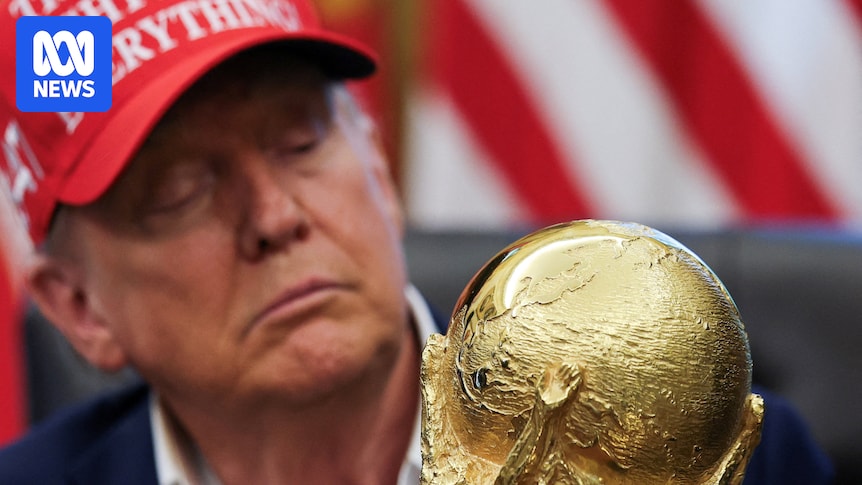
US President Donald Trump has extended an invitation to Iran’s men’s national soccer team to participate in the 2026 FIFA World Cup, which will be co-hosted by the United States, Canada, and Mexico. However, he expressed concerns about the appropriateness of their participation due to safety issues amidst ongoing geopolitical tensions.
Previously, Trump had shown indifference towards Iran’s participation, stating, “I really don’t care” if they joined the tournament. This stance shifted after a meeting with FIFA President Gianni Infantino, where Trump reportedly expressed his welcome to the Iranian team. In a post on Truth Social, Trump reiterated his invitation but warned of potential risks, saying, “The Iran National Soccer Team is welcome to The World Cup, but I really don’t believe it is appropriate that they be there, for their own life and safety.”
Geopolitical Tensions and Sports
The backdrop to Trump’s comments is a complex geopolitical landscape. Iran’s sports minister announced that the nation’s athletes could not participate following US and Israeli airstrikes on Tehran, which have escalated into a broader regional conflict. This development has raised questions about the safety and feasibility of Iran’s participation in international events held in the US.
The 2026 World Cup, scheduled from June 11 to July 19, is set to feature 48 teams, with Iran slated to play matches in Los Angeles and Seattle. An official withdrawal by Iran would be unprecedented in modern World Cup history, posing a challenge for FIFA to find a replacement team.
FIFA’s Position and Historical Context
FIFA has not yet commented on the situation, leaving uncertainty about how the organization will handle a potential withdrawal. Historically, the World Cup has seen political tensions affect participation, but a withdrawal at this stage would be a significant logistical hurdle.
Iran’s absence from a recent FIFA planning summit in Atlanta has fueled speculation about their participation. The summit was crucial for discussing logistics and security measures for the upcoming tournament.
Humanitarian Concerns and Political Maneuvering
In a related development, Australia recently granted humanitarian visas to six Iranian women soccer players and a team support worker who sought asylum, fearing persecution for refusing to sing the national anthem at an Asia Cup match. One of the players later chose to return to Iran.
President Trump had urged Australian Prime Minister Anthony Albanese to provide asylum to these players, indicating that the US would step in if Australia did not. This move highlights the intersection of sports and political asylum, reflecting broader humanitarian concerns.
Looking Ahead: Implications for Global Sports
The situation underscores the challenges of hosting global sporting events amidst geopolitical tensions. The World Cup, a symbol of international unity and competition, is now entangled in a complex web of political and safety concerns.
As the tournament approaches, FIFA and participating nations will need to navigate these challenges, ensuring the safety and integrity of the event. The outcome of Iran’s participation will likely set a precedent for how international sports organizations handle similar situations in the future.
The world will be watching closely as developments unfold, with the hope that sports can continue to serve as a bridge between nations, even in times of conflict.