



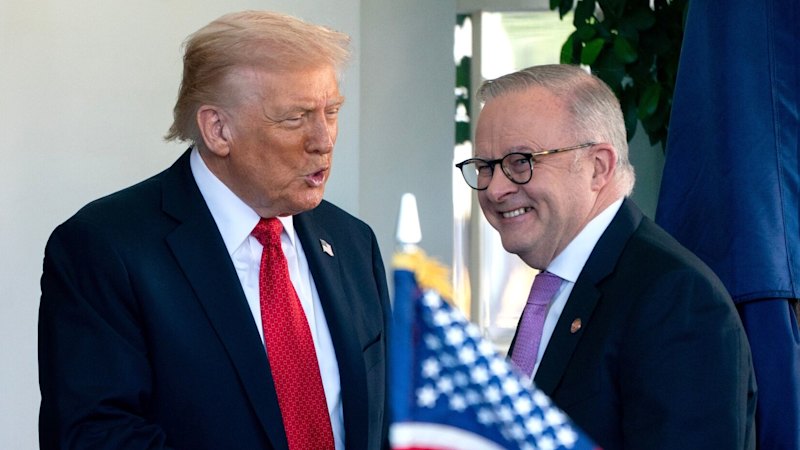
WASHINGTON, January 21, 2026 — In a recent interview, Steve Bannon, a prominent figure in the Make America Great Again (MAGA) movement, emphasized the renewed importance of Australia to the United States under President Donald Trump’s administration. Bannon highlighted the AUKUS submarine agreement as a cornerstone of this relationship, underscoring its strategic significance in the Indo-Pacific region.
According to Bannon, Australia’s standing among US conservatives had suffered during the COVID-19 pandemic due to its stringent restrictions. However, he believes the relationship has been revitalized under the leadership of President Trump and Australian Prime Minister Anthony Albanese. “I think you see President Trump and his team drawing closer to Australia,” Bannon stated, acknowledging Australia’s pivotal role as a “linchpin for the Indo-Pacific.”
Reviving AUKUS and Strategic Commitments
The Trump administration’s firm recommitment to the AUKUS agreement in October marked a significant step in strengthening US-Australia ties. The agreement involves Australia purchasing at least three nuclear-powered attack submarines from the United States by the 2030s. Despite concerns about American shipbuilding capacity, Bannon expressed confidence in the deal’s fruition. “I don’t think the deal would have been agreed to if they weren’t going to be delivered,” he remarked, emphasizing Australia’s strategic centrality in East Asia and the Indo-Pacific.
Bannon, who served as Trump’s chief strategist during his first term, continues to wield considerable influence through his podcast, War Room. Although not part of the current White House team, his views reflect a segment of the conservative base that values strong international alliances, particularly in countering Chinese influence.
Overcoming Pandemic Perceptions
Bannon acknowledged the damage to Australia’s image among US conservatives due to its pandemic response, which included harsh lockdowns and vaccination mandates. “People culturally are so close to Australia and just think the world of Australia,” he noted, describing the pandemic measures as a “shock” to many Americans. This sentiment was frequently discussed on his podcast, where Australia’s approach was used as a cautionary tale for US political dynamics.
Despite these challenges, Australia’s strict measures were credited with keeping COVID-19 cases and deaths low until the Delta outbreak in 2021. The pandemic response remains a point of contention among US conservatives, who often view it as an example of government overreach.
Balancing China Relations
Australia’s stance on China also garners mixed reactions in Washington. While some critics view Canberra as inconsistent in its approach to Beijing, Bannon praised Australia’s handling of the relationship, particularly in contrast to other Western nations. He cited the AUKUS agreement as evidence of a strong partnership between the US, UK, and Australia, dismissing concerns about Australia’s resolve.
Bannon, known for his staunch opposition to the Chinese Communist Party, compared Albanese’s approach to that of Canadian Prime Minister Mark Carney, who recently struck a trade deal with China. “Carney went and kowtowed. You guys have not kowtowed,” Bannon asserted, highlighting the strategic importance of Australia in the global geopolitical landscape.
Looking Ahead: Strategic Implications
The deepening ties between the US and Australia under the AUKUS framework have significant implications for regional security and global power dynamics. As the US navigates its complex relationship with China, Australia’s role as a strategic ally becomes increasingly crucial. Bannon suggested that Trump, while cautious about potential economic repercussions, understands the historical context and strategic necessity of maintaining pressure on Beijing.
“He would put the CCP in the exact same position Japan was in the summer of 1941,” Bannon said, referring to potential economic measures against China. “The Steve Bannons of the world would love to do that. I think that would lead to breaking them.”
As the US and Australia continue to collaborate on defense and economic initiatives, the AUKUS agreement stands as a testament to their shared commitment to regional stability. The evolving geopolitical landscape underscores the importance of robust alliances, with Australia positioned as a key player in the Indo-Pacific strategy.
For more insights on international relations and global affairs, sign up for our weekly What in the World newsletter.