




US President Donald Trump has firmly stated that he is not open to negotiations with Iran, suggesting that the ongoing conflict may only cease when Tehran’s military and leadership are incapacitated. This declaration comes amidst escalating tensions in the Middle East, as Israeli forces launched new strikes across Iran early Sunday, intensifying a war that has already disrupted global oil markets and caused widespread chaos.
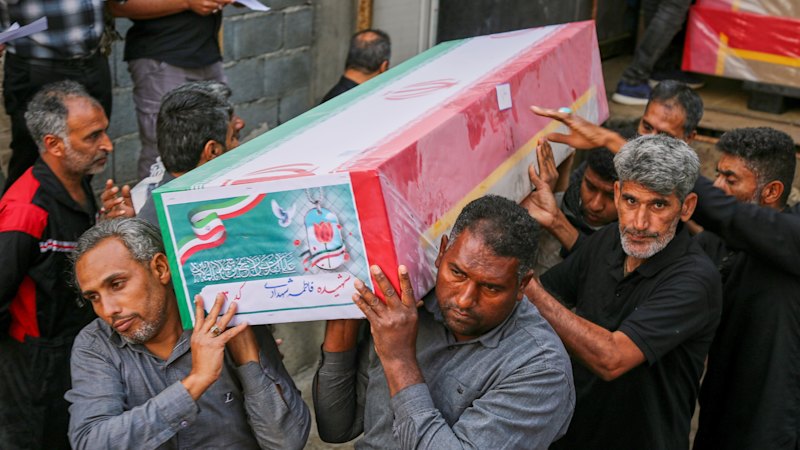
Speaking aboard Air Force One, Trump expressed skepticism about Iran’s capacity to surrender, stating, “At some point, I don’t think there will be anybody left maybe to say, ‘We surrender’.” He further accused Tehran of being responsible for a deadly airstrike on a girls’ school in Iran, which resulted in over 165 casualties, primarily children, despite contrary evidence from satellite images and military analyses suggesting US involvement.
Accusations and Defense
Trump’s assertions have been met with controversy, as Defense Secretary Pete Hegseth, present during the briefing, noted that the incident was still under investigation. However, Trump interrupted, insisting, “We think it was done by Iran because they’re very inaccurate, as you know, with their munitions. They have no accuracy whatsoever. It was done by Iran.”
The US-Israeli military operations are justified by Trump on the grounds of an imminent threat posed by Iran’s nuclear capabilities. Reports from Axios indicate that discussions have taken place regarding the deployment of special forces to secure Iran’s enriched uranium stockpiles as the conflict progresses.
Regional Repercussions
The conflict’s impact has been felt across the region, with Iranian drone strikes reported in Saudi Arabia, Kuwait, the United Arab Emirates, and Bahrain. A significant fire broke out in a government office in Kuwait, and an explosion at the US embassy in Oslo, Norway, caused minor damage.
Saudi Arabia has issued warnings to Iran about potential retaliatory measures if attacks on its energy sector continue, according to sources cited by Reuters. In a bid to ease tensions, Iran’s president extended apologies to neighboring states for strikes on US facilities, while dismissing Trump’s demands for unconditional surrender as unrealistic.
Leadership Transition in Iran
Amidst the turmoil, Iran is on the brink of selecting a new supreme leader following the assassination of Ayatollah Ali Khamenei. The Assembly of Experts is expected to convene soon to finalize the decision, with Ayatollah Mohammadmehdi Mirbaqeri indicating that a consensus is near.
Meanwhile, Israel has intensified its military actions, targeting Iranian missile sites and command centers, resulting in significant casualties. Iran’s UN ambassador reports over 1,332 civilian deaths due to the US-Israeli strikes, while Iranian attacks have claimed lives in Israel and among US service members.
International Reactions and Criticism
The conflict has drawn varied international reactions. Israel has issued stern warnings to Lebanon regarding Hezbollah’s involvement, while Trump criticized the United Kingdom’s delayed military response. On Truth Social, Trump remarked, “The United Kingdom, our once Great Ally, maybe the Greatest of them all, is finally giving serious thought to sending two aircraft carriers to the Middle East. That’s OK, Prime Minister Starmer, we don’t need them any longer – But we will remember.”
As the situation develops, the global community watches closely, with potential implications for international relations and regional stability. The unfolding events underscore the complexities and high stakes involved in the Middle East conflict, with no clear resolution in sight.