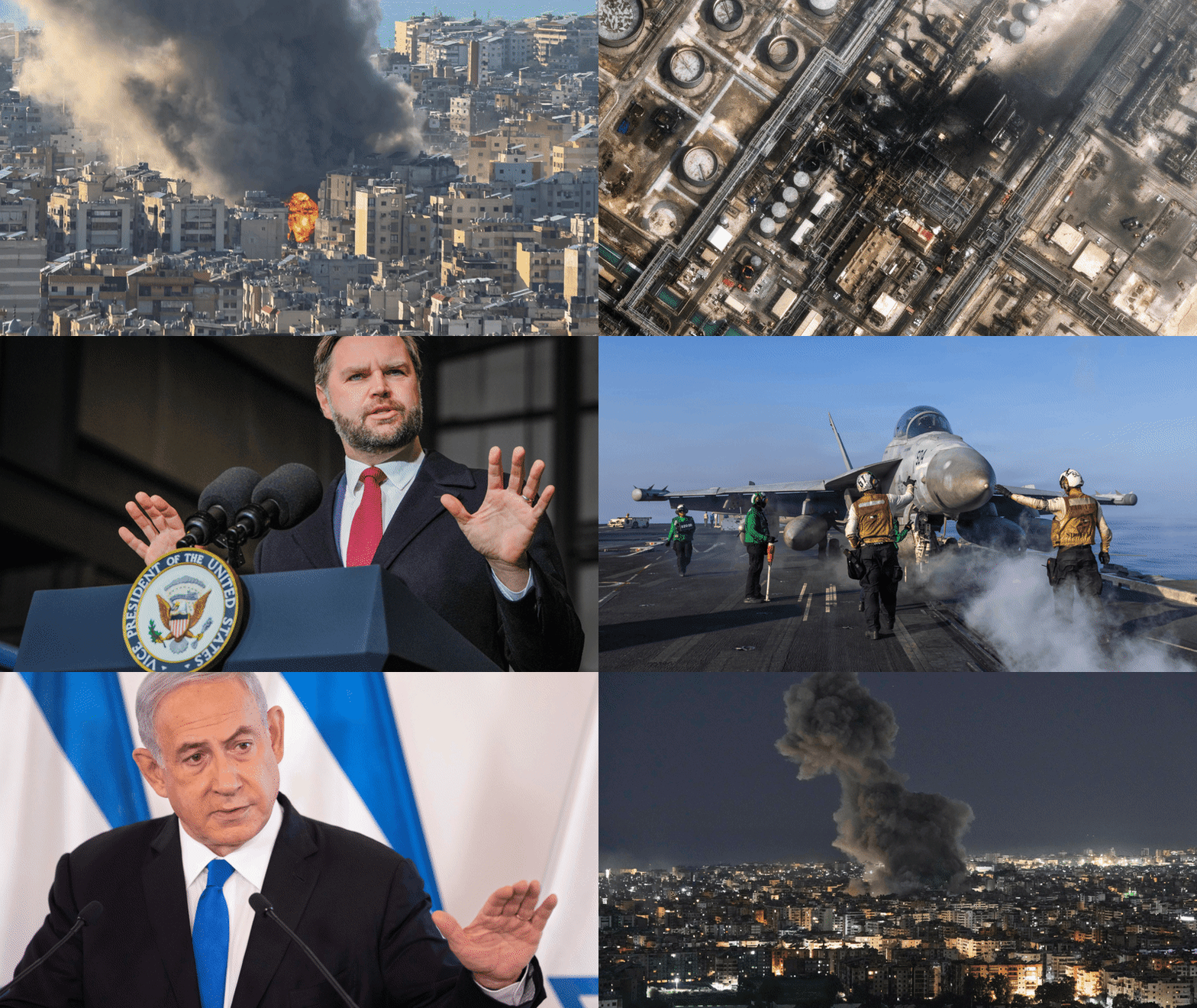



President Donald Trump is pushing forward with his Gaza ceasefire plan, aiming to transition into a new phase within the coming weeks. However, significant elements of the agreement remain undefined, as Israel continues to tighten its military hold on the beleaguered enclave.
The return of all but one of the deceased hostages held by militants marks the near completion of the first phase of Trump’s 20-point plan. Yet, with international concerns mounting over the fragility of the two-month-old ceasefire, Trump is eager to advance to the more complex second phase. This phase includes the disarmament of Hamas, the initiation of reconstruction efforts, and the establishment of a post-war governance structure.
Challenges in Implementing the Ceasefire Plan
Central to the new governance plan for Gaza is the creation of a “Board of Peace,” which Trump intends to lead alongside other global leaders. “It’ll be one of the most legendary boards ever. Everybody wants to be on it,” Trump remarked at the White House.
Despite Israeli Prime Minister Benjamin Netanyahu’s public support for the deal in September, significant differences persist between the US and Israel. The US is advocating for a swift transition to the next phase, but Israel is demanding the return of the final deceased hostage before making any major moves. Furthermore, Israel has resisted US efforts to resolve a standoff with isolated Hamas militants in southern Gaza.
“Much of the second phase is left open to interpretation, which, in the Middle East, is both the best and the worst thing,” an Israeli official told CNN.
International Concerns and Mediation Efforts
Qatari Prime Minister Mohammed bin Abdulrahman al-Thani, along with Egypt and Norway, recently warned that the ceasefire is at a “critical moment” and at risk of collapse. “It’s not yet there, so what we have just done is a pause,” al-Thani stated at the Doha Forum.
The Trump administration is prepared to begin rehabilitation and reconstruction of Gaza, but Israel remains focused on disarming Hamas and demilitarizing the region—a key component of the agreement that lacks a clear path forward.
“The question is whether, in the meantime, Hamas remains there, and that’s it—we just get used to it and accept it,” a second Israeli official told CNN.
Stalled Progress and Military Tensions
The US is still working to finalize crucial details ahead of a potential phase two announcement, including the composition of an international security force and the Board of Peace to oversee Gaza’s governance. Two months into the ceasefire, tensions remain high, with both Hamas and Israel accusing each other of violations.
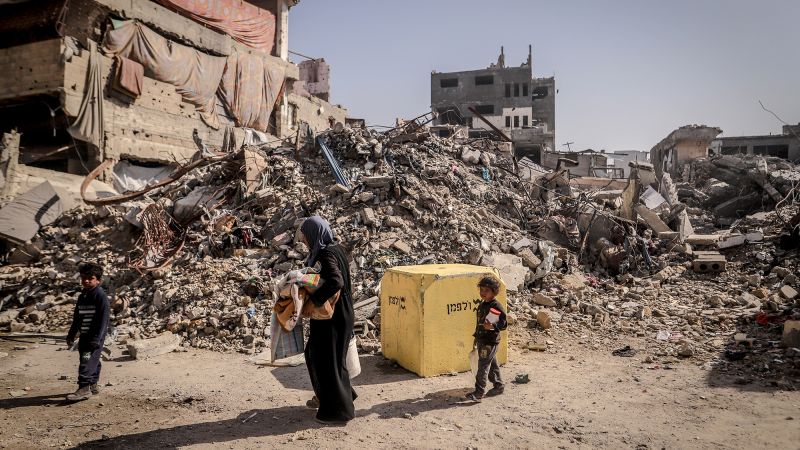
Nearly 400 Palestinians have been killed by the Israeli military since the ceasefire took effect in October, according to the Palestinian Ministry of Health. The Israeli military reports that three of its soldiers were killed by Hamas militants during the same period.
Human rights organizations have criticized Israel for failing to uphold its commitments regarding humanitarian aid and blocking essential supplies from entering the strip. Meanwhile, Israeli military chief Lt. Gen. Eyal Zamir announced that Israeli forces would remain on the “yellow line” inside Gaza, referring to it as a “new border line” and a “forward defensive line.”
Implications for Gaza’s Future
According to the ceasefire agreement, Israel is prohibited from permanently occupying or annexing Gaza, but the military currently occupies more than half of the enclave. The US has urged Israel to open the Rafah crossing between Gaza and Egypt, which was supposed to resume operations as part of the ceasefire agreement. However, Israel has kept the crossing closed, allowing only Palestinians to leave Gaza, a move that has sparked outrage from Arab and Muslim nations.
Efforts to resolve the dispute continue, with Secretary of State Marco Rubio expected to discuss the issue with his Israeli counterpart. An Egyptian official attributed the lack of progress to deep-seated distrust between Israel and Hamas. “Every point in it is tied to internal calculations on both sides,” the official noted.
“Phase two is not frozen because of one point,” the official said. “It is frozen because every step affects Gaza’s future, and the parties are not yet willing to pay the political cost of making a final decision.”
Looking Ahead: Reconstruction and Governance
The foremost demand for Israel remains the demilitarization of Gaza, with the agreement calling for the decommissioning of Hamas’ weapons. However, a senior Hamas official indicated the group’s willingness to discuss options for their weapons, though these proposals fall short of the ceasefire agreement’s disarmament clauses.
The agreement also calls for an international force to manage disarmament and secure parts of Gaza, but this force currently exists only on paper. The Trump administration aims to deploy the force early next year, though no nations have formally committed troops yet.
In the meantime, Israel continues to support local anti-Hamas militias in Gaza, despite recent internal clashes that highlight the region’s volatility. Without clear prospects for Hamas’ disarmament or international oversight, the second phase will focus on reconstruction efforts within Israeli-occupied Gaza.
The Trump administration is concentrating on finalizing elements of Gaza’s post-war governance, including the Board of Peace and a Palestinian technocratic committee. A reformed Palestinian Authority is expected to eventually take over Gaza’s administration, paving the way for a “credible pathway to Palestinian self-determination,” according to a UN resolution.
However, Israel has already rejected both Palestinian Authority responsibility for Gaza and the notion of Palestinian statehood, indicating the long-term challenges of the ceasefire agreement.