


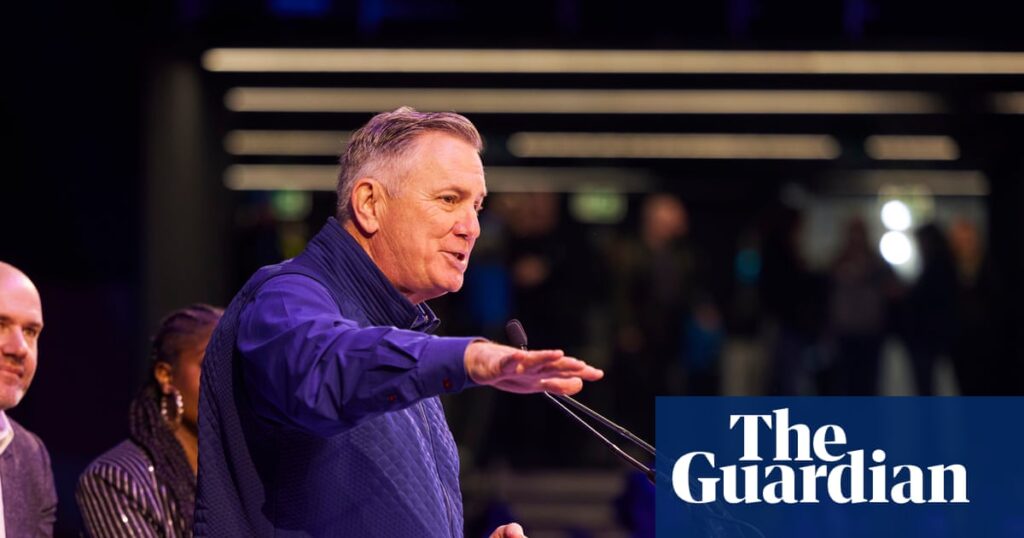
Donald Trump quietly issued a pardon on Tuesday for Tim Leiweke, a prominent sports and entertainment executive, who had been indicted earlier this year by the president’s own Justice Department. Leiweke, co-founder of Oak View Group, faced charges related to orchestrating a conspiracy to manipulate the bidding process for an arena at a public university in Austin, Texas.
Leiweke, who had pleaded not guilty to charges of conspiracy to restrict trade, was scheduled to stand trial next year. However, according to a copy of the pardon posted on the Justice Department’s website, Trump signed “a full and unconditional pardon” for Leiweke on Tuesday.
Background on the Indictment
The indictment, announced in July, accused Leiweke of rigging a bidding process to favor his company, thereby depriving the public university and taxpayers of the benefits of competitive bidding. Assistant Attorney General Abigail Slater of the Justice Department’s Antitrust Division emphasized the seriousness of the charges at the time, stating, “The Antitrust Division and its law enforcement partners will continue to hold executives who cheat to avoid competition accountable.”
Justin Simmons, the U.S. Attorney for the Western District of Texas, appointed by Trump’s Attorney General Pam Bondi, also weighed in on the case. “Unfair business practices, like those employed here, make it very difficult for the American people to pursue prosperity like our founders intended,” Simmons remarked in July.
Pattern of Pardons
The pardon for Leiweke is the fifth Trump has granted in the past week to individuals of significant influence, raising questions about the motivations behind these decisions. The Justice Department has not provided explanations for terminating these corruption cases, leading to speculation about potential political motivations.
Experts in legal and political fields have expressed concern over the implications of such pardons. “These actions could undermine public trust in the justice system,” noted Dr. Emily Carter, a professor of law at Georgetown University. “When high-profile individuals receive pardons without clear justification, it sends a message that the powerful are above the law.”
Historical Context and Implications
The use of presidential pardons has long been a tool for addressing perceived injustices or for political maneuvering. Historically, presidents have used this power to correct judicial errors or to advance policy goals. However, Trump’s recent pardons have drawn comparisons to controversial decisions in the past, such as President Clinton’s pardon of financier Marc Rich, which also sparked debates about fairness and influence.
As Trump’s term comes to a close, the frequency and nature of these pardons could have lasting effects on how future administrations approach the use of this executive power. Legal analysts suggest that the pattern of pardons may lead to calls for reform in how pardons are granted, potentially seeking more transparency and oversight in the process.
“The power to pardon is one of the most unchecked powers of the presidency,” said Dr. Robert Hayes, a political historian. “While it can serve as a tool for justice, it can also be wielded in ways that challenge the integrity of the legal system.”
Looking Ahead
As the nation prepares for a transition in leadership, the implications of Trump’s pardons will likely be a topic of discussion and analysis. Observers will be watching closely to see if President-elect Joe Biden will address the issue of presidential pardons and if any reforms will be proposed.
For now, Leiweke’s future remains uncertain. Although he has been pardoned, the controversy surrounding his case and the broader implications of such executive decisions will continue to resonate in both legal and political circles.