

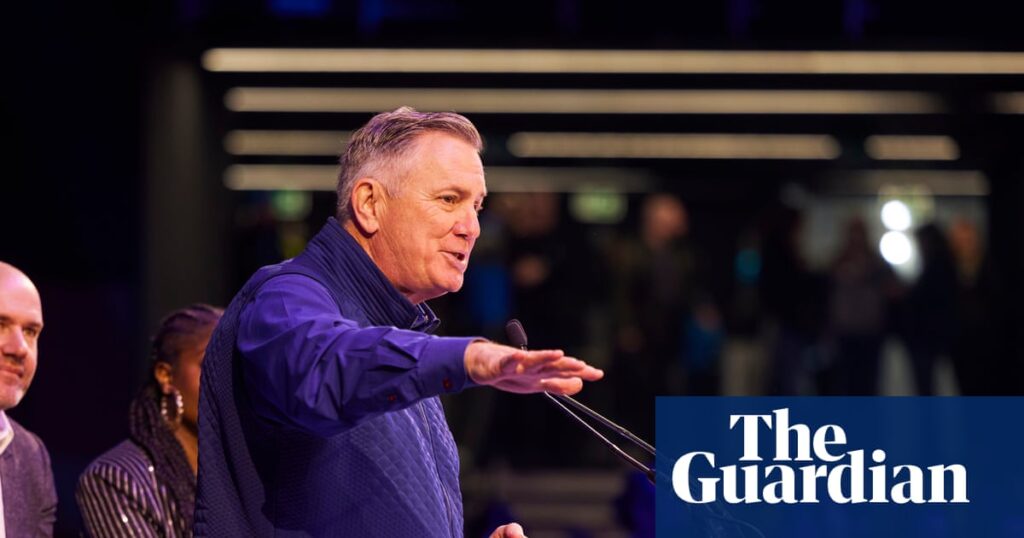
In a surprising move, former President Donald Trump issued a pardon on Tuesday for Tim Leiweke, a prominent sports and entertainment executive, who had been indicted by the Department of Justice earlier this year. Leiweke, co-founder of the Oak View Group, faced charges related to allegedly orchestrating a conspiracy to manipulate the bidding process for an arena project at a public university in Austin, Texas.
The indictment, which was announced in July, accused Leiweke of conspiracy to restrict trade, a charge he denied. He was scheduled to stand trial next year. However, the pardon, described as “full and unconditional,” was signed by Trump and posted on the Justice Department’s website on Wednesday, marking the fifth such pardon granted by Trump in the past week to influential individuals, with no detailed explanation provided.
The Indictment and Legal Proceedings
According to the indictment, Leiweke was involved in a scheme that allegedly deprived a public university and taxpayers of the benefits of competitive bidding. Assistant Attorney General Abigail Slater of the Justice Department’s Antitrust Division stated in July,
“As outlined in the indictment, the Defendant rigged a bidding process to benefit his own company and deprived a public university and taxpayers of the benefits of competitive bidding.”
Justin Simmons, the U.S. Attorney for the Western District of Texas, appointed by Trump’s Attorney General Pam Bondi, echoed these sentiments, emphasizing the impact of such practices on the American economy.
“Unfair business practices, like those employed here, make it very difficult for the American people to pursue prosperity like our founders intended,”
Simmons noted in July.
Context of the Pardon
The decision to pardon Leiweke comes amid a series of controversial pardons by Trump, raising questions about the motivations behind these decisions. The lack of transparency and explanation has drawn criticism from various quarters, particularly given the nature of the charges and the fact that they were brought by Trump’s own Justice Department.
Historically, presidential pardons have been a tool for correcting judicial errors or offering clemency in cases where the punishment is deemed excessive. However, critics argue that recent pardons appear to favor individuals with connections or influence, potentially undermining the integrity of the justice system.
Implications and Reactions
The pardon of Leiweke has sparked a debate about the use of presidential pardons and their implications for justice and accountability. Legal experts suggest that such actions could set a precedent for future administrations, potentially leading to a perception of partiality or favoritism in the justice system.
Meanwhile, the Justice Department has not released a detailed statement regarding the pardon, leaving many questions unanswered about the rationale behind the decision. The move has also drawn attention to the broader issue of antitrust enforcement and the challenges of maintaining fair competition in the business sector.
As the legal community and the public grapple with the implications of this pardon, the focus now shifts to how the Justice Department will continue to address antitrust violations and ensure accountability for corporate misconduct.
The case of Tim Leiweke serves as a reminder of the complexities involved in balancing executive power with judicial independence, a challenge that will likely continue to shape the discourse around presidential pardons in the future.