


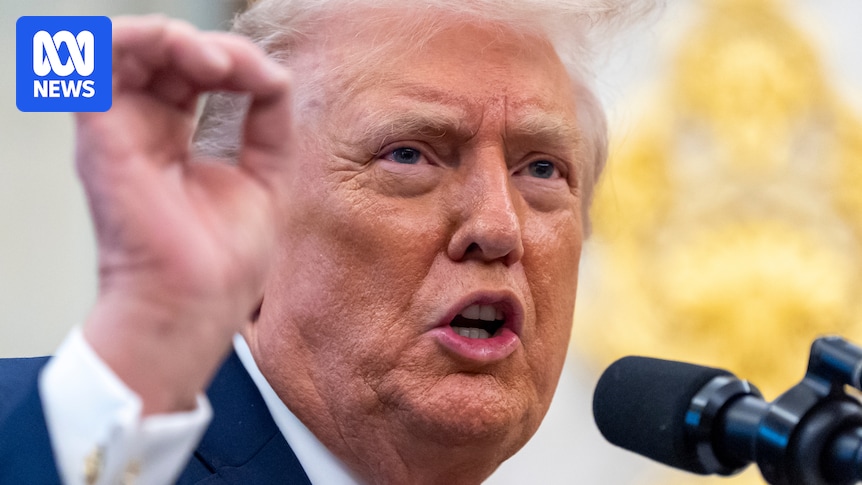
In a bold move that underscores escalating tensions between the United States and Venezuela, U.S. President Donald Trump has announced a “total and complete” blockade of all sanctioned oil tankers entering and leaving Venezuela. The directive was communicated via Trump’s post on Truth Social, where he cited “the theft of our Assets, and many other reasons, including Terrorism, Drug Smuggling, and Human Trafficking” as justifications for the action.
Trump’s statement follows the recent seizure of a sanctioned oil tanker by the United States off the coast of Venezuela. The Venezuelan communications ministry has yet to respond to requests for comment, while Venezuelan President Nicolas Maduro, addressing a public event prior to Trump’s announcement, accused foreign powers of attempting to “colonise Venezuela to take over its wealth of oil, gas, gold, among other minerals.” Maduro asserted that peace would prevail in Venezuela.
Historical Context and Economic Impact
Venezuela, home to the world’s largest proven oil reserves, has historically depended on oil revenues as the cornerstone of its economy. However, U.S. sanctions have severely restricted its ability to engage in the global oil market. Since 2017, when the Trump administration began imposing oil sanctions, Venezuela’s state-owned oil company, Petróleos de Venezuela SA (PDVSA), has been forced to rely on clandestine methods to distribute its oil, often at a significant discount to markets such as China.
The sanctions have also included measures threatening to exclude any American individual or company conducting business with the Maduro government from the U.S. economy. This has further isolated Venezuela economically, exacerbating the country’s financial difficulties.
Military Presence and Strategic Implications
The announcement of the blockade is part of a broader strategy by the Trump administration, which has increased military presence in the region. According to the Associated Press, the U.S. Navy has deployed 11 ships, including an aircraft carrier and several amphibious assault ships, in the vicinity. These ships are equipped with a variety of aircraft, including helicopters and V-22 Ospreys, and are supported by P-8 Poseidon maritime patrol aircraft.
“The move represents a significant escalation in the U.S.’s approach to Venezuela,” noted a senior defense analyst. “It raises questions about the potential for direct confrontation on the high seas and the legal ramifications of such actions.”
Legal and Diplomatic Challenges
While sanctions allow governments to dictate the movement of vessels within their waters, the legal authority to seize ships on the high seas remains contentious. The U.S.’s ability to enforce a “total and complete blockade” as described by Trump is unclear, and it poses significant diplomatic challenges.
Experts suggest that such a blockade could lead to increased tensions not only with Venezuela but also with countries that continue to trade with the South American nation. The international community may view the blockade as an overreach of U.S. power, potentially leading to diplomatic disputes.
Looking Ahead
The implications of this blockade are profound, affecting global oil markets, international relations, and the geopolitical landscape of the region. The move could further isolate Venezuela, but it also risks drawing criticism from allies and adversaries alike.
As the situation develops, the world will be watching closely to see how Venezuela responds and how the U.S. plans to implement its blockade. The potential for escalation remains, and the international community will need to navigate the complex legal and diplomatic waters that this decision has stirred.
In the coming weeks, it will be crucial to monitor the reactions from global powers and the impact on international oil prices. The unfolding events may redefine the strategic dynamics in the Western Hemisphere.