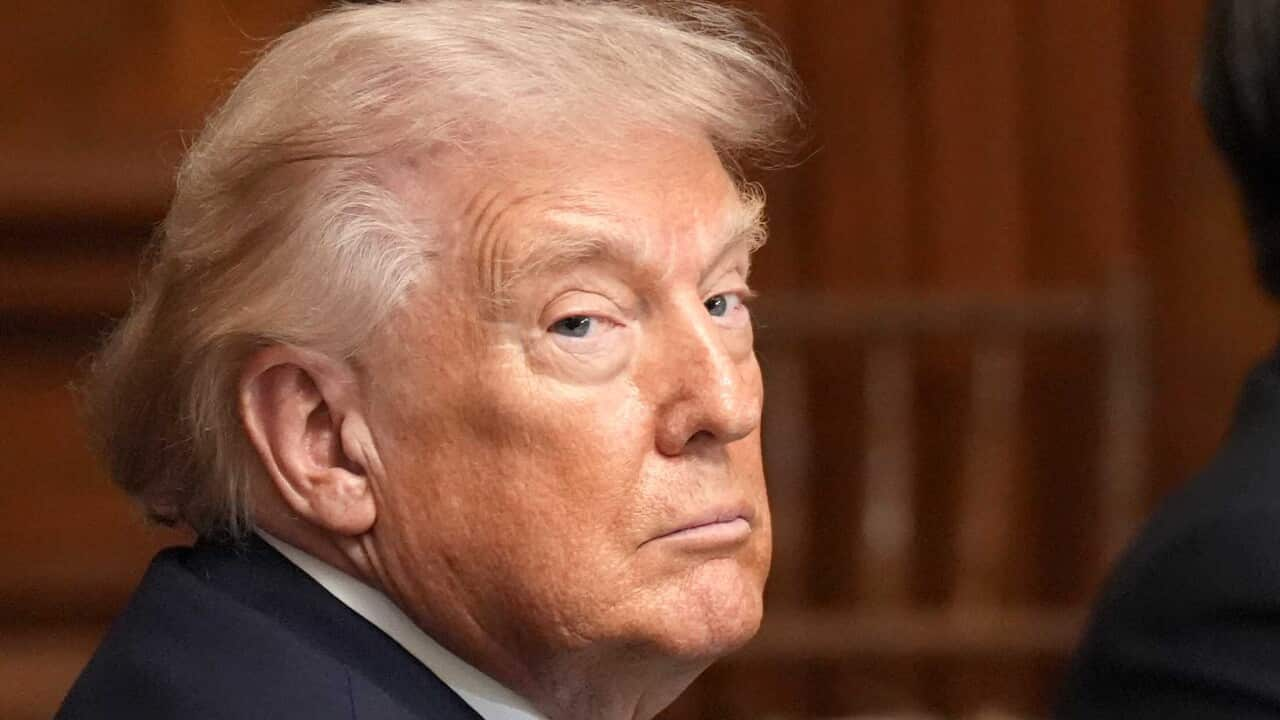



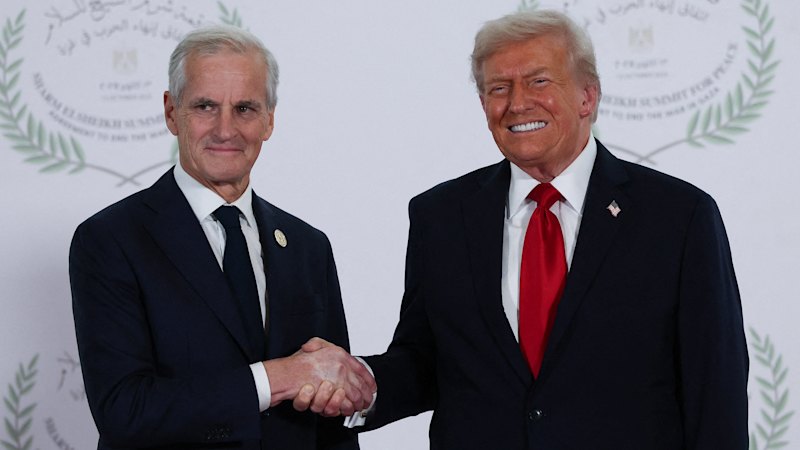
The Norwegian Prime Minister’s office has released a series of text messages between President Donald Trump and Norwegian Prime Minister Jonas Gahr Støre, revealing a surprising connection between Trump’s interest in Greenland and his feelings about not receiving the Nobel Peace Prize. The exchange was shared with The New York Times, shedding light on Trump’s geopolitical strategies and personal grievances.
In the messages, Støre reached out to Trump to discuss pressing global security issues, including Greenland, Gaza, and Ukraine. The message, signed “Alex and Jonas,” also referenced Finnish President Alexander Stubb, indicating a collaborative diplomatic effort. Støre proposed a call with Trump to address these concerns, emphasizing the need for unity in de-escalating tensions.
Dear Mr President, dear Donald – on the contact across the Atlantic – on Greenland, Gaza, Ukraine – and your tariff announcement yesterday. You know our position on these issues. But we believe we all should work to take this down and de-escalate – so much is happening around us where we need to stand together. We are proposing a call with you later today – with both of us or separately – give us a hint of what you prefer! Best – Alex and Jonas
Trump’s Response and the Nobel Peace Prize
In his response, Trump linked his interest in Greenland to his disappointment over not receiving the Nobel Peace Prize. He suggested that Norway’s decision influenced his stance on global peace efforts, stating that he no longer felt obligated to prioritize peace above all else.
Dear Jonas: Considering your Country decided not to give me the Nobel Peace Prize for having stopped 8 Wars PLUS, I no longer feel an obligation to think purely of Peace, although it will always be predominant, but can now think about what is good and proper for the United States of America. Denmark cannot protect that land from Russia or China, and why do they have a ‘right of ownership’ anyway?
Trump further argued that Greenland’s strategic importance necessitated American control, citing NATO’s role and his contributions to the alliance as justification for his demands.
The Strategic Importance of Greenland
Greenland has long been considered a strategically valuable territory due to its location and resources. The island is rich in minerals and offers a pivotal position in the Arctic, making it a point of interest for global superpowers, including the United States, Russia, and China. Trump’s assertion that “the World is not secure unless we have Complete and Total Control of Greenland” underscores the geopolitical significance of the region.
Historically, the United States has shown interest in Greenland, with President Harry Truman attempting to purchase the island in 1946. The recent exchange highlights a continuation of this interest, albeit with new geopolitical dynamics at play.
Expert Opinions and Reactions
Experts in international relations have weighed in on the implications of Trump’s messages. Dr. Emily Harding, a geopolitical analyst, noted that Trump’s approach reflects a transactional view of international diplomacy, where strategic interests are prioritized over traditional alliances and peace efforts.
“Trump’s message to Støre reveals a shift in U.S. foreign policy priorities, where national interests are increasingly intertwined with personal grievances,” Harding explained.
Meanwhile, European leaders have expressed concern over the potential for increased tensions in the Arctic region. The European Union has reiterated its support for Denmark’s sovereignty over Greenland, emphasizing the importance of peaceful cooperation in the Arctic.
Looking Ahead: Implications for U.S.-Nordic Relations
The release of these messages could have significant implications for U.S.-Nordic relations. While the exchange highlights existing tensions, it also underscores the need for continued dialogue and cooperation on shared security concerns. As global powers continue to vie for influence in the Arctic, the importance of diplomatic engagement and multilateral solutions becomes increasingly evident.
Moving forward, it remains to be seen how this revelation will impact future negotiations and alliances. The United States’ approach to Greenland and the broader Arctic region will likely continue to be a focal point of international diplomacy, with potential consequences for global security and environmental stewardship.
As the situation develops, all eyes will be on the responses from both Nordic leaders and the international community, as they navigate the complex landscape of Arctic geopolitics.