
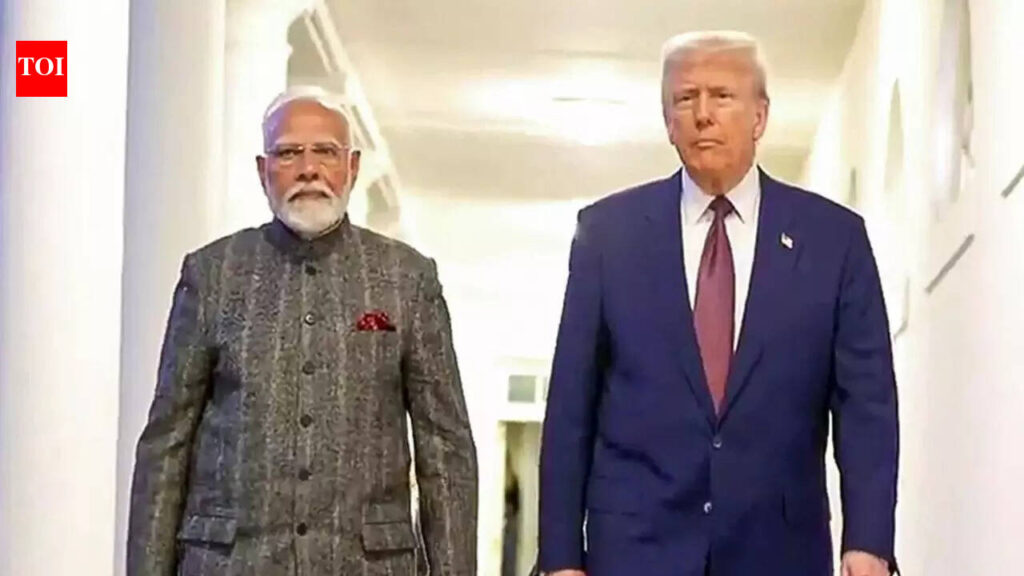
In a significant move aimed at reshaping US-India trade relations, US President Donald Trump signed an executive order on Friday lifting the additional 25 percent tariff on all imports from India. This decision follows India’s agreement to cease its purchases of Russian oil, a point of contention that had strained relations between the two nations.
The announcement comes on the heels of a newly finalized trade deal between the United States and India, resolving nearly a year of trade tensions. The White House confirmed the executive order, highlighting the evolving partnership between the two countries.
Background of the Trade Tensions
Previously, President Trump had criticized India for its continued imports of Russian oil, arguing that such actions indirectly supported Russia’s military operations in Ukraine. This criticism was part of a broader strategy to isolate Russia economically following its invasion of Ukraine in 2022. The United States had imposed a punitive 25 percent tariff specifically targeting India’s Russian oil imports, in addition to a pre-existing 25 percent reciprocal tariff.
India, relying heavily on Russian oil to meet approximately 90 percent of its import needs, had benefitted from reduced costs due to lower Russian oil prices. However, the geopolitical landscape and economic sanctions against Russia prompted India to reconsider its energy import strategy.
The New Trade Agreement
Earlier this week, the US and India announced a trade agreement that reduced US tariffs on Indian goods from 50 percent to 18 percent. In exchange, India agreed to halt its Russian oil purchases and lower several trade barriers, marking a new chapter in bilateral trade relations.
According to a White House official, the withdrawal of the punitive 25 percent duty was a direct result of India’s commitment to reworking its oil import strategy. This adjustment reflects a broader shift in India’s foreign policy and economic strategy, aligning more closely with Western allies.
Impact on Global Oil Markets
India’s decision to reduce its Russian oil imports is expected to have significant implications for global oil markets. As of January, India imported approximately 1.2 million barrels of oil per day from Russia. This figure is projected to decrease to around 1 million barrels per day in February and further to about 800,000 barrels per day in March, according to a Reuters report.
“India’s strategic pivot away from Russian oil is a crucial development in the global energy landscape,” said Dr. Meera Patel, an energy policy expert. “This move not only strengthens US-India relations but also signals India’s growing alignment with Western economic policies.”
Looking Ahead
The lifting of the tariff and the new trade agreement represent a significant step forward in US-India relations. Experts believe this could pave the way for further economic collaboration and geopolitical alignment between the two nations.
Meanwhile, the global community will be closely monitoring the impact of these developments on international trade dynamics and energy markets. The US-India trade deal could serve as a model for future agreements, particularly in the context of balancing economic interests with geopolitical considerations.
As the world navigates the complexities of post-pandemic recovery and geopolitical shifts, the evolving US-India partnership underscores the importance of strategic alliances in addressing global challenges.