



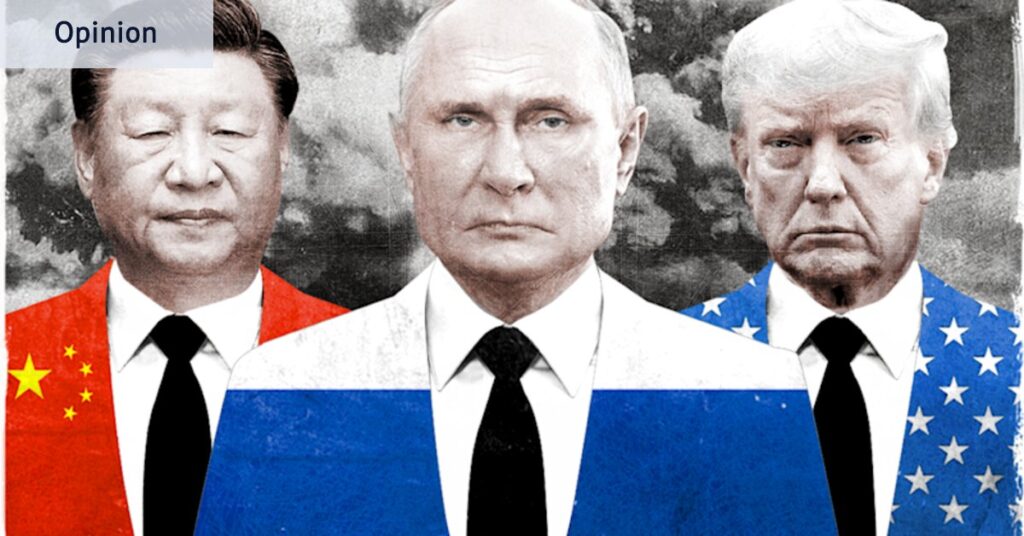
February 24, 2026 — As the world marks the fifth anniversary of Russia’s invasion of Ukraine, the geopolitical landscape reflects a stark reality: the United States, under Donald Trump’s leadership, has shifted from restraining global predators to joining them. This development has profound implications for international stability and the balance of power.
The Pentagon initially predicted that Russia’s military campaign in Ukraine would conclude swiftly. Yet, as the conflict drags into its fifth year, it underscores a significant lesson: survival in the modern world hinges on power. Historically, the US wielded its military might to deter adversaries, offering protection to its allies. However, this strategic posture has evolved dramatically.
The Shift in US Foreign Policy
Under Barack Obama, the US began to retreat from its traditional role when it allowed Russia to annex parts of Ukraine in 2014. This perceived weakness emboldened authoritarian leaders like Vladimir Putin and Xi Jinping, who saw opportunities in America’s reluctance to engage militarily. Xi accelerated his territorial ambitions in the South China Sea, while Kim Jong-un intensified North Korea’s nuclear program.
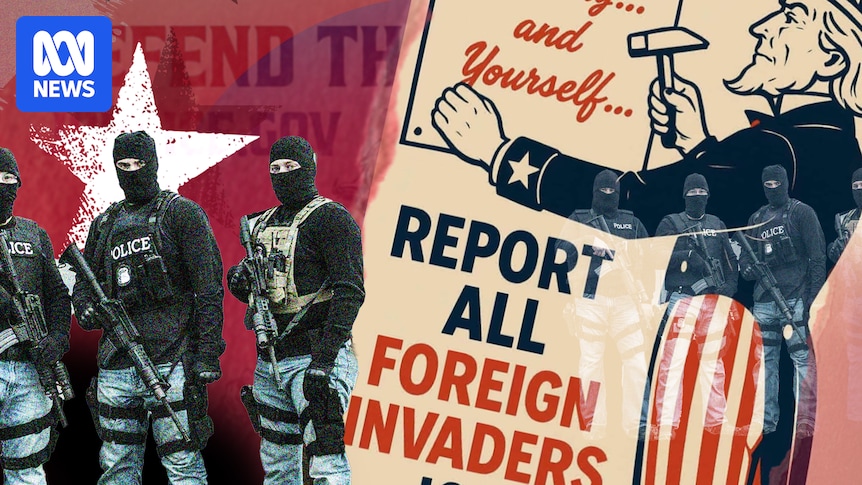
Joe Biden’s administration attempted to revive US hegemony, leading NATO in a cautious support of Ukraine. However, this was insufficient to secure a decisive Ukrainian victory. With Trump’s ascension to power, even this minimal effort was abandoned. Trump’s administration withdrew support for Ukraine, effectively allowing Putin, Xi, and Kim to pursue their ambitions unchecked.
Global Implications and Regional Tensions
The ramifications of this policy shift are profound. The US, alongside Russia and China, is now engaged in aggressive territorial expansions. Trump has controversially claimed Canada and Greenland as US territories, while European borders remain fluid amidst ongoing conflict in Ukraine. Meanwhile, China’s military posturing against Japan, the Philippines, and Taiwan has intensified, as evidenced by a Chinese naval task group’s circumnavigation of Australia last year.
“The law of the jungle applies. If national survival depends solely on power, how has Ukraine managed to endure against the odds for so long?”
Despite being ranked significantly lower in military power, Ukraine has demonstrated resilience, primarily through its indomitable willpower. Russian academic Vladislav L. Inozemtsev highlights the critical role of morale and leadership, echoing Napoleon’s sentiment that moral strength outweighs physical might.
Lessons from Ukraine’s Resistance
Ukraine’s endurance offers valuable insights. The conflict has shown that a nation’s military is an extension of its society, fueled by patriotism and a collective cause. President Volodymyr Zelensky’s leadership has been pivotal, contrasting sharply with Putin’s reclusive approach.
Strategist Phillips P. O’Brien emphasizes the importance of economic and technological strength in warfare. For nations like Australia, this means reducing dependency on the US and enhancing self-reliance. Australia has begun producing its missiles and diversifying its military suppliers, exemplified by Japan’s construction of Mogami-class frigates for Australia.
“For a state to have power, it must have economic/technological strength. It needs not only to make stuff, but to make the most complex and advanced stuff in large amounts.” — Phillips P. O’Brien
The Role of Alliances and Future Preparedness
The Ukrainian conflict underscores the necessity of alliances. European support has been crucial for Ukraine, just as China’s backing is vital for Russia. Australia, recognizing this, has strengthened ties with Japan and Indonesia, while maintaining a selective alliance with the US.
Durability is another critical lesson. Ukraine’s prolonged struggle highlights the need for nations to prepare for extended conflicts. Iskander Rehman of Johns Hopkins advocates for planning beyond initial engagements to ensure long-term success.
Finally, Ukraine’s experience serves as a cautionary tale about the dangers of underestimating adversaries. Trusting Putin’s assurances proved costly, reinforcing the importance of vigilance and preparedness.
As the global order continues to evolve, the lessons from Ukraine and the US’s shifting role in international affairs will shape the strategies of nations worldwide. The need for resilience, alliances, and strategic foresight has never been more apparent.