

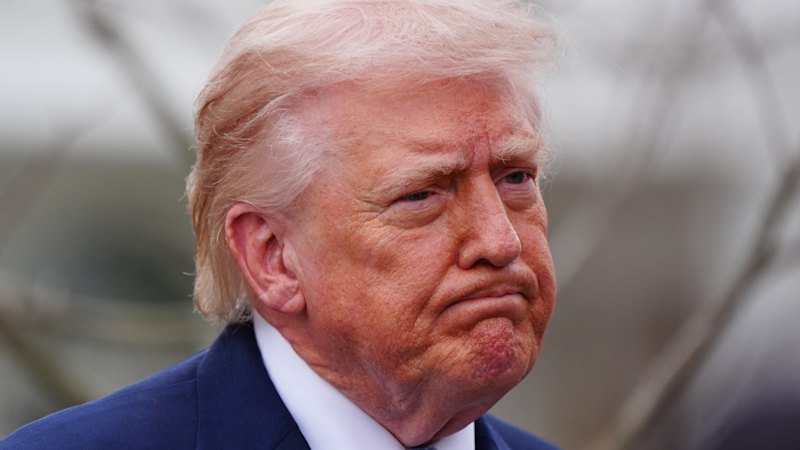
US President Donald Trump has issued a stark ultimatum to Iran, threatening to “obliterate” its power plants unless Tehran fully reopens the Strait of Hormuz within 48 hours. This escalation comes just a day after Trump suggested a potential de-escalation of the ongoing conflict.
“If Iran doesn’t FULLY OPEN, WITHOUT THREAT, the Strait of Hormuz, within 48 HOURS from this exact point in time, the United States of America will hit and obliterate their various POWER PLANTS, STARTING WITH THE BIGGEST ONE FIRST!” Trump declared on social media, intensifying tensions in the region.
Rising Tensions in the Gulf
The Strait of Hormuz is a narrow but strategically crucial waterway, serving as a conduit for about a fifth of global oil and liquefied natural gas supplies. The threat of Iranian attacks has deterred most ships from passing through, raising fears of a global energy crisis.
Iran has warned that any US strike on its energy facilities would provoke retaliation against American energy and infrastructure assets in the region. Tehran’s representative to the United Nations’ maritime agency stated that the strait remains open to all vessels except those associated with “Iran’s enemies.”
Missile Capabilities and Regional Impact
In a significant development, Iran targeted the joint British-US Diego Garcia military base in the Indian Ocean, demonstrating missile capabilities that reach further than previously acknowledged. Israeli military chief Eyal Zamir noted that these missiles could threaten European capitals, including Berlin, Paris, and Rome.
Additionally, Iran struck two communities in southern Israel, injuring dozens near Israel’s main nuclear research center. Israeli Prime Minister Benjamin Netanyahu condemned the attacks, vowing to continue military operations against Iran.
Energy Market Shock and Political Ramifications
The conflict has already caused a spike in energy prices, following Iran’s retaliation against an Israeli attack on its major gas field. The damage to Qatar’s Ras Laffan Industrial City, a key processing site for liquefied natural gas, is expected to take years to repair, exacerbating the global energy supply crisis.
Domestically, Trump faces mounting pressure as energy price shocks fuel inflation, impacting consumers and businesses. This poses a significant political challenge for Trump, who must justify the war to the American public ahead of the November elections, where control of Congress is at stake.
International Reactions and Diplomatic Efforts
Trump’s ultimatum has drawn mixed reactions from US allies. While some NATO members have expressed willingness to consider intervention, many remain reluctant to engage in a conflict initiated unilaterally by the US. Trump has criticized NATO allies for their hesitance, accusing them of cowardice.
Meanwhile, Iran’s permanent representative to the International Maritime Organization, Ali Mousavi, emphasized Tehran’s readiness to cooperate with the UN agency to enhance maritime safety. He reiterated that diplomacy remains Iran’s priority, but mutual trust and cessation of aggression are essential.
Military Developments and Casualties
As the conflict enters its fourth week, a military helicopter crash in Qatar’s territorial waters resulted in the deaths of seven personnel, including Qatari and Turkish forces. The crash was attributed to a technical malfunction during routine duty.
In Israel, Iranian strikes on the cities of Dimona and Arad destroyed buildings and injured dozens, including children. Iran’s Revolutionary Guards claimed responsibility, targeting military installations and security centers in southern Israel.
Israeli military spokesman Brigadier General Effie Defrin stated that the country’s air defenses were operational but failed to intercept the strikes. The incident is under investigation to prevent future breaches.
Looking Ahead
With over 2000 casualties reported since the conflict began, the situation remains volatile. The international community watches closely as the 48-hour deadline approaches, with potential repercussions for global energy markets and geopolitical stability.
As tensions escalate, diplomatic efforts continue in the hope of averting further military confrontation. The world waits to see if a resolution can be reached before the deadline expires, potentially altering the course of this high-stakes conflict.