


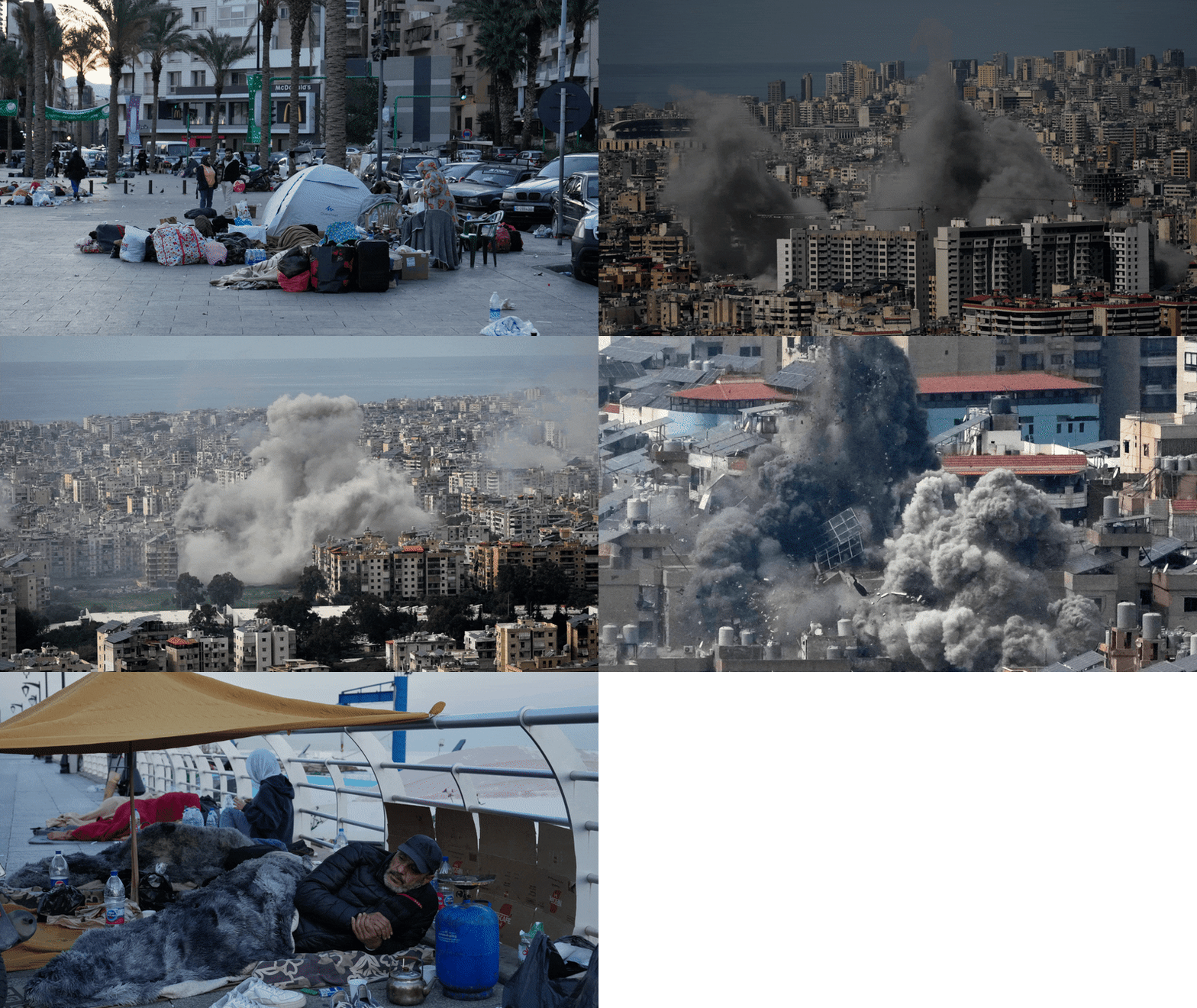
The Middle East conflict intensified dramatically over the weekend as U.S. President Donald Trump demanded Iran’s “unconditional surrender,” while Israeli airstrikes targeted key locations in Beirut and Tehran. This escalation has resulted in significant casualties and heightened tensions across the region.
According to officials, the death toll has risen sharply, with at least 1,230 people killed in Iran, over 200 in Lebanon, and around a dozen in Israel. Israeli warplanes have continued their assault, with further strikes reported in Tehran and Isfahan.
Regional Turmoil and International Reactions
The conflict has severely impacted the region, with Dubai’s international airport briefly suspending operations after an Iranian missile struck the world’s busiest transit hub. Iranian President Masoud Pezeshkian publicly apologized for the attacks on neighboring countries, attributing them to a breakdown in command following the killing of Iran’s supreme leader and other top officials.
Qatar reported intercepting another missile attack shortly after Pezeshkian’s statement. Meanwhile, the United States has approved a new $151 million arms sale to Israel, reinforcing its stance against Iran. Trump’s demand for Iran’s surrender was swiftly rejected by Pezeshkian, who dismissed it as a “dream” the U.S. would take to their graves.
Global Implications and Economic Impact
The ongoing conflict has disrupted global energy markets, with oil prices soaring past $90 a barrel, marking a 25% increase within a week. The Strait of Hormuz, a critical chokepoint for global oil shipments, has seen a significant reduction in traffic, exacerbating fears of a major energy crisis.
“Every day that war rages on brings the world closer to a tipping point,” warned energy executives, predicting $100 crude within days if hostilities continue.
Refineries in the Middle East and Asia have cut production, causing prices for diesel and jet fuel to surge. This has raised alarms among traders and executives who foresee a potential escalation in energy costs if the situation does not de-escalate soon.
Political Maneuvering and Diplomatic Efforts
Amid the chaos, Russia has reportedly provided Iran with intelligence to counter American military assets in the region. Russian President Vladimir Putin expressed condolences to Iran over civilian casualties and called for an immediate cessation of hostilities. Pezeshkian indicated that Russia would support Iran’s “legitimate rights against aggression.”
In Iran, Ayatollah Nasser Makarem Shirazi urged the Assembly of Experts to swiftly appoint a new supreme leader to restore order. However, airstrikes on buildings associated with the panel have likely delayed any such meeting.
“The timely realization of this important matter will lead to national authority and the best possible organization of affairs,” Shirazi stated.
Humanitarian Concerns and Civilian Impact
The conflict has placed immense pressure on civilians across the region. Verified footage showed the moment an Iranian missile hit Dubai International Airport, causing temporary suspension of operations. The internet blackout in Iran has entered its seventh day, isolating the public from vital updates while state media retains access.
Gulf states have expressed outrage over attacks on civilian infrastructure, despite their non-involvement in U.S.-Israeli military actions. Iran’s strategy of creating regional chaos has led to increased energy prices and disrupted global business links, raising questions about Tehran’s long-term objectives.
Future Prospects and Diplomatic Challenges
As the conflict enters its second week, the international community is closely monitoring developments. The potential for further escalation remains high, with diplomatic efforts yet to yield significant progress. The situation underscores the fragile balance of power in the Middle East and the global stakes involved.
Efforts to mediate a ceasefire or de-escalate tensions will be critical in the coming days. The world watches anxiously as leaders navigate this complex geopolitical landscape, hoping to avert a broader conflict that could have far-reaching consequences.