In a dramatic turn of events, Nicolás Maduro, the ousted Venezuelan leader, found himself in a New York prison cell following a bold military operation by US special forces. The raid, which resulted in at least 40 casualties, was swiftly followed by a declaration from former US President Donald Trump that he would now “run” Venezuela, tapping into its abundant oil reserves.
The operation, a striking display of American military might, was accompanied by Trump’s reassertion of the Monroe Doctrine, signaling US dominance in the Western Hemisphere. This move is seen as a direct warning to China and Russia, both of whom have vested interests in the region.
The Capture of Nicolás Maduro
Maduro, who had ruled Venezuela since 2013 but was not recognized by the US and several other nations, was captured alongside his wife, Cilia Flores, in a covert military operation. The mission involved over 150 aircraft launched from various bases, culminating in their apprehension as they attempted to reach a secure bunker in Caracas.
Footage released by the White House showed Maduro being escorted through the Metropolitan Detention Centre in Brooklyn, where he was heard saying, “good night, happy new year.” The operation was reportedly overseen by Trump from his Mar-a-Lago resort in Florida.
US Plans for Venezuela’s Future
While Trump hinted at appointing members of his team to “run” Venezuela, he also suggested potential collaboration with Delcy Rodriguez, Maduro’s deputy, who was declared acting president by Venezuela’s Supreme Court. However, Trump dismissed the idea of Nobel Peace Prize winner Maria Corina Machado leading the nation, questioning her support among the Venezuelan populace.
“We are going to run the country until such time as we can do a safe, proper, and judicious transition,” Trump stated, emphasizing the financial benefits of managing Venezuela’s oil resources.
The former president left open the possibility of further military action, cautioning other South American leaders, including Colombian President Gustavo Petro, to remain vigilant.
Military Operation Details
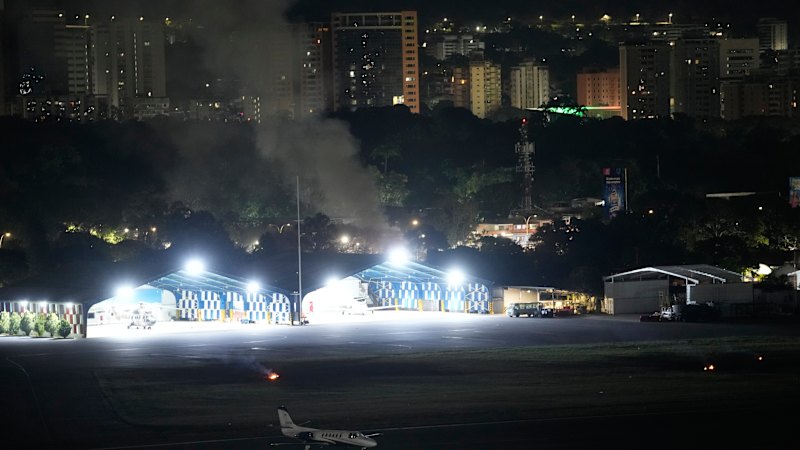
The operation, led by Dan Caine, chairman of the joint chiefs of staff, was preceded by extensive CIA intelligence gathering. It was initially approved in December but executed at the most strategic moment. The US Air Force disabled Venezuela’s air defense systems, allowing helicopters to approach Caracas undetected.
The apprehension force engaged in a brief firefight upon entering Maduro’s compound. Despite one aircraft being hit, all US personnel returned safely, with only minor injuries reported. Maduro and Flores were subsequently transported to the USS Iwo Jima before being flown to New York.
Legal and Political Repercussions
Maduro now faces cocaine trafficking charges in the Southern District of New York, with a court appearance anticipated soon. Meanwhile, US Secretary of State Marco Rubio indicated potential cooperation with Rodriguez, though she publicly denounced Maduro’s capture as illegal.
The Venezuelan military’s response remains uncertain, with reports from Caracas indicating a mix of quiet streets and sporadic protests. The nation, plagued by violence and criminal gangs, is on edge as the political landscape shifts dramatically.
International Reactions and Historical Context
Internationally, Maduro’s allies, including Russia, China, and Cuba, condemned the US’s actions. Russian officials labeled it an “act of armed aggression,” while China expressed deep shock. Conversely, European leaders cautiously supported the end of Maduro’s rule, with French President Emmanuel Macron advocating for a peaceful transition.
“The Venezuelan people would rejoice at Maduro’s removal,” Macron stated, calling for Edmundo González to assume leadership as per the 2024 election results.
The operation coincides with the anniversary of the 1990 US invasion of Panama, drawing historical parallels to past US interventions in Latin America. Maduro’s tenure, marked by economic turmoil and political unrest, has been contentious, with his 2018 re-election widely disputed.
Domestic Reactions and Future Implications
Within the US, the operation has sparked debate over its legality and the lack of congressional approval. Democratic leaders, including Chuck Schumer, criticized Trump’s unilateral military action, warning of potential repercussions.
As the situation unfolds, questions about the US’s long-term involvement in Venezuela loom large. Trump’s emphasis on “America First” policies and energy interests underscores the strategic motivations behind the intervention.
With international tensions simmering and Venezuela’s future uncertain, the world watches closely as this geopolitical drama continues to evolve.