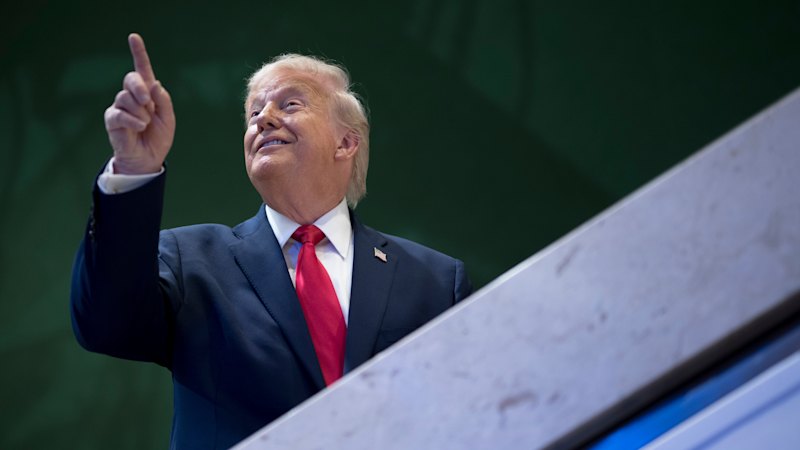




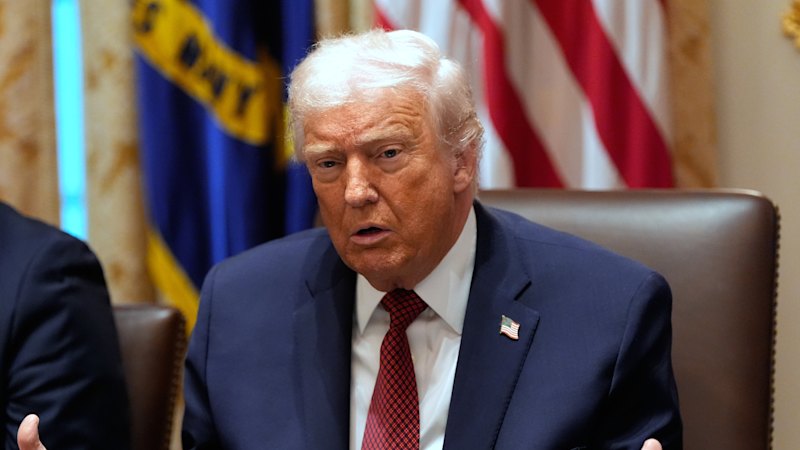
In a recent interview with Politico, U.S. President Donald Trump sharply criticized European leaders, labeling them as “weak” and predicting dire consequences for their nations due to rising immigration. Trump expressed his belief that these leaders are hesitant to repatriate migrants, leading to what he described as a potential cultural and social decline in Europe.
Trump also took aim at European leaders for their handling of the Ukraine conflict, suggesting that Ukrainian President Volodymyr Zelensky might need to concede territory to Russia to secure peace. These comments underscore a widening chasm between Trump and America’s European allies on both foreign and domestic policy issues, raising questions about future U.S. support for Ukraine in its ongoing conflict with Russia.
Migration Policies Under Fire
Trump’s remarks have sparked significant debate across Europe, especially concerning his views on migration. He criticized European leaders for what he perceives as their overly cautious approach to immigration and cultural integration. “I think they’re weak, but I also think that they want to be so politically correct,” Trump stated during the interview. “Europe doesn’t know what to do.”
The U.S. President refrained from naming specific leaders but highlighted cities like London and Paris as examples of urban decline linked to migration. He also pointed to Sweden as a nation grappling with migration-related crime, citing an influx of migrants from various global regions, including the Congo.
“They’re coming in from all parts of the world, not just the Middle East,” Trump said. “They’re coming in from the Congo, tremendous numbers of people coming from the Congo. And even worse, they’re coming from prisons of the Congo and many other countries.”
European Leaders Respond
The comments coincide with the release of a White House national security statement that criticized Western leaders for their handling of mass migration. Trump’s specific focus on migrants from the Middle East and Africa taps into ongoing public anxiety in Europe regarding social change. Politicians like Nigel Farage in the UK, Alice Weidel in Germany, and Marine Le Pen in France have gained traction with policies aimed at reducing migrant intake.
Trump’s criticism of European migration policies echoes sentiments expressed earlier this year by U.S. Vice President JD Vance, who warned European leaders of a “threat from within” during a security conference in Munich. The national security strategy further predicted a potential rift between the U.S. and its European allies if they continued to pursue what Trump and his administration view as overly liberal social policies.
Ukraine Conflict and U.S. Foreign Policy
In addition to his comments on migration, Trump expressed skepticism about the current trajectory of the Ukraine conflict. He criticized Zelensky’s leadership and suggested that Russia holds a stronger position in the ongoing war. This marks a departure from Trump’s previous assertion in September that Ukraine could emerge victorious.
“It’s not easy with Russia, because Russia has the upper hand, and they always did,” Trump remarked.
Trump’s son, Donald Trump Jr., recently suggested that the U.S. might withdraw support from Ukraine if peace talks do not advance, a notion that Trump neither fully endorsed nor rejected. Meanwhile, Zelensky has been actively seeking international support to resist territorial concessions to Russia, with recent visits to London, Brussels, and Rome, where he met with Pope Leo.
Implications for U.S.-Europe Relations
Trump’s comments have intensified discussions about the future of U.S.-Europe relations, particularly in the context of the Ukraine conflict and migration policies. His endorsement of Hungarian Prime Minister Viktor Orban and indirect support for Germany’s AfD party indicate a preference for leaders with more conservative stances on immigration.
As Europe grapples with these challenges, the U.S. stance under Trump’s administration could significantly influence the continent’s political landscape. The President’s remarks have already made headlines, prompting European leaders to reassess their strategies in dealing with both migration and the ongoing conflict in Ukraine.
With the world watching, the evolving dynamics between the U.S. and Europe will likely shape the geopolitical landscape for years to come. The international community remains attentive to how these relationships will develop amidst the complex interplay of domestic and foreign policy challenges.