



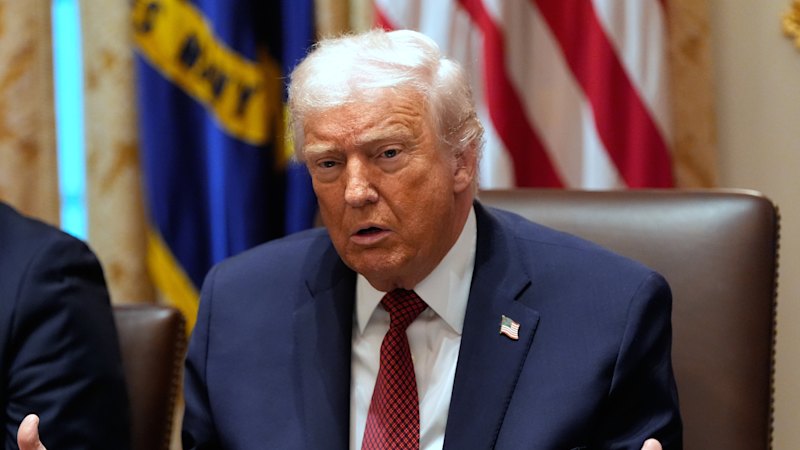
US President Donald Trump has sharply criticized European leaders, labeling them as “weak” and predicting that their countries could face destruction due to rising immigration. Speaking in an interview with Politico, Trump accused European leaders of being overly politically correct and hesitant to send migrants back to their countries of origin. His comments have sparked significant debate across Europe, especially in the context of ongoing discussions about the war in Ukraine.
Trump’s remarks also targeted European leaders’ handling of the Ukraine conflict, suggesting that Ukrainian President Volodymyr Zelensky may need to concede territory to Russia to achieve peace. This stance underscores a significant divergence from the approach taken by many of America’s traditional allies, raising questions about the future of US support for Ukraine and its broader foreign policy strategy.
Migration Concerns and Criticism
In his critique, Trump did not specify which European leaders he considered weak, but he did mention cities like London and Paris as examples of decline due to migration. He also pointed to crime in Sweden, attributing it to an influx of migrants from various parts of the world, including the Congo. “They’re coming in from all parts of the world, not just the Middle East,” Trump stated.
The former president suggested that European countries should adopt a more stringent immigration policy similar to his own, emphasizing the need to turn migrants away. “They want to be politically correct, and they don’t want to send them back to where they came from,” he added.
“Well, Europe is a different place, and if it keeps going the way it’s going, Europe will not be, in my opinion, many of those countries will not be viable countries any longer. Their immigration policy is a disaster.” — Donald Trump
Trump’s comments resonate with public concerns in Europe about social change, echoing sentiments expressed by politicians like Nigel Farage in the UK and Marine Le Pen in France, who advocate for reducing migrant intake.
The Ukraine Conflict and Strategic Differences
On the issue of Ukraine, Trump criticized President Zelensky and suggested that Russia holds a stronger position in the ongoing conflict. This marks a shift from Trump’s earlier statements in September, where he expressed confidence in Ukraine’s ability to win the war.
Trump’s son, Donald Trump Jr., recently suggested that the US might withdraw support from Ukraine if peace talks do not progress, a statement that Trump neither fully endorsed nor rejected. “It’s not correct, but it’s not exactly wrong,” Trump commented.
Meanwhile, Zelensky has been actively seeking international support for Ukraine’s stance against ceding territory to Russia. His recent visits to London, Brussels, and Rome, including a meeting with Pope Leo, have been widely publicized to bolster support.
“It’s not easy with Russia, because Russia has the upper hand, and they always did.” — Donald Trump
Implications and Future Prospects
Trump’s statements have amplified existing tensions between the US and its European allies, particularly regarding immigration policies and the Ukraine conflict. The former president’s views on population change and multicultural societies reflect broader themes in his administration’s policies, which often emphasize nationalism and conservative social values.
As Europe grapples with these challenges, the potential for a rift with the US looms, especially if European leaders do not align with the more conservative policies advocated by Trump and his allies. The national security strategy released by the White House last week further underscores this divide, predicting long-term consequences if Europe continues on its current path.
The ongoing debate over migration and foreign policy in Europe will likely continue to evolve, with significant implications for international relations and domestic politics. As leaders navigate these complex issues, the question remains whether they will heed Trump’s warnings or chart a different course for their countries’ futures.