


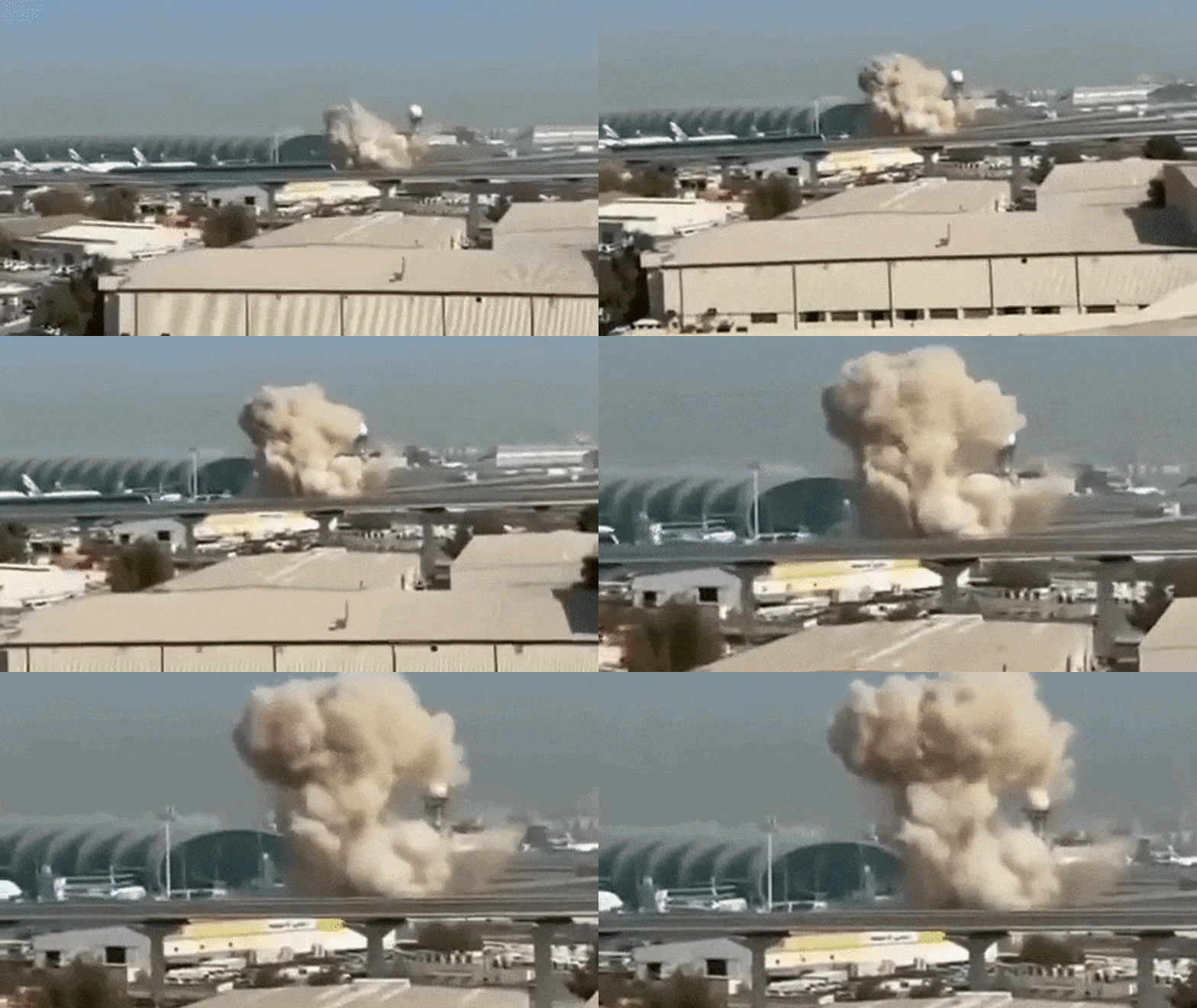
The United States is contemplating a significant military escalation in the ongoing conflict with Iran, as discussions with Israel about deploying American troops to secure Iranian nuclear facilities intensify. This development follows reports from NBC and Axios indicating that President Donald Trump is seriously considering such a move.
Israeli Prime Minister Benjamin Netanyahu has announced that US-Israeli forces plan to target “many more” sites within Iran, following initial strikes on fuel depots. These actions are part of a broader strategy to destabilize Iran’s government and potentially facilitate regime change.
Iran’s Leadership Vacuum and Regional Reactions
The conflict has intensified following the death of Iran’s Supreme Leader Ayatollah Ali Khamenei, killed in the early days of the war. Iran is now in the process of selecting a new leader, with Israel’s defense minister vowing to eliminate any successor. Meanwhile, regional powers are reacting cautiously to the unfolding events.
China’s Foreign Minister Wang Yi has criticized the conflict, stating that it “shouldn’t have happened” and warned against attempts at regime change. Despite these tensions, Wang indicated that the hostilities would not disrupt an upcoming meeting between President Trump and China’s President Xi Jinping.
Impact on Global and Regional Stability
The conflict’s repercussions are being felt across the Middle East. A major fire erupted in a Kuwaiti government building following reports of intercepted drones and missiles. Additionally, Bahrain reported material damage to a desalination plant and a university building, attributing these incidents to Iranian aggression.
Australia has ruled out deploying troops for a ground offensive but has expressed willingness to assist Middle Eastern nations in defending against Iranian attacks. Foreign Minister Penny Wong emphasized Australia’s supportive role in regional defense.
Economic and Humanitarian Consequences
The conflict has also disrupted global oil supplies, with unleaded petrol prices in Sydney and Melbourne reaching nearly $2.20 per liter. The Strait of Hormuz, a critical passage for oil transport, is heavily impacted by the hostilities.
In a solemn ceremony, President Trump honored six service members killed in Kuwait, marking the first American casualties since the conflict began. The President met with their families at Dover Air Force Base, acknowledging the risks involved in military engagements.
“When it comes to war, there’s always that, but we’re going to keep it to a minimum, I think,” President Trump remarked during a meeting in Florida.
Domestic and International Reactions
Protests against the Iranian regime have erupted globally, including a significant gathering in Melbourne. Demonstrators expressed support for Reza Pahlavi, the exiled son of Iran’s last Shah, as a potential transitional leader.
In the United States, a federal jury convicted an Iranian Revolutionary Guard operative involved in “murder for hire” plots targeting US politicians. This conviction underscores the complex web of espionage and counterintelligence activities linked to the conflict.
Future Prospects and Strategic Considerations
As the conflict enters its second week, the possibility of deploying US troops to Iran remains a contentious issue. President Trump has hinted at a prolonged engagement, with discussions ongoing about securing Iran’s nuclear stockpile.
Chinese Foreign Minister Wang Yi’s comments highlight the geopolitical stakes, as China remains Iran’s largest economic partner. However, experts suggest that China’s support for Iran may be limited to rhetoric, given the transactional nature of their relationship.
“Middle Eastern Affairs should be determined by regional countries independently. Plotting color revolution or seeking regime change will find no popular support,” Wang Yi stated, emphasizing China’s stance on sovereignty.
As the situation develops, global leaders continue to navigate the delicate balance between military action and diplomatic engagement, with significant implications for regional and international stability.