



February 20, 2026 — 5:00am
Washington: US President Donald Trump announced that he would likely decide within the next ten days whether to launch military strikes against Iran. This decision comes as the United States undertakes its largest military build-up in the Middle East since the 2003 Iraq invasion.
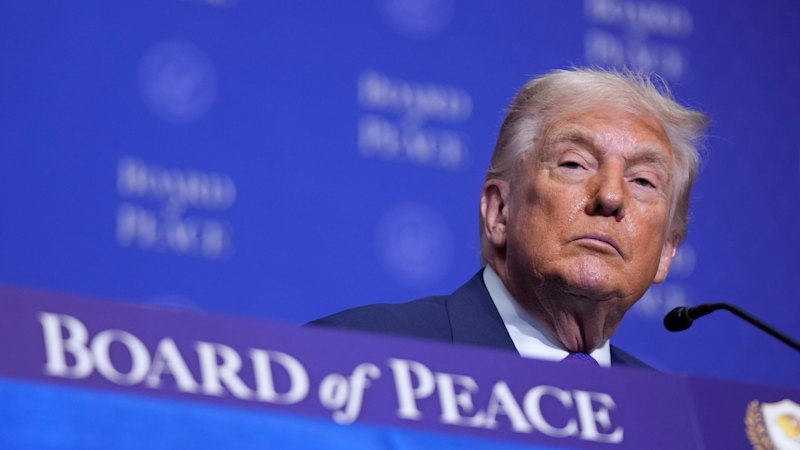
Speaking at the inaugural meeting of the Board of Peace in Washington, Trump highlighted Iran as a “hotspot” and emphasized the challenges of reaching a meaningful agreement with the nation. “Good talks are being had,” he stated, “but we have to make a meaningful deal otherwise bad things happen.”
Military Preparedness and Strategic Decisions
The remarks follow reports from US media that Trump has been briefed on the military readiness to strike Iran. The US has deployed significant assets to the region, including two major aircraft carrier groups, the USS Abraham Lincoln and USS Gerald Ford, along with dozens of aircraft refueling tankers.
Trump’s history of shifting timelines with Tehran adds complexity to the current situation. Last June, he promised a decision within two weeks but initiated strikes on Iran’s nuclear facilities just two days later, claiming these actions decimated Iran’s nuclear capabilities and paved the way for peace negotiations in Gaza.
Board of Peace and International Cooperation
The Board of Peace, a new international alliance led by Trump, aims to stabilize the Gaza region. Despite being snubbed by key US allies like Australia, the Board has made progress in securing Gaza, originally its primary focus. Five nations—Indonesia, Morocco, Kazakhstan, Kosovo, and Albania—have committed troops to the United Nations-mandated International Stabilisation Force (ISF).
US Major General Jasper Jeffers will command the ISF, with Indonesia filling the deputy commander’s post. Egypt and Jordan have agreed to train a Palestinian police force, with an ISF brigade assigned to each of five sectors in Gaza, starting with Rafah in the south.
Financial and Diplomatic Efforts
Trump announced that nine Board of Peace members pledged $7 billion towards a Gaza relief package. However, the Associated Press reported this figure is only a tenth of what is needed to rebuild after the two-year war between Israel and Hamas.
Former British Prime Minister Tony Blair, speaking on Gaza’s future, highlighted its “vast” potential due to its Mediterranean coastline and young population. He envisioned a future with effective public institutions and a business-friendly society, though details on achieving this remain sparse.
“This is a vision of Gaza as part of the Middle East at peace,” Blair stated, emphasizing the importance of genuine agreements.
International Reactions and Future Prospects
The inaugural meeting of the Board of Peace saw attendance from several heads of state, including the King of Bahrain and presidents from Kazakhstan, Uzbekistan, Romania, and Argentina. Indonesian President Prabowo Subianto confirmed his country’s contribution of over 8,000 troops to the peacekeeping force, expressing optimism about the peace plan’s success.
However, notable absences included several Western European allies. The UK, France, and Germany declined participation, while Trump rescinded Canada’s invitation. Ukraine also refused to join after Trump invited Russia, which has yet to agree to participate.
As Trump weighs his options regarding Iran, the global community watches closely. The next ten days could prove pivotal in shaping the geopolitical landscape of the Middle East and beyond.