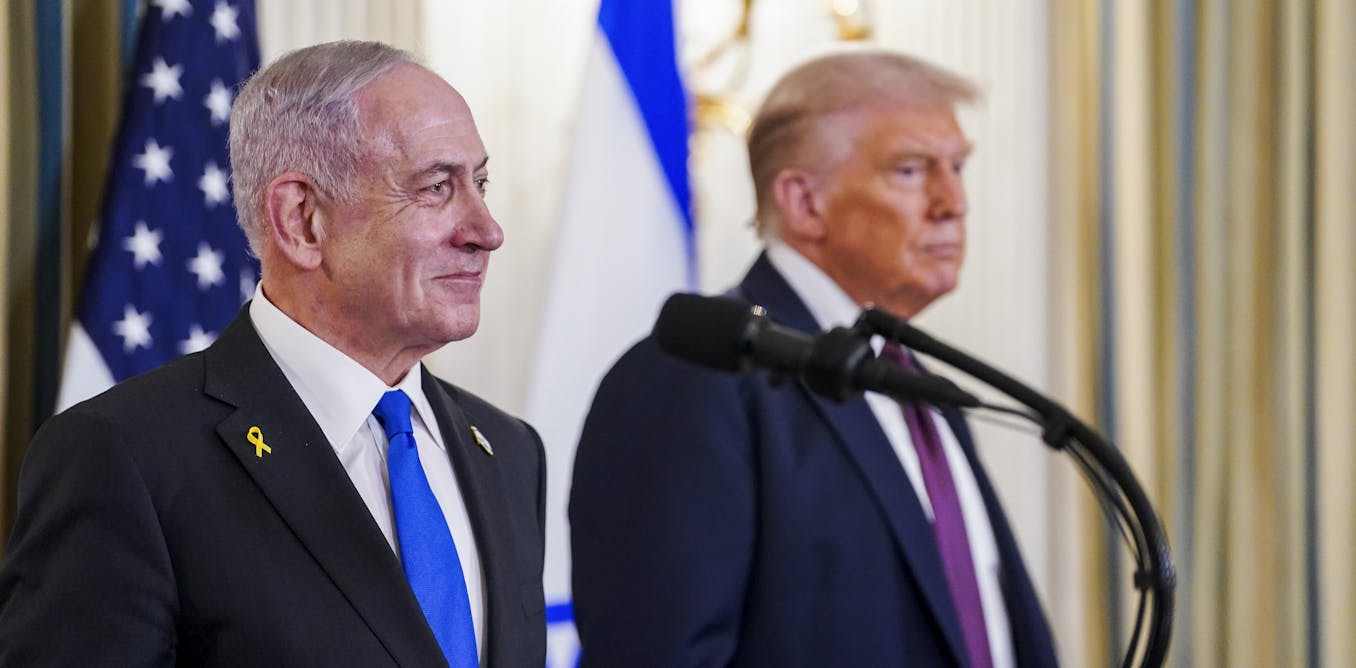


Donald Trump, speaking to reporters aboard Air Force One on March 15, described his relationship with Israeli Prime Minister Benjamin Netanyahu as “extraordinary.” In contrast, Netanyahu characterized their partnership as one of “dialogue, shared concepts, consultation and joint work.” These remarks come amid reports of tensions between the two leaders over the ongoing war in Iran, which Trump has dismissed as “fake news.” The alleged discord highlights not only differing objectives in the conflict but also the distinct personalities that have shaped their alliance.
The announcement comes as both leaders navigate a complex geopolitical landscape. Writing for the Sunday Times on March 15, former UK ambassador to Israel, Matthew Gould, noted that Trump and Netanyahu share similarities in certain respects. Both are populist figures who have polarized their respective nations with divisive rhetoric. However, key differences remain. While Trump avoided military service during the Vietnam War through five deferments, Netanyahu served with distinction in the Israeli armed forces, including five years in the elite Sayeret Matkal unit from 1967 to 1972.
Contrasting Approaches to Military Strategy
These contrasting backgrounds are significant as Trump and Netanyahu collaborate in the military confrontation with Iran. Trump often boasts about U.S. military strength and frequently engages with the media, whereas Netanyahu adopts a more measured approach and is less forthcoming with journalists. This divergence is also evident in their war aims. Netanyahu has consistently viewed Iran as an existential threat to Israel, focusing on its nuclear weapons program, ballistic missile capabilities, and support for regional proxy groups like Hamas, Hezbollah, and the Houthis.
Meanwhile, Trump’s rationale for the conflict has evolved from dismantling Iran’s military capabilities to regime change in Tehran. Despite the war’s unpopularity at home and among allies, Trump faces pressure to resolve the conflict quickly, especially with midterm elections looming in October. Oil prices surged to over $100 a barrel on March 16 after Trump announced the U.S. had “totally demolished” Kharg Island, Iran’s critical oil export hub.
Domestic Political Pressures
Netanyahu, however, is unlikely to seek a swift resolution without achieving a decisive victory over Iran, at least in terms of dismantling its nuclear and ballistic missile programs. Like Trump, Netanyahu faces an election in October and aims to portray himself as a victor rather than the leader under whose watch the October 7 Hamas attacks occurred in 2023.
How Trump and Netanyahu navigate these differences will significantly impact the war’s trajectory and duration. Despite public displays of camaraderie, their personal relationship has been fraught. Six months ago, Trump pressured Netanyahu into accepting a 20-point plan for a Gaza ceasefire, requiring Netanyahu to make a public apology to Qatar for an Israeli attack on Hamas leaders in Doha. This incident, among others, underscores the complexities of their partnership.
The War’s Current Phase and Future Prospects
The war in Iran has entered a challenging phase. Despite the overwhelming military advantage held by Israel and the U.S., including the elimination of high-ranking Iranian officials like security chief Ali Larijani, the Iranian regime remains functional and retains substantial military capabilities. For Israel, the conflict has been marked by coordinated Iranian-Hezbollah missile attacks, highlighting the distinct pressures faced by U.S. and Israeli leadership. While Israelis endure the third year of war, Americans are primarily affected by economic repercussions such as higher gas prices and inflation, rather than direct military engagement.
As the war progresses, reports suggest the U.S. administration is exploring diplomatic avenues to conclude the conflict, raising concerns for Netanyahu about potential outcomes. The leaders may have initiated the war together, but concluding it in unison presents significant challenges.
The move represents a critical juncture in U.S.-Israel relations, with both leaders needing to reconcile their differences to achieve a sustainable resolution. As diplomatic discussions continue, the world watches closely to see how this complex alliance will navigate the turbulent waters of Middle Eastern geopolitics.