

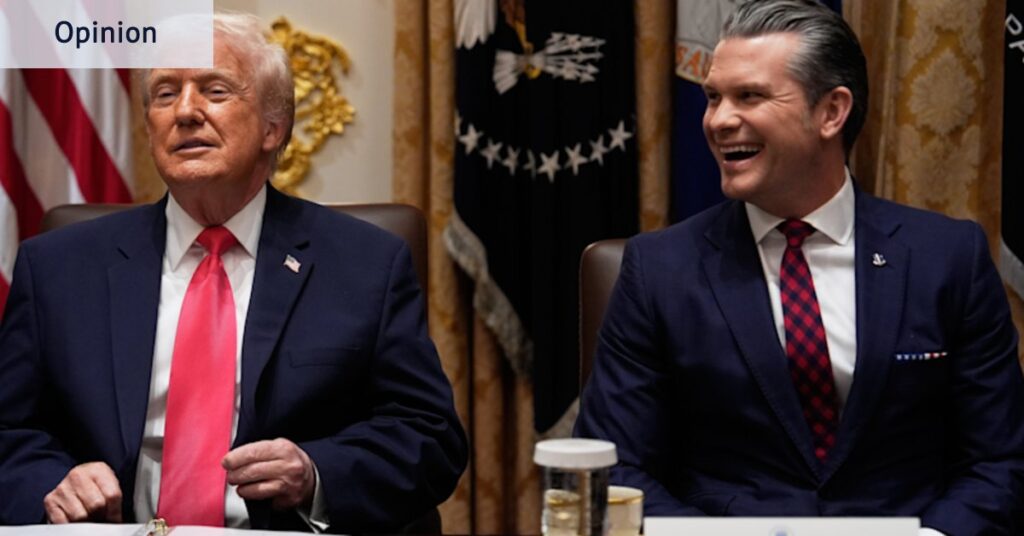
In a bold move last week, former President Donald Trump directed U.S. government agencies to “immediately cease” using Anthropic’s Claude artificial intelligence tools, escalating tensions with the AI company. Despite this directive, Claude remains deeply embedded within the U.S. military, where it plays a crucial role in operational planning, intelligence gathering, and cyber operations.
The decision to phase out Claude, the only AI technology approved for classified use, comes amid a broader confrontation between the Pentagon and Anthropic. The Defense Department has been given a six-month window to transition to alternative AI models, highlighting the entrenched role Claude plays in U.S. defense operations.
Pentagon’s Contractual Clash with Anthropic
The conflict centers on the Pentagon’s attempt to renegotiate its contract with Anthropic. Co-founder Dario Amodei has been vocal about the need for AI regulation, setting two firm boundaries: Claude should not be used for mass surveillance of Americans or to control autonomous weapons without human oversight.
While the Pentagon insists it would not use AI unlawfully, it opposes any restrictions imposed by private contractors. The department argues that just as it wouldn’t allow missile suppliers to dictate deployment terms, it shouldn’t be constrained by AI companies.
Amodei argues that AI’s rapid development outpaces current laws, making unrestricted deployment potentially dangerous.
Political Underpinnings and Strategic Implications
Amodei’s critical stance towards Trump, coupled with his support for Kamala Harris in the previous election, adds a political dimension to the dispute. Trump’s administration has labeled Anthropic a “radical left” entity, with executives described as “leftwing nutjobs.” This rhetoric underscores the administration’s combative approach to its critics.
Pete Hegseth, leading the Defense Department, has emphasized a shift towards “hard-nosed realism” over “Utopian idealism,” dismissing diversity and social ideology in defense strategies. This policy shift is part of a broader effort to redefine procurement criteria, focusing on “model objectivity.”
Anthropic’s Response and Industry Impact
The Pentagon’s actions against Anthropic are unprecedented, declaring the company a “supply chain risk.” Hegseth’s social media declarations have warned contractors against any commercial ties with Anthropic, potentially isolating the company from key industry players like Nvidia, Amazon, and Google.
AI analysts warn that this could be a critical blow to Anthropic, a leader in AI development, following its recent release of Claude Code tools.
Despite the administration’s aggressive stance, Amodei remains steadfast, planning to challenge the directives in court. He emphasizes the ethical implications of deploying AI without adequate safeguards, particularly concerning privacy and autonomous weaponry.
Future of AI Regulation and Industry Dynamics
The broader implications of this conflict extend beyond Anthropic. The administration’s use of the Cold War-era Defense Production Act to potentially compel Claude’s supply without restrictions highlights the strategic importance of AI in national security.
As the AI industry grapples with these challenges, there is a growing call for legislative action to establish a robust regulatory framework. The current patchwork of laws fails to address the rapid evolution and potential risks of AI technologies.
AI experts stress the need for a 21st-century legal framework to manage AI’s opportunities and inherent risks.
With the global race to harness AI’s potential intensifying, the stakes are high. The industry’s future hinges on balancing innovation with ethical and legal considerations, ensuring AI’s transformative power is harnessed responsibly.
As the situation unfolds, the need for comprehensive AI regulation becomes increasingly apparent, urging lawmakers to step in and shape the future of this pivotal technology.