



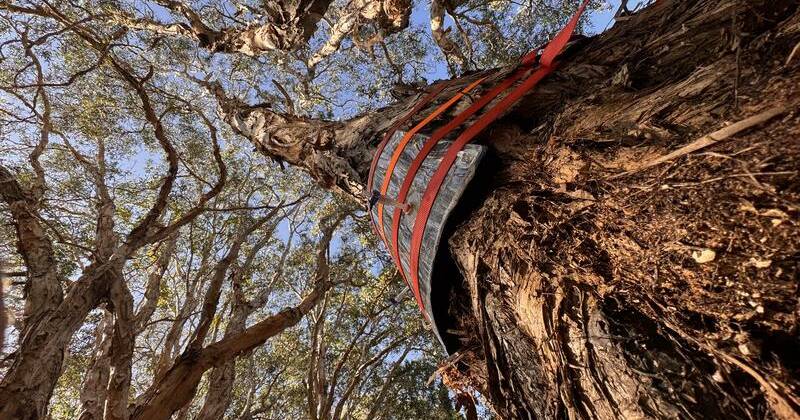
Hidden within the bark of trees, a bustling world of microscopic life has been discovered, revealing a new potential ally in the fight against climate change. Australian researchers have found that tree bark harbors trillions of microbes capable of scrubbing the air of toxic gases, including methane, a potent greenhouse gas.
This groundbreaking discovery suggests that trees could play an even more significant role in combating climate change than previously thought. According to Dr. Bob Leung from Monash University’s Biomedicine Discovery Institute, these gas-consuming microbes have been known to exist in soil, but their presence in tree bark had been largely overlooked until now.
Dr. Leung explained,
“It is one of the really early findings that gas-consuming microbes are occurring in such a high abundance in plants.”
This means that the global surface area of tree bark, if spread out, could cover all seven continents, providing a vast habitat for these beneficial microbes.
The Role of Trees in Climate Mitigation
Trees have long been recognized for their role in mitigating climate change by absorbing atmospheric carbon dioxide through photosynthesis. However, the carbon-absorbing capabilities of forests have been somewhat compromised by climate change-induced heat and drought, which are killing more trees.
The discovery by researchers from Monash University and Southern Cross University adds a new dimension to the ecological importance of trees. The bark microbes not only absorb methane but also hydrogen and carbon monoxide, which are considered “indirect” greenhouse gases that extend the lifespan of methane in the atmosphere.
Expert Insights on the Discovery
Luke Jeffrey from Southern Cross University’s Faculty of Science and Engineering, another lead author of the study published in the journal Science, highlighted the magnitude of this microbial activity.
“The scale of microbial activity across the ‘bark continent’ is staggering,” he noted.
This discovery opens up new possibilities for utilizing trees and their microbial inhabitants to achieve significant climate benefits. Dr. Leung emphasized the potential of strategically using the right trees and microbes to maximize these benefits.
Implications and Future Directions
The implications of this research are profound. By understanding and harnessing the natural gas-scrubbing capabilities of tree bark, policymakers and environmentalists could develop more effective strategies for reducing greenhouse gas concentrations in the atmosphere.
Looking forward, further research is needed to explore the specific types of trees and conditions that optimize the growth and activity of these beneficial microbes. This could lead to innovative approaches in forest management and urban planning, where trees are selected not only for their aesthetic and shade-providing qualities but also for their ability to clean the air.
The discovery of these bark-dwelling microbes represents a promising step forward in the global effort to combat climate change. As scientists continue to uncover the hidden capabilities of the natural world, the role of trees in creating a sustainable future becomes increasingly vital.