




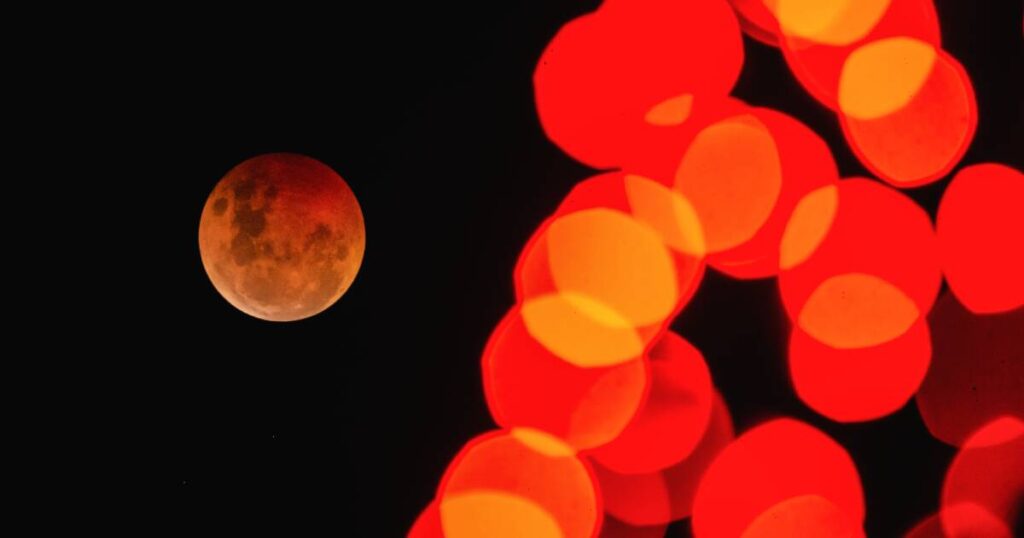
On Tuesday, March 3, residents along Australia’s east coast will have the opportunity to witness a stunning celestial event as the moon turns crimson during a total lunar eclipse. This astronomical phenomenon will be visible from 9 PM, with the full eclipse occurring around 10:30 PM, offering a rare spectacle of the moon bathed in deep red hues.
As the moon passes directly through Earth’s shadow, it will be enveloped in bright shades of copper and auburn, creating a mesmerizing red glow. This event marks the last chance to witness such vivid colors until 2029, as the next six lunar eclipses will only partially dip into Earth’s shadow, resulting in a much lighter effect.
The Science Behind the Eclipse
Lunar eclipses occur when the Earth positions itself between the sun and the moon, casting a shadow over the lunar surface. Unlike solar eclipses, which are brief and require special viewing equipment, lunar eclipses unfold over several hours, allowing spectators to enjoy the gradual transition of colors.
Tonight’s eclipse will begin with a 75-minute partial phase, followed by an hour of totality when the moon turns red. The event concludes with another 75 minutes as the moon exits the shadow, returning to its usual brightness. The eclipse will also be visible in New Zealand and Western Australia, as Earth’s large shadow allows everyone on the night side to experience the event simultaneously, adjusting only for local time zones.
Viewing Conditions and Local Events
Despite the excitement surrounding the eclipse, weather forecasts predict a 50-60% chance of cloud cover, potentially obscuring the view. However, local astronomers remain hopeful that some effects will still be visible. In Newcastle, the Newcastle Astronomical Society plans to set up telescopes at Foreshore Park near Nobbys Beach, inviting the public to join them for a closer look.
“It’s very rare that you’ll see the moon so red,” said Mike Anderson, president of the Newcastle Astronomical Society. “It’s great. People always are fascinated by the night sky in particular because, you know, there’s just so much to see.”
The society, active for over 30 years, regularly hosts events to engage the community and share their passion for astronomy. Anderson encourages people to attend, noting the value of connecting with those interested in the wonders of the night sky.
Historical Context and Future Eclipses
Lunar eclipses have captivated humanity for centuries, often inspiring myths and legends across various cultures. Historically, they were seen as omens or messages from the gods. Today, they offer a chance for scientific observation and public engagement with astronomy.
While tonight’s eclipse is the last opportunity to see such deep reds until 2029, future eclipses will still provide unique viewing experiences. The partial eclipses scheduled over the next few years will offer a subtler display, with the moon only partially immersed in Earth’s shadow.
Looking Ahead
As the eclipse approaches, enthusiasts and casual observers alike are encouraged to take advantage of this rare opportunity. Whether through organized events or personal observation, the total lunar eclipse promises to be a memorable experience for those fortunate enough to have clear skies.
For those unable to view the eclipse in person, many astronomy organizations and enthusiasts will likely share images and videos online, ensuring that the beauty of this celestial event can be appreciated globally.
As we look to the future, the anticipation of the next total lunar eclipse in 2029 serves as a reminder of the enduring allure of the night sky and the wonders it holds.