



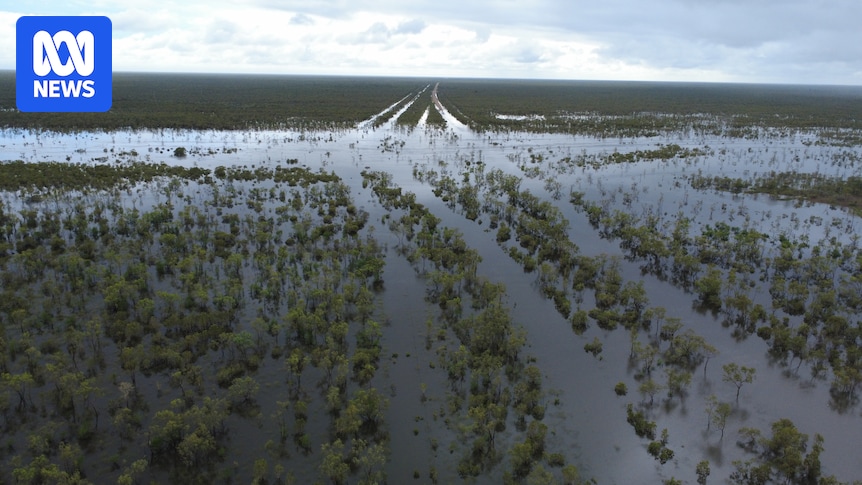
Queensland is grappling with severe weather as torrential rains continue to batter the region, isolating towns and cutting off roads. Residents from the north-east coast to the outback are now in their fourth day of relentless downpours, with floodwaters rising ominously in the north-west. The towns of Doomadgee, Burketown, Gregory, Normanton, Karumba, Julia Creek, and McKinlay find themselves cut off, with communities bracing for isolation that could last up to a week.
Tragedy struck on Tuesday when a man in his 70s was discovered dead in a submerged vehicle in Normanton. Authorities have since urged the public to exercise extreme caution around floodwaters to prevent further loss of life. The Bureau of Meteorology (BOM) has reported that areas such as Cloncurry have experienced rainfall equivalent to their annual average since Christmas.
Weather Systems and Rainfall Impact
The Bureau of Meteorology has identified two severe weather systems currently affecting Queensland. A tropical low is responsible for widespread, heavy rainfall in the north-west, while enhanced onshore winds coupled with a very humid air mass pose a risk of heavy rainfall along the north-east coast.
Senior meteorologist Harry Clark warned of potential flash flooding and riverine flooding over the next 24 hours. “That significant flood risk comes from the fact that we’ve got heavy rainfall that is forecast to fall across already saturated soil and already flooded rivers,” he explained.
Key Rainfall Data:
- Cowley Beach recorded 662.4mm since Monday.
- Bingil Bay recorded 344.6mm.
- Brinyard Station recorded 215mm on Tuesday.
Heavy rainfall, which may lead to flash flooding, is expected to continue through Wednesday and possibly into Thursday in several districts, including Northern Goldfields and Upper Flinders. The forecast predicts widespread six-hourly rainfall totals between 40 to 70mm, with isolated falls of up to 100mm in areas such as Winton and Evesham Station.
Road Closures and Government Response
In response to the severe weather, the state and federal governments have activated Disaster Recovery Funding Arrangements (DRFA) for five councils in north Queensland. These include Carpentaria, Cloncurry, Flinders, McKinlay, and Richmond shire councils, which can now access funding for clean-up efforts, emergency road repairs, and repairs to essential public assets.
Numerous roads across Queensland are closed, including the Mount Isa rail line from Hughenden to Cloncurry and sections of the Bruce and Flinders Highways. Transport Minister Brent Mickelberg has cautioned that further road closures may occur, especially with expected king tides later in the week.
Premier David Crisafulli assured the public that preparations had been made to ensure isolated communities have sufficient food and fuel supplies. “We pre-positioned a lot of fuel supplies to those isolated communities that live and die on generators,” he stated.
Impact on Agriculture and Tourism
The prolonged heavy rainfall has raised concerns among graziers about potential livestock losses, reminiscent of the devastating 2019 floods. Cloncurry grazier Jacqueline Curley expressed anxiety as floodwaters encroached on her property, although she remains hopeful that most of her cattle have survived.
Cloncurry Shire Mayor Greg Campbell noted that while it is too early to assess the full impact, residents are cautiously optimistic about avoiding the scale of losses seen in 2019. “The general condition of livestock is markedly different — we didn’t endure 40 days over 40 degrees in the lead-up,” he said.
The tourism sector has also felt the impact of the monsoonal rains, which have struck during peak holiday season. Teresa Millwood, mayor of the Cassowary Coast Regional Council, described the situation as a “big bite” out of the local tourism-dependent economy, with many visitors leaving the area prematurely.
Future Outlook and Community Resilience
As Queensland continues to endure these challenging weather conditions, communities are demonstrating resilience and preparedness. Additional police and State Emergency Service workers have been deployed to assist those in flood-affected regions.
With a major flood warning in place for the Flinders River and multiple moderate warnings for other rivers, residents remain vigilant. The coming days will be critical as authorities monitor weather patterns and manage the ongoing response to this natural disaster.
The situation remains fluid, and the community’s ability to adapt and respond will be crucial in mitigating the impact of this severe weather event. As the rains continue, Queenslanders are reminded to stay informed and prioritize safety.