

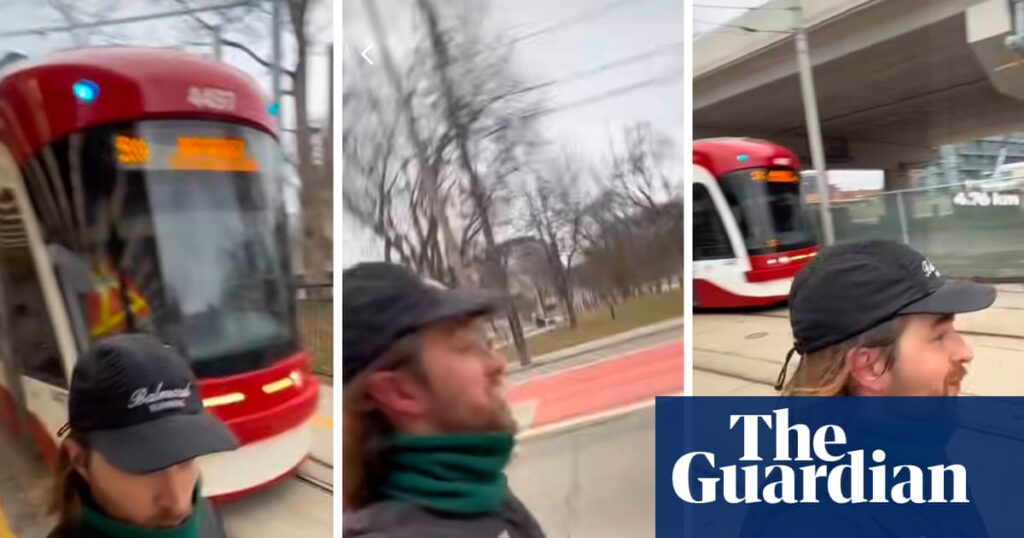
When Toronto’s streetcars manage to find a rare open stretch of road, the metallic grind gives way to an airy electric hum, offering a fleeting sense of futuristic travel. Yet, this illusion quickly shatters as the streetcar grinds to a halt, either at a stop or more often, in traffic. As the city slips past the stalled riders, some notice a runner zipping by, effortlessly outpacing the sluggish trams.
Mac Bauer, a 32-year-old Toronto resident, has taken it upon himself to race against these streetcars, highlighting the inefficiencies of a transit system used by 230,000 people daily. Despite the streetcars’ potential speed of nearly 45 mph, Bauer remains undefeated in these head-to-head races. His victories underscore a broader issue: the sluggishness of Toronto’s public transit network.
The Man Behind the Runs
Bauer’s rise as a running celebrity and transit critic embodies the mounting frustration of a city beset by chronic delays, congested streets, and decades of under-investment in transit infrastructure. On a recent chilly morning, Bauer raced the 511 streetcar, one of the slowest routes in the city. Despite efforts to prioritize streetcars by painting sections of the road red, Bauer’s running prowess once again highlighted the system’s shortcomings.
“I don’t like winning. I really don’t. I really, really wish these streetcars were faster than me,” Bauer expressed. “But they’re not. And this is the problem.”
Racing for Change
Bauer’s races are more than just athletic feats; they are a form of social activism. By posting videos of his races on Instagram, he has become a minor celebrity, striking a chord with tens of thousands of commuters who share his frustration. “When I first started, it felt like no one was really talking about signal priority or designated lanes. Now – and maybe I’m in this world too much – but I hear so much more,” Bauer noted.
His speed, honed through a disciplined regimen geared towards road races, isn’t something the average runner can sustain. Yet, Bauer argues that even at a slower pace, he would still outpace many of the city’s streetcars. His races have sparked conversations among city officials, leading to motions for more aggressive signal priority measures.
Challenges and Improvements
Earlier in December, Bauer made headlines for racing against a newly opened light rail transit system. Despite a hefty investment of over C$3.5 billion, the line was plagued with service disruptions shortly after its debut. Bauer’s victory over the train by 18 minutes was a stark reminder of the system’s inefficiencies, prompting city councillors to call for improvements.
“We can’t allow that to ever happen again,” said Councillor Josh Matlow. “The LRT is meant to be rapid transit.”
Near the end of his most recent race against the 511 streetcar, Bauer felt the bitter wind cut against his face as he neared Lake Ontario. Despite a closer-than-expected finish, Bauer was heartened by the improvements made through dedicated lanes for streetcars.
“This used to be the slowest route. Now it’s the closest race I’ve done,” he remarked. “I never thought I’d say this. But I’m really surprised. There’s hope: for the streetcars and for the city.”
Looking Ahead
Bauer’s efforts have not gone unnoticed, sparking a dialogue about the future of Toronto’s transit system. As the city prepares to host the 2026 FIFA World Cup, the pressure is on to improve transit efficiency and reliability. Bauer’s races serve as a vivid reminder of the work that remains to be done.
For now, Bauer continues his runs, a symbol of both the challenges and the potential for change within Toronto’s public transit system. His story is a testament to the power of grassroots activism and the impact one individual can have in highlighting and addressing systemic issues.