




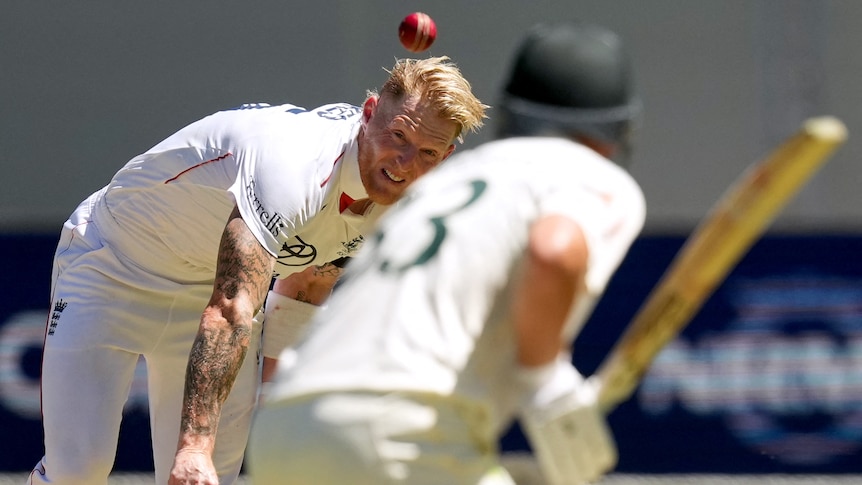
If you’ve ever watched a batter get beaten by a ball that curved, jagged, or dipped at the last moment, you’ve witnessed one of cricket’s great mysteries. Whether it’s a Mitchell Starc inswinger, a Josh Hazlewood delivery that nips off the seam, or a Nathan Lyon off-spinner turning sharply, each instance is a testament to the intricate dance of physics and biomechanics.
Bowlers make the ball move in three primary ways: swing, seam, and spin. Each method presents a unique challenge to batters, and even today, scientists continue to unravel the secrets behind these techniques.
Swing: When the Air Does the Work
Swing bowling involves the sideways curve of the ball in flight, a phenomenon most common among fast or medium-pace bowlers, though some spinners can swing the new ball in shorter formats. For batters, swing presents one of the toughest challenges. Despite coaches urging them to “watch the ball,” it often curves too swiftly for the eye to track.
Batters rely on cues from the bowler’s action and early ball flight to predict where it will land. Any deviation from this prediction can be devastating. There are three main types of swing bowling: conventional, contrast, and reverse swing.
Conventional Swing
Conventional swing occurs with a new, shiny ball. When the seam is angled slightly, it makes one side of the ball’s surface rougher than the other. As the air hits the raised seam, it becomes turbulent on that side, while the air on the other side stays smooth. This difference creates a sideways force that causes the ball to swing toward the direction of the pointed seam.
Research from 2024 shows keeping the ball’s seam upright and stable increases swing, while a wobbling seam reduces it.
Elite bowlers achieve this by aligning their fingers and wrist with the seam and running their fingers down the back on release. Any sideways movement of the seam “scrambles” it, negating the swing.
Contrast and Reverse Swing
As the ball ages, one side roughens while the bowling team shines the other side to keep it smoother and shinier. This creates contrast swing, where the ball moves towards the rough side because air clings longer to the ball’s surface. With more wear, the rough side can become so coarse that air no longer stays attached, flipping the airflow.
This produces reverse swing, where the ball moves towards the smoother side, usually appearing only at very high speeds, which is why the world’s fastest bowlers generate it most consistently.
Seam: When the Bounce Is Unpredictable
While swing happens through the air, seam movement occurs off the pitch. It’s the sideways deviation caused when the seam grips the pitch surface. To seam the ball, fast bowlers release it with a slight wobble or at an angle, rather than perfectly upright. The raised seam then catches the turf and deviates slightly towards the direction of the seam.
Cricket pitches vary greatly, and some are more conducive to seam movement than others. “Flat” wickets with short grass offer little movement, while greener pitches with more grass or moisture have small irregularities that make the ball grip and change direction.
From the batter’s point of view, seam movement is brutal. At 130 kilometres per hour or more, they’ve already committed to their shot before the ball lands.
Even a few centimetres of deviation can turn a good shot into an edge or a miss, which is why seam bowlers claim so many caught behind, bowled, and leg before wicket (LBW) dismissals.
Spin: Making the Ball Dance
Spin bowling creates movement through rotation, causing the ball to drift, dip, and turn. Spin bowlers trade pace for revolutions, relying on sidespin and topspin to manipulate flight and bounce. There are two main types: finger spin (off-spin, left-arm orthodox spin) and wrist spin (leg-spin, left-arm unorthodox spin).
Finger spinners roll their fingers across the ball, while wrist spinners use a strong flick of the wrist to generate more spin. A spinning ball changes the airflow around it: air speeds up on one side and slows on the other, producing sideways drift in flight. Adding topspin makes the ball dip, dropping sharply as it nears the batter.
When the ball lands, friction between ball and pitch can cause it to turn sideways. Pitch conditions play a significant role in spin bowling. Dry, dusty wickets common in the Indian subcontinent create more friction and turn, while harder, faster Australian pitches offer bounce but less spin.
Variations in moisture, grass, and wear also influence how much the ball grips. That’s why spinners constantly adjust their pace, angle, and release – small tweaks that can deceive even the best batters.
The Beauty of Unpredictability
Cricket is a game of fine margins, where physics meets skill. Even the smallest variation – a flick of the wrist, a roughened seam, or a patch of grass – can send the ball on a different path. That unpredictability keeps cricket fascinating – a constant contest between bowler and batter, skill and science, order and chaos.
As cricket continues to evolve, the understanding of these techniques will deepen, but the essence of the game remains a thrilling blend of strategy and surprise.