



About an hour after the horror of high-powered rifles reverberated around Bondi Beach, Pauline Hanson’s right-hand man received a phone call. On the other end of the line was One Nation’s head office in Brisbane, asking the party’s chief of staff and most influential aide, James Ashby, how he wanted to handle the influx of memberships.
“We had 300 new members in one hour off the back of that tragedy,” he told this masthead during an expansive interview in the Central Queensland coastal city of Yeppoon. Ashby claimed the party had added thousands to its membership database by Friday – though requests for proof were rejected – as One Nation unabashedly seized on the massacre to land political blows and expand its supporter reach.
Political Strategy Amid Tragedy
The announcement comes as One Nation seeks to capitalize on public discontent with the major political parties. Ashby articulated a plan to establish branches in as many of the 150 federal electorates as possible by the next election, which could be as early as August 2027 and no later than May 2028.
“People now realise they have had as big a gutful of what these two major parties have been doing to our country – with the mass migration, the calibre of people coming into this country – and I think, they’re that wound up as a result of this, they now want to help,” Ashby said. He emphasized the need for grassroots involvement, aiming to decentralize the party’s operations beyond its Brisbane stronghold.
Regional Dynamics and Growing Support
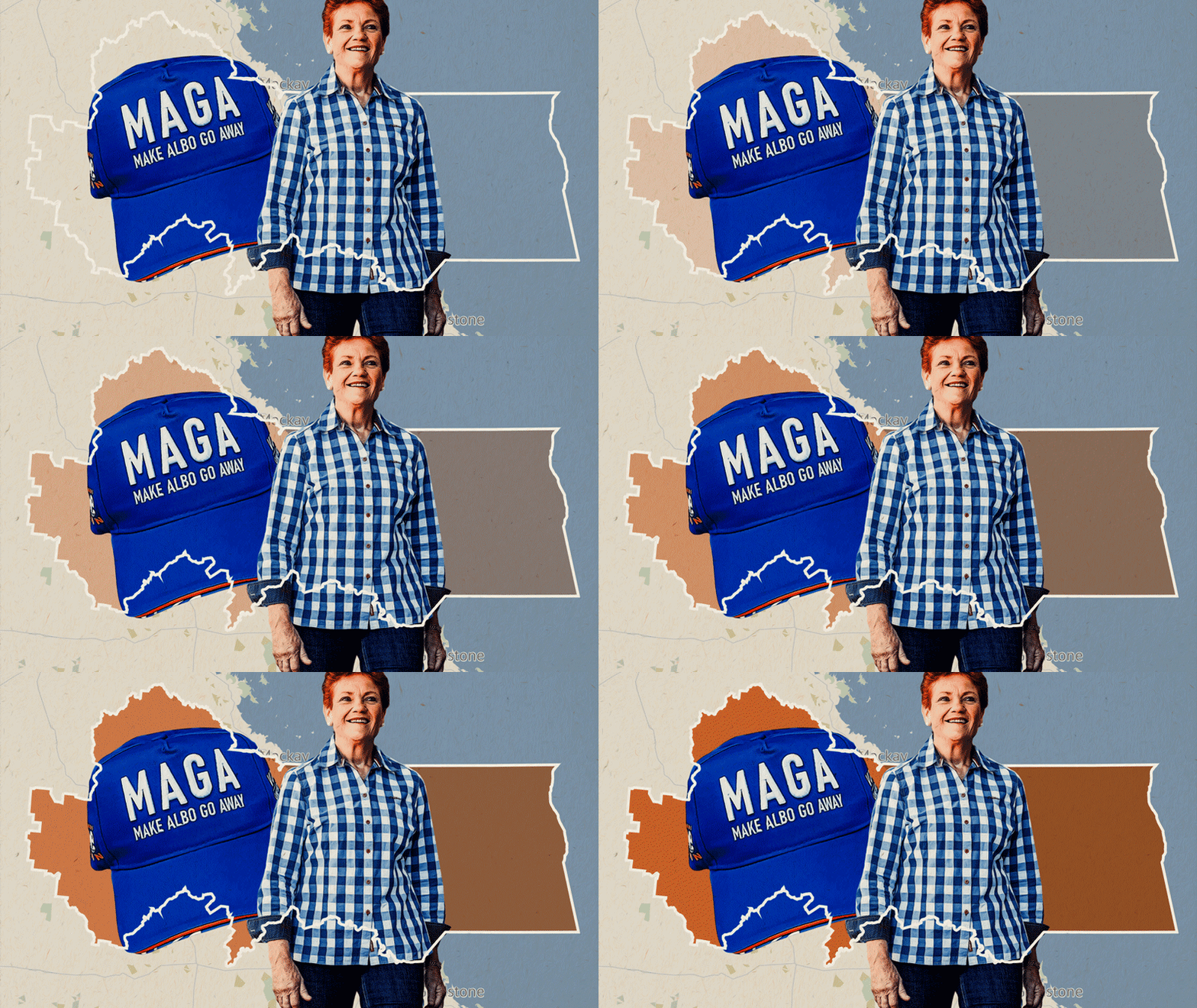
One Nation’s membership base is reportedly growing nationwide, but the front line of its movement is the seat of Capricornia. This region stretches from Rockhampton along the coast to the southern suburbs of Mackay, capturing large mining centres like Collinsville and Moranbah. Hanson addressed a branch meeting here earlier this month, in front of 160 people at the Yeppoon RSL.
Speculation that Ashby would run as a candidate in the seat was rife, but he said he was yet to decide, with the party’s candidacy to be confirmed in the new year. The groundswell of One Nation support in Capricornia is underpinned by a growing disenfranchisement with the major parties.
Business owners have expressed frustration over tax settings and industrial relations laws they claim have weakened productivity, while mining workers feel abandoned during a resource sector downturn and transition to clean energy. Workers and families also cite housing and living-cost pressures, poor infrastructure development, and strained access to healthcare.
Public Sentiment and Political Implications
Coal miner Daniel Mathieson, a relatively new One Nation member, expressed anger over the attacks at Bondi and the government’s response. “As far as who to vote for, LNP or Labor, everyone wants a change, and everyone’s going to go to Pauline if she goes for it,” he said.
Meanwhile, Rockhampton retiree Neil Hardy, who previously voted for Labor, has swung behind One Nation out of frustration. However, not all believe Hanson and One Nation are the solution. Colin Marshall, pointing to the party’s single seat in the House of Representatives, remarked, “They’re never going to get into power, it’s pointless.”
Expert Opinions and Future Prospects
Former state minister and long-time Central Queensland Labor powerbroker Robert Schwarten acknowledged the threat of One Nation resurfacing in the region. He urged both major parties to act swiftly to counter it, conceding that Hanson’s party could claim the seat of Capricornia if the National Party doesn’t address its issues.
Pollster Samaras warned politicians against using tragedies as a campaign tool, predicting that One Nation’s response to the Bondi attack would galvanize its base but fail to win over more voters. “I don’t think they’ll lose any support yet on this issue and the way they’re handling it, but they certainly won’t be grabbing support beyond the usual group of Australians who harbour radical right-wing, populist views,” he said.
Senior National Party figure Matt Canavan echoed concerns about the growing disenchantment with major parties. “I think the political class has failed Australians in recent years,” he said, emphasizing the need for better governance. Despite acknowledging the threat of minor parties, Canavan expressed skepticism about One Nation’s ability to deliver substantial change.
“No matter how popular you are as an individual, you still only get one vote as a member of parliament. You need 76 in the House and 39 in the Senate to make any change,” he noted, questioning One Nation’s capacity to build a cohesive team capable of enacting significant political reforms.
As One Nation continues to navigate the political landscape, its future success will depend on its ability to sustain and expand its support base beyond moments of national tragedy.