



About an hour after the chilling echoes of high-powered rifles reverberated around Bondi Beach, a phone call was made that would set the stage for a political shift. On the line was One Nation’s head office in Brisbane, reaching out to James Ashby, the party’s chief of staff and Pauline Hanson’s right-hand man. The message was clear: the tragedy had sparked an unprecedented surge in party memberships.
“We had 300 new members in one hour off the back of that tragedy,” Ashby revealed during an expansive interview in Yeppoon, a coastal city in Central Queensland. By Friday, he claimed, the party had added thousands to its membership database, although requests for proof were met with refusal. This surge in support came as One Nation unabashedly leveraged the massacre to expand its political reach and deliver blows to the major parties.
Political Strategy in the Wake of Tragedy
Ashby articulated the party’s strategy, emphasizing a growing public discontent with the major parties’ handling of issues such as mass migration and national security. “People now realise they have had as big a gutful of what these two major parties have been doing to our country,” he said, suggesting that the tragedy had intensified existing frustrations.
One Nation’s plan, as outlined by Ashby, is ambitious: to establish a branch in as many of the 150 federal electorates as possible by the next election, which could occur as early as August 2027. “We recognised following the federal election there was a real need for greater involvement from grassroots-level members,” he noted, emphasizing a decentralized approach to policy development.
Groundswell of Support in Central Queensland
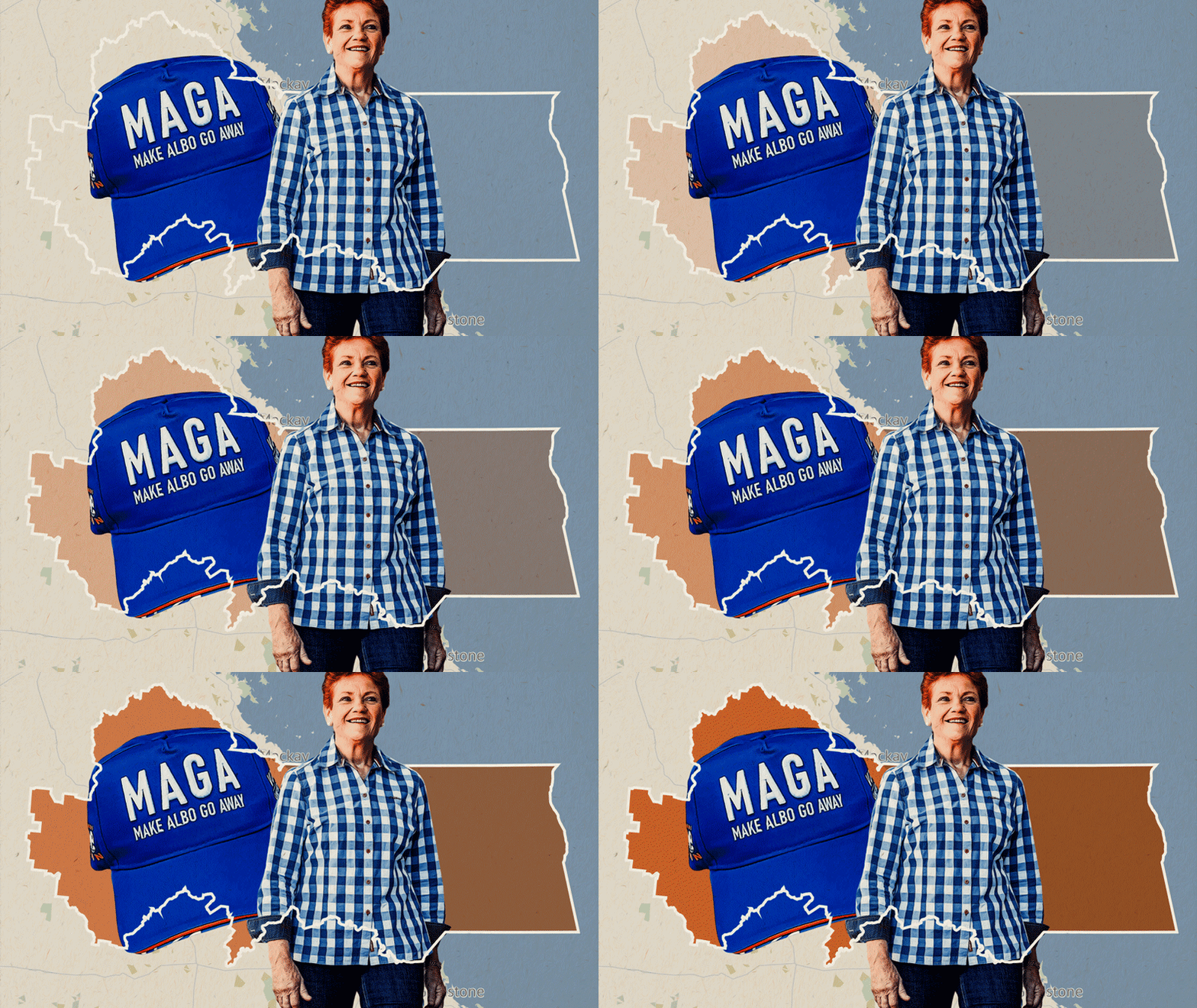
The party’s growing influence is particularly evident in the seat of Capricornia, a region stretching from Rockhampton to southern suburbs of Mackay. Here, Hanson recently addressed a branch meeting, drawing a crowd of 160 at the Yeppoon RSL. Speculation abounds regarding Ashby’s potential candidacy in the seat, though he remains noncommittal.
This masthead traveled over 1000 kilometers across the electorate, uncovering widespread disenchantment with the major parties. Business owners cited unfair tax policies and industrial relations laws, while mining workers expressed feelings of abandonment amid a sector downturn. Housing and living costs, infrastructure, and healthcare access also emerged as critical issues.
“As far as who to vote for, LNP or Labor, everyone wants a change, and everyone’s going to go to Pauline if she goes for it,” said coal miner Daniel Mathieson.
Challenges and Criticisms
Despite the surge in support, skepticism remains about One Nation’s ability to effect change. Colin Marshall, a local resident, dismissed the party’s potential, citing its limited presence in the House of Representatives. Former state minister Robert Schwarten echoed this sentiment, warning that the party’s organizational strengths may be overstated.
Schwarten and others argue that the electorate may ultimately reject a race-based narrative. “They’re not voting for Ashby … they’re voting for a kick in the arse to the body politic,” Schwarten remarked, suggesting that the party’s response to the Bondi attack might not translate into long-term gains.
Implications for Australian Politics
Political analysts, including pollster Samaras, caution against using tragedies as political tools. While One Nation’s base may be galvanized, expanding beyond its core supporters could prove challenging. “I don’t think they’ll lose any support yet on this issue and the way they’re handling it, but they certainly won’t be grabbing support beyond the usual group,” Samaras predicted.
Meanwhile, senior National Party figure Matt Canavan acknowledged voter frustration with the major parties, but questioned One Nation’s capacity to deliver meaningful change. “No matter how popular you are as an individual, you still only get one vote as a member of parliament,” Canavan noted, emphasizing the need for broader coalition-building.
As Australia grapples with these political shifts, the next election looms as a pivotal moment. Whether One Nation can translate its current momentum into lasting influence remains to be seen. The party’s future, and its impact on the national landscape, will depend on its ability to navigate the complex dynamics of Australian politics.