



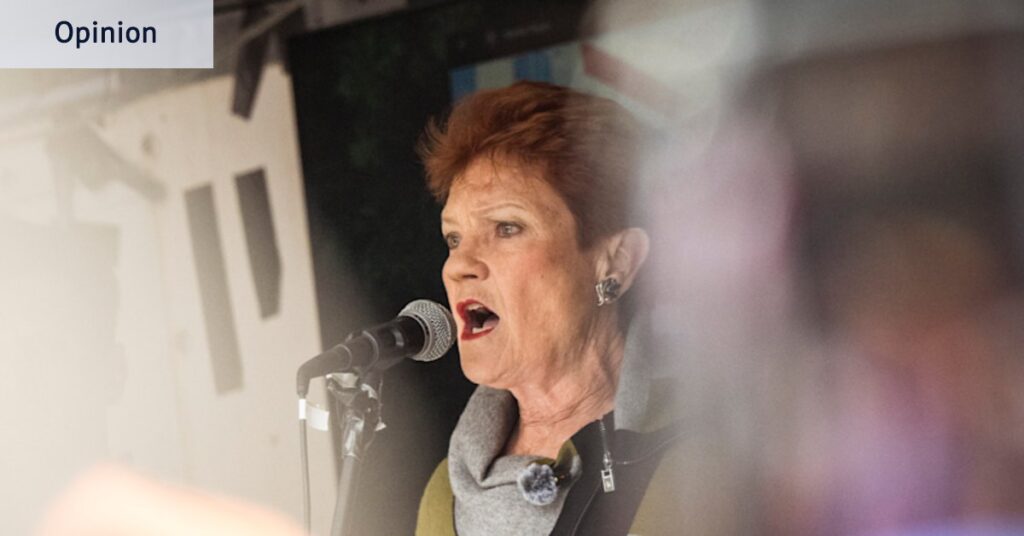
In the lead-up to the upcoming state elections, the political landscape in Australia is witnessing a notable shift with the rise of Pauline Hanson’s One Nation party. This development has sparked discussions about the motivations behind this surge, often attributed to what some analysts describe as “middle-finger voters” — individuals disenchanted with mainstream political offerings.
Pauline Hanson, a figure synonymous with controversial rhetoric, has once again captured public attention. Her recent statements, echoing past sentiments about Islam and immigration, have reignited debates about her party’s influence. Despite the divisive nature of her comments, opinion polls suggest that a significant portion of the electorate, particularly in Victoria, is considering supporting One Nation in the forthcoming elections.
Historical Context and Political Impact
Hanson’s political journey has been marked by a consistent theme of nationalism and skepticism towards multiculturalism. Her infamous “swamped by Muslims” speech a decade ago laid the groundwork for her current platform, which critics argue perpetuates fear and division. This rhetoric has resonated with a segment of the population that feels alienated by the status quo.
The potential rise of One Nation in Victoria, a state historically resistant to such ideologies, has alarmed major political parties. The concern is not just about electoral outcomes but also about the broader implications for social cohesion and political discourse in Australia.
Political Reactions and Strategies
In response to One Nation’s growing influence, political leaders are reassessing their strategies. Julian Hill, a prominent figure within the Labor Party, has called for an embrace of “inclusive patriotism” as a counter-narrative. He argues that celebrating Australia’s diversity and shared values can mitigate the appeal of divisive politics.
“Inclusive patriotism helps to combat and blunt the rise of right-wing authoritarianism and exclusive nationalism,” Hill stated in a recent address.
Meanwhile, Tim Wilson of the Liberal Party highlights the phenomenon of “middle-finger voting,” where disillusionment with traditional parties is driving support for One Nation. He emphasizes the need for major parties to present a compelling vision that resonates with voters’ aspirations.
Implications for Future Elections
The upcoming South Australian election may offer insights into whether the current polling trends for One Nation will translate into actual votes. Historically, there has been a disparity between expressed voter intentions and electoral outcomes for fringe parties.
Former Victorian Premier Jeff Kennett’s recent suggestion to direct preferences to One Nation marks a significant shift from his earlier stance. This change reflects the evolving political dynamics and the challenges facing traditional party structures.
“She should be put last on everyone’s ticket,” Kennett declared in 1997, highlighting the stark contrast with his current position.
The Victorian election will serve as a litmus test for both One Nation’s influence and the major parties’ ability to adapt to changing voter sentiments. As the political climate continues to evolve, the strategies adopted by political leaders will play a crucial role in shaping Australia’s future.
Looking Ahead: Navigating a Divided Landscape
The rise of One Nation underscores the complexities of modern Australian politics. As parties grapple with the challenges posed by populism and voter dissatisfaction, the need for innovative and inclusive approaches becomes increasingly apparent.
Ultimately, the outcome of the upcoming elections will not only determine the immediate political landscape but also set the tone for how Australia navigates issues of identity, inclusivity, and governance in the years to come.