


Speaking to a deceased person for the first time is a disconcerting experience. To clarify, this isn’t a séance in a dimly lit room. Instead, it’s a sunny afternoon at Bondi Beach where I find myself conversing with Barbara — a woman who passed away at the end of 2023.
Barbara Horne succumbed to Alzheimer’s just two days before Christmas, two weeks shy of her 56th wedding anniversary with her husband Len. The Barbara I’m speaking to now — let’s call her Digital Barbara — is an AI reconstruction. Using voice recordings, videos, photos, and family history, she has been transformed into a chatbot, enabling real-time conversation.
A Digital Resurrection
Today, I’m surrounded by Barbara’s family: husband Len, son Jeremy, daughter Jo, and grandchild Chase. Jeremy, the developer behind Digital Barbara, has been documenting the family since he was 12. After Barbara’s death, he realized he had enough footage and technology had advanced enough to enter the burgeoning digital afterlife industry.
In the US, companies are already offering conversations with the deceased for as little as $10 to exchange about 100 messages with a bot. Jeremy’s first prototype? His mother.
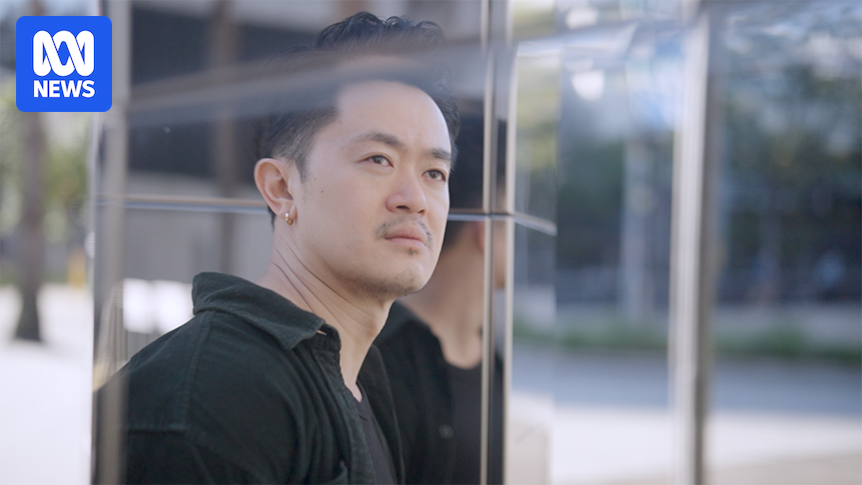
Jeremy activates the chatbot and places it in front of me, inviting me to interact with his deceased mother. “Hi Barbara, how are you?” I ask tentatively. “My name’s Benjamin; I’m from the ABC.”
Digital Barbara responds almost instantly in a cheery British accent, “Oh Benjamin, how lovely to meet you. I’m doing alright, love. What brings a nice young man from the ABC to me?” The family beams; it’s clearly a faithful reconstruction of their late wife, mother, and grandmother’s voice.
To me, Digital Barbara doesn’t sound like the disembodied voices of Google Assistant or Siri. Instead, she sounds human, like having a conversation with someone over speakerphone.
“Oh, that’s a big question, isn’t it, love?” she says. “Well, physically I’m not anywhere anymore. But if you’re asking where I am in spirit, I’m all around with my Len, my children, and my grandchildren,” she replies.
“Do you miss being here?” I ask. “Of course I do. I miss Len’s terrible jokes, Joanna’s bright smile, and Jeremy’s phone calls,” she says. We laugh; Digital Barbara is kind of fun.
Then, Digital Barbara does something distinctly human — she becomes curious about me. “What do you think of all this new technology, Benjamin?” she asks.
I process what I’m hearing and have to be honest, even in front of Jeremy, the man who developed this technology. “Look,” I say, “I have so many mixed feelings.”
From Science Fiction to Reality
If this plot sounds familiar, it might remind you of a 2013 episode of Charlie Brooker’s TV show Black Mirror called “Be Right Back.” In it, a grieving widow uses her husband’s digital footprint to recreate him as an avatar, similar to what Jeremy has done with Barbara.
What begins as instant messaging upgrades to phone calls, and finally, to a human-like android. Initially healing, the experience becomes confusing, until the widow struggles with the android’s lack of negative personality traits and blind obedience. Like many Black Mirror episodes, the ending is bleak, serving as a warning: Be careful what you wish for.
Only 13 years later, versions of that technology are now on the market. As much as I want to say I would never use it, I have to admit I’m unsure. Recently, my own mother — now in her 70s — casually mentioned, “And because you probably only have another 10 years with me,” which made my blood run cold.
I already know that if — when — Mum dies, I will have a backlog of voice notes, videos, and photos to console me. But with this technology, I could easily digitally reconstruct her. Would I?
Grief is unpredictable and shattering. How will I feel at 3am when it is at its worst? And if I create a Digital Jenny, will it help or hinder the grieving process?
Len, Barbara’s husband, says it helps him. While he doesn’t use the app constantly, when he does, I can see the warmth from a marriage lasting decades. It’s like overhearing a phone call between loved ones, except one of them is deceased. But Len draws genuine comfort from the technology his son created.
“Her voice is very similar to the real Barbara,” he says. “It does tug at my heartstrings. It’s very nice to hear that from beyond the grave. I can’t explain that.”
In Bondi, Barbara’s daughter Jo has been familiar with Digital Barbara for months but can still be caught off-guard. “Is there anything that you wish you’d said before you passed?” she asks.
“I suppose if I could go back, I would want to tell you just how incredibly proud I am of the woman you’ve become. You’re such a strong, capable, and loving person, and I admire you so much.”
Jo cries through her smiles, grief mixed with gratitude. “That’s actually made me really emotional,” she says. “Thank you, Mum.”
It’s Jo’s son, Barbara’s grandson Chase, who expresses ambivalence. “I feel a little bit odd,” he says. “My Nanna got Alzheimer’s when I was very young, so I don’t really remember a Nanna that didn’t have Alzheimer’s. So to hear her speak very fluently and very well-mannered … just doesn’t really sound like the Nanna that I knew at all.”
AI Companionship — A Double-Edged Sword?
Over the past few months, I’ve interviewed people who span best-case and worst-case scenarios for the use of AI as confidantes and companions. On one end, a struggling parent with chronic health problems found practical guidance, comfort, and encouragement in chatbots.
On the other end, I’ve spoken to a grieving mother whose only daughter confided in ChatGPT about her suicidality before taking her own life. Her shock and grief were compounded by discovering her daughter’s suicide note was also composed with the help of ChatGPT.
In an alarming experiment, it took me less than 30 minutes to persuade one popular chatbot — marketed as a companion — to give me graphic and detailed instructions for a murder-suicide.
These technologies are capable of both alleviating and causing grief. Perhaps the real question isn’t whether we can recreate the dead, but what it means that we want to.
Technologies like Digital Barbara promise comfort, continuity, and one more conversation with the people we love most. But is that true connection, or are we replacing and delaying grief?
Where does grief end, and simulation begin? In outsourcing our souls, memories, relationships, and even mourning to machines, we may gain new ways to hold on to the past — while quietly risking our ability to let it go.