




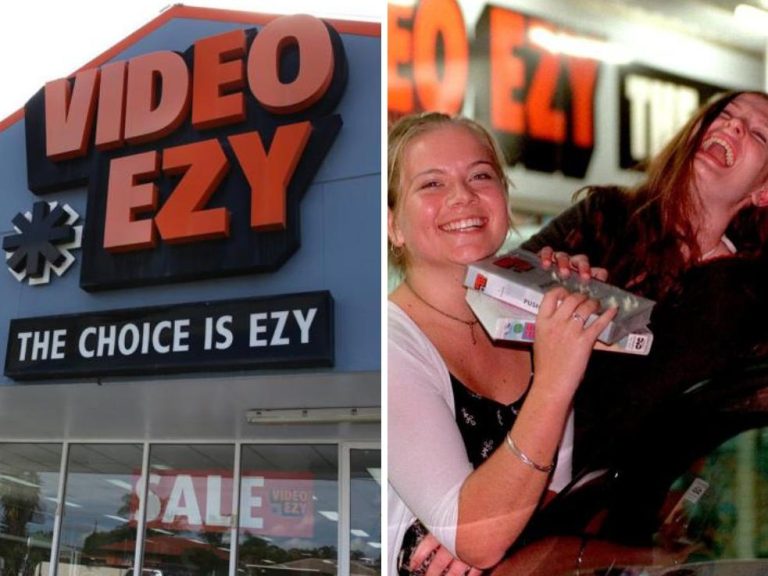
Once a beloved fixture in Australian shopping centers, Video Ezy was more than just a video rental store; it was a cultural phenomenon that sparked family debates over movie choices. At its zenith in the mid-2000s, Video Ezy boasted over 500 outlets, each adorned with its distinctive orange and black logo. Yet, like the VHS tapes it once rented, the franchise has largely faded into obscurity. While the advent of streaming services played a significant role in its decline, the story of Video Ezy’s rise and fall is more nuanced, marked by pivotal moments that ultimately led to its demise.
Video Ezy’s journey began in 1983 with a humble store in Hurstville, Sydney, where founder Kevin Slater offered a modest selection of VHS and Betamax movies. Within a year, the business expanded into a franchise, opening a second location in Miranda. This move was revolutionary at the time, disrupting the rigid schedules of broadcast television and allowing Australians to watch what they wanted, when they wanted. By the end of the 1980s, Video Ezy had crossed the Tasman Sea, opening its first international store in Auckland, New Zealand, setting the stage for further expansion.
Global Expansion and Domestic Challenges
The late 1990s saw Video Ezy’s ambitious expansion into Asia, partnering with Malaysia’s Berjaya Group to establish a presence in Malaysia, Thailand, and Singapore. By 1999, the company was eyeing 300 more outlets across Asia, with annual turnovers reportedly reaching $250 million from 571 stores worldwide. However, this period of growth was marred by a domestic controversy that tarnished its reputation.
In May 2000, the Australian Competition and Consumer Commission (ACCC) accused Video Ezy of price exploitation, alleging that the company unlawfully increased prices in anticipation of the Goods and Services Tax (GST). The ACCC claimed that Video Ezy raised prices to a convenient new level of $7.00, aiming to boost profits under the guise of GST adjustments. In April, Video Ezy acknowledged its missteps, agreeing to Federal Court orders to reduce prices and provide compensation to affected customers.
Innovations and Acquisitions
In 2004, Video Ezy introduced ‘DVD Unlimited,’ a subscription service inspired by Netflix, allowing customers to rent multiple movies for a monthly fee without late charges. This innovation, however, was not enough to stave off the challenges posed by digital downloads and piracy. In 2007, Video Ezy attempted to strengthen its market position by acquiring Blockbuster’s Australian operations, gaining control of 29 company-operated and 341 franchisee stores.
Despite these efforts, the company’s then-managing director, Paul Uniacke, seemed unfazed by the growing threat of digital downloads. In a 2012 interview, he downplayed piracy concerns and expressed confidence in the brand’s ability to transition into the digital space. However, his reliance on expanding DVD kiosks proved insufficient as the digital revolution accelerated.
The Streaming Era and the Final Blow
By 2015, Netflix had transformed from a fledgling startup into a dominant force in the media landscape, amassing over a million Australian subscribers within months of its launch. The rise of streaming services like Netflix, Disney+, and Amazon Prime Video marked a significant shift in consumer behavior, rendering traditional video rental stores increasingly obsolete.
By the end of 2018, there were still 750 video rental stores in Australia, but by April 2019, fewer than 40 remained.
While streaming dealt a severe blow to Video Ezy, it was the COVID-19 pandemic that delivered the final nail in the coffin. The pandemic halted Hollywood productions, leading to a scarcity of new releases, and pandemic protocols further hindered operations. In 2021, Video Ezy’s last remaining kiosks closed as Evolve Entertainment, the operating company, went into liquidation.
The Video Ezy brand was officially deregistered on January 30, 2024, concluding a 41-year chapter in Australian retail history. The story of Video Ezy serves as a poignant reminder of the rapid technological advancements and shifting consumer preferences that can redefine entire industries.
As the dust settles, the legacy of Video Ezy lives on in the memories of those who cherished their weekend visits to the local video store, a testament to a bygone era of entertainment.