




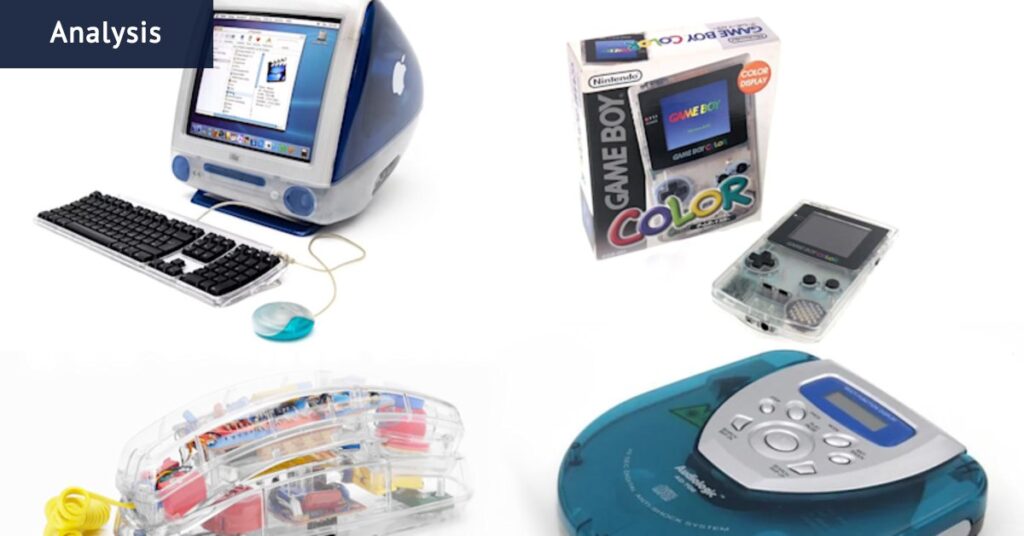
The late 1990s were characterized by a unique aesthetic in personal technology: transparent plastic. This design, which allowed users to peer into the inner workings of their gadgets, is making a comeback. From Apple’s iconic 1998 iMac G3 to Nintendo’s Game Boy Color, the transparent tech trend is being revived in today’s market, sparking a wave of nostalgia and a desire for transparency in a digital age.
In the late ’90s, transparent gadgets redefined technology aesthetics, moving away from the opaque and bulky designs of the past. Devices like home phones, TVs, and CD players proudly displayed their internal components, symbolizing an era of openness and honesty in tech design. Fast forward to today, and the resurgence of see-through technology is driven by a longing for the tangible and a pushback against the invisible complexity of modern digital systems.
The Nostalgic Appeal of Transparency
As technology has evolved, the physical components that once defined gadgets have been miniaturized or hidden away in data centers. The tactile experience of interacting with technology has diminished, replaced by sleek, featureless designs. However, companies like the British tech firm Nothing are reviving the see-through aesthetic with products like their transparent earbuds and smartphones, which feature panels that expose screws and circuit traces.
Audio equipment, in particular, has embraced this trend, with companies like Beats and Sony releasing see-through earbuds. Audio Technica has even introduced a transparent turntable, catering to the resurgence of vinyl records. This trend is not just about aesthetics; it also represents a desire for clarity and authenticity in an increasingly digital world.
Challenges and Innovations in Transparent Design
Creating transparent gadgets is not without its challenges. According to Charlie Bolton, Razer’s global head of design, refitting devices to be see-through involves a complex process of material selection and design iteration. “If you do it badly, it can look very cheap,” Bolton explains. “We had to find the balance of transparencies against black parts and certain elements.”
Razer’s products, such as the Basilisk V3 Pro mouse and BlackWidow V4 75% keyboard, showcase the intricate design work involved in creating visually appealing transparent devices. These products feature a mix of clear, smoky, and frosted panels, combined with colorful internal lighting, to create a striking visual effect.
Video Games and Retro Revival
The video game industry has also embraced the transparent tech trend, with modern recreations of classic systems like the PlayStation and Nintendo 64 available in see-through finishes. This design choice evokes the special editions of the ’90s and early 2000s, appealing to both nostalgia and a desire for a more tangible gaming experience.
Australian modder Natalie the Nerd has taken the trend further by creating a transparent circuit board for her custom Game Boy, enhancing the device’s see-through appeal. Meanwhile, the Commodore 64 Ultimate, a modern recreation of the classic computer, offers a transparent model complete with LEDs, combining retro charm with contemporary design.
Transparency as a Symbol of Trust
The resurgence of see-through technology is more than just a design trend; it represents a broader desire for transparency and trust in technology. In a world where digital systems are increasingly complex and opaque, the ability to see into a device offers reassurance and a connection to the physical world.
As consumers seek out gadgets that balance innovation with nostalgia, the transparent tech trend is likely to continue. Whether it’s through audio equipment, gaming consoles, or personal devices, the appeal of transparency lies in its promise of openness and honesty in an age of digital complexity.
Stay informed about the latest in technology, gadgets, and gaming by signing up for our Technology newsletter, delivered every Friday.