




“They just don’t make movies like that anymore.” This is the sentiment echoed by many following the tragic deaths of celebrated Hollywood filmmaker and political activist Rob Reiner and his wife, Michele Singer Reiner. Their son, Nick Reiner, has been arrested in connection with their deaths, casting a shadow over the legacy of a man whose work has left an indelible mark on the film industry.
Rob Reiner, born into show business royalty, was the son of comic legend Carl Reiner, creator of “The Dick Van Dyke Show,” and actress and jazz singer Estelle Reiner. Born in 1947 in the Bronx, Reiner’s family moved to Los Angeles in 1959, setting the stage for his future in entertainment. His personal life was as storied as his career; after a marriage to director and actress Penny Marshall from 1971 to 1979, he wed Michele Singer in 1989, whom he met on the set of “When Harry Met Sally…”
Reiner’s breakthrough role came as Michael “Meathead” Stivic on the sitcom “All in the Family,” earning him Emmy Awards for Best Supporting Actor in a Comedy in 1974 and 1978. His acting career included roles in films like “The Wolf of Wall Street” and “Sleepless in Seattle.” However, it was his work behind the camera that truly defined his legacy.
From Actor to Acclaimed Director
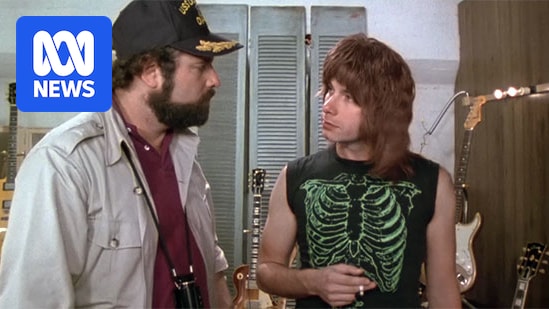
Reiner’s directorial debut came with the 1974 television movie “Sonny Boy,” but it was the 1984 mockumentary “This is Spinal Tap” that cemented his status as a filmmaker. The film, a satirical take on the world of heavy metal bands, became a cult classic, known for its deadpan humor and improvised dialogue. Reiner collaborated with comics Christopher Guest, Harry Shearer, and Michael McKean to create this iconic film, which included the memorable line, “These go to 11.”
Reiner was also involved in the sequel released this year, “Spinal Tap II: The End Continues,” demonstrating his enduring connection to the project that launched his directing career.
Iconic Films and Memorable Quotes
When Harry Met Sally…
Reiner’s personal life influenced his work on “When Harry Met Sally…” As a divorcee, meeting Michele Singer during filming inspired him to change the film’s ending to a more romantic conclusion. The film is famous for the scene where Sally (Meg Ryan) fakes an orgasm in a New York deli, prompting a bystander to quip, “I’ll have what she’s having.”
A Few Good Men
In “A Few Good Men,” Reiner directed the intense courtroom drama that delivered the unforgettable line, “You can’t handle the truth!” This line, delivered by Jack Nicholson’s character Colonel Nathan Jessup, has become part of cinematic history, illustrating Reiner’s ability to craft powerful narratives.
The Princess Bride
“The Princess Bride,” a wry fantasy film, showcased Reiner’s versatility. The film’s line “As you wish,” spoken by the character Westley, symbolizes love and devotion, capturing the hearts of audiences worldwide.
Misery
Reiner’s adaptation of Stephen King’s “Misery” proved his skill in handling different genres. Kathy Bates’ portrayal of Annie Wilkes, who chillingly claims to be the “number one fan” of the writer she imprisons, remains a standout performance in film history.
The Enduring Impact of Rob Reiner
Rob Reiner’s films are celebrated not only for their entertainment value but also for their cultural impact. His ability to blend humor, drama, and suspense has left a lasting legacy in Hollywood. As the industry mourns his loss, the lines and stories he created continue to resonate with audiences, ensuring that his work will endure for generations to come.
The tragic circumstances surrounding his death have cast a pall over his achievements, but the legacy of his films and the memorable lines they delivered remain a testament to his talent and vision. As the investigation into his death continues, the film community reflects on the profound contributions of a filmmaker whose work transcended genres and touched the hearts of many.