


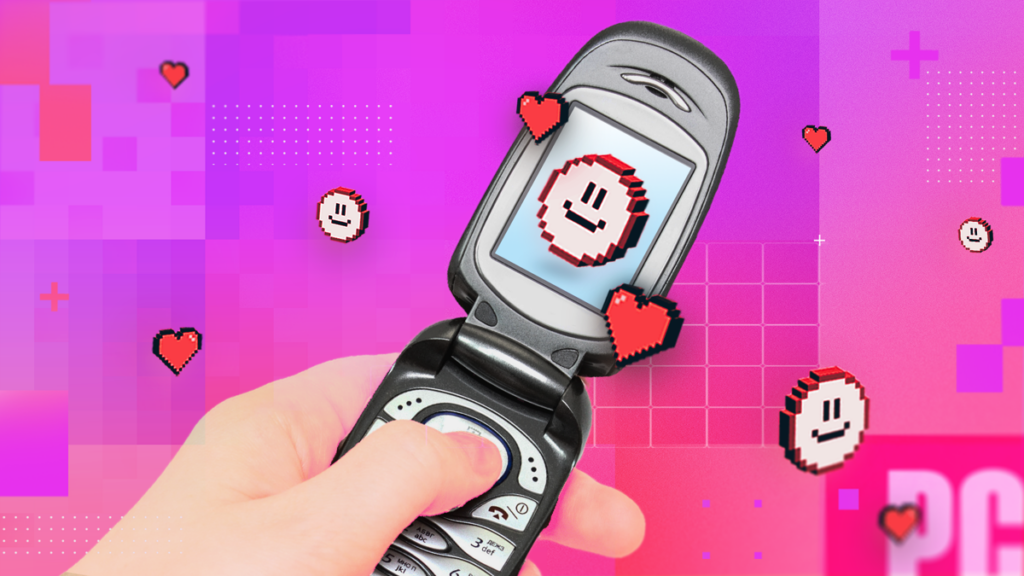
Are you constantly scrolling on your smartphone? If so, you are far from alone. The average American checks their phone nearly 186 times per day, equating to 11.6 times per hour, and 46% say they’re addicted to their devices, according to a recent study. In response to this trend, a growing number of people are reclaiming control over their digital lives by switching to a flip phone.
The subreddit r/Dumbphones, which boasts 200,000 weekly participants, serves as a hub for those looking to unplug, with veterans sharing stories of how they did it. Celebrities like Aziz Ansari and Ed Sheeran have also embraced the movement, with Camila Cabello declaring in a 2023 X post, “I’m team flip phone revolution.” Business Insider recently described “offline” as the new luxury, as digital minimalism gains momentum.
The Personal Stories Behind the Switch
We recently spoke to six individuals, ranging in age from 19 to 45, who have joined the flip phone revolution. Each has their own rationale for the decision, but common themes emerge: reduced distractions, improved social interactions, and cost savings. Flip phones can be purchased for as low as $30, with monthly plans available for $15.
Most are not anti-technology; in fact, three are software engineers. Here’s what they had to say about how downgrading their tech has been the best upgrade of their lives.
Trevor Brown, 35: Making Time for Family
Trevor Brown, a software engineer from Florida, once juggled multiple smartphones. However, by 2020, he realized the downsides of constant connectivity. “I started to realize that while a smartphone was very powerful, there were many downsides,” he says, citing mindless scrolling during downtime as a major issue.
As Brown started a family, he wanted to be more present with his children. He purchased a $30 Alcatel Go Flip 2, which runs on KaiOS, allowing him to sync with Google Calendar. Later, he upgraded to a Cat S22 flip phone with a full Android operating system, yet its small screen discourages excessive online browsing.
“There’s always a new thing, whether it’s cryptocurrencies or AI, and a lot of people go along with it and get into it,” he says, “even though it doesn’t always benefit them.”
Zoe Rodriguez, 24: Overcoming Childhood Phone Addiction
Zoe Rodriguez received her first iPhone at age 10, leading to a decade-long phone addiction. By age 20, she decided to switch to a flip phone. “I was just like, dude, I have to do something about this,” she says.
Rodriguez chose the $195 Sunbeam F1 and a $15-per-month Mint Mobile plan. Without internet-connected apps, she no longer glances at her device during awkward moments, allowing her to focus on personal growth and hobbies like reading and figure drawing.
“I have all this knowledge, and I feel smarter,” she says.
Joel Epstein, 45: Leading by Example
Joel Epstein, who runs five businesses in New York, has banned smartphones in his office, resulting in a 20% increase in productivity. Initially addicted to his BlackBerry, Epstein hesitated to switch to an iPhone, viewing it as a “full computer” in his pocket.
Epstein provides flip phones to employees for emergencies and notes that about 100 have adopted them in their personal lives as well.
“I thought, ‘Why should I have a phone that dictates my life?'” Epstein says.
Brandon Aikman, 19: Making College Social Again
Brandon Aikman, a computer engineering student, noticed stronger friendships with peers who weren’t glued to their phones. In October 2024, he switched to a Nokia 2780 flip phone, focusing on intentional tech use.
Despite challenges like using Duo for school, Aikman values the reminder of his priorities and plans to stick with his flip phone.
“I see no reason to buy an iPhone, or any smartphone, ever again,” Aikman says.
Lee Seibert, 39: Saying ‘F.U.’ to the Tech Industry
Software engineer Lee Seibert views smartphones as ad-serving tools rather than productivity aids. Frustrated by AI’s aggressive rollout, he switched to a Sonim XP3plus 5G flip phone, considering it a hobby and challenge.
“I’m a technologist, and it’s fascinating to take control of this aspect of my life in a technical way,” he says.
Allison Sigmon, 21: Ignoring the Naysayers
Allison Sigmon, who runs an editing company, felt overwhelmed by her smartphone. Inspired by a YouTube video, she switched to a Cat S22 flip phone, reducing her screen time from seven hours to half an hour daily.
Sigmon appreciates the mental clarity and work-life balance her flip phone provides, ignoring critics who suggest she upgrade.
“The biggest benefit has been my mental state,” she says. “I’m calmer.”
The Broader Implications of Digital Minimalism
This movement towards digital minimalism reflects a broader societal shift. As technology becomes more pervasive, individuals are seeking ways to reclaim their time and attention. Experts suggest that this trend could lead to more meaningful social interactions and improved mental health.
While the transition to a flip phone may not be for everyone, those who have made the switch report significant benefits. As digital minimalism gains traction, it challenges the notion that more technology equates to a better life.
As the flip phone revolution continues, it raises questions about the future of technology and personal well-being. Will more people choose to unplug, or will the allure of constant connectivity prevail? Only time will tell.