




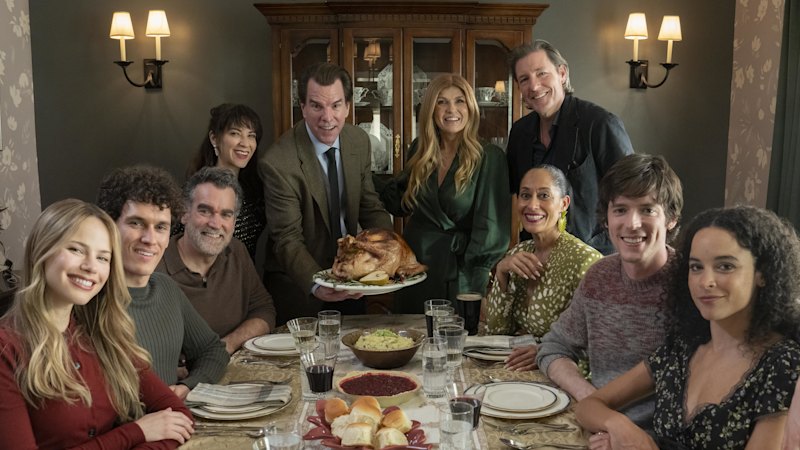
The release of The Family McMullen, a sequel to the 1995 indie hit The Brothers McMullen, marks a significant moment in the career of writer-director Edward Burns. However, this long-awaited follow-up appears to struggle under the weight of its own legacy.
Back in 1995, Burns was hailed as “the new Woody Allen” after his debut film, shot on a shoestring budget of $25,000, captivated audiences with its raw portrayal of an Irish-American family in Long Island. The film was a triumph of guerrilla filmmaking, catapulting Burns into the spotlight after a chance encounter with Robert Redford led to its screening at Sundance and subsequent acquisition by Fox Searchlight.
The Return to Familiar Grounds
Thirty years later, Burns revisits the familial themes that first brought him acclaim. Unfortunately, The Family McMullen lacks the freshness and charm of its predecessor. The film, which unfolds over two Thanksgiving dinners a year apart, feels more like a Hallmark movie than an indie classic. The narrative, centered around the McMullen family, seems to have lost its original spark.
Burns reprises his role as Barry McMullen, a twice-divorced father navigating complex family dynamics. The film also sees the return of Michael McGlone as Patrick, the youngest brother, now facing his own marital challenges. Meanwhile, the eldest brother, Jack, is absent, having succumbed to cancer, leaving behind his widow Molly, played by Connie Britton.
Character Dynamics and Plotlines
The film introduces new characters, including Barry’s children and Molly’s niece, Patty, whose engagement to a seemingly lackluster law school beau prompts familial debate. Molly advises against marrying one’s first love, citing infidelity risks, a sentiment echoed by Barry and Tommy, the latter of whom has yet to find a serious romantic partner.
While the film attempts to weave a tapestry of romantic and familial entanglements reminiscent of Woody Allen’s work, it falls short of capturing the sharp dialogue and existential depth that characterized Allen’s films. The narrative feels predictable, lacking the incisive insights that made the original film a standout.
A Reflection on Burns’ Career
Burns’ career, spanning 20 directorial projects and numerous acting roles, began with the unexpected success of The Brothers McMullen. His return to this familiar territory with The Family McMullen seems to underscore the challenges of recapturing past glory. The film is a testament to Burns’ enduring commitment to storytelling, yet it highlights the difficulty of sustaining the vibrancy that once defined his work.
“If this were Burns’ first film, it might also have been his last rather than merely his latest.”
Looking Forward
As Burns continues to explore themes of family and identity, the reception of The Family McMullen may serve as a catalyst for future projects. The film’s shortcomings could inspire a renewed focus on innovation and depth in storytelling, potentially paving the way for a resurgence in Burns’ cinematic endeavors.
While The Family McMullen may not achieve the acclaim of its predecessor, it remains a noteworthy chapter in Burns’ career, reflecting both the evolution of his artistic vision and the challenges inherent in revisiting past successes.