


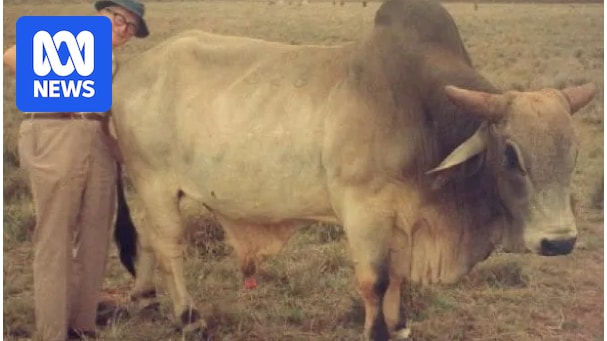
In 1976, a renowned economist found himself in an unusual setting—a farm paddock in north Queensland. Friedrich Hayek, the Nobel Prize-winning Austrian economist, was in Australia during a global economic crisis marked by soaring inflation and unemployment. Invited for a speaking tour, Hayek took a break at the Atherton Tablelands farm of Ronald Kitching, a miner and tour organizer. Amidst Scotch and conversation, Hayek noticed a photo of Kitching’s prize-winning Brahman bull, humorously named “Inflation” for its relentless growth.
This anecdote, while light-hearted, belies the profound impact Hayek’s ideas would have on Australia’s economic landscape. His influence, particularly through the establishment of “free-market” think tanks by his followers, is now under scrutiny in a federal parliamentary inquiry. This inquiry seeks to uncover how misinformation and disinformation about climate change and energy are financed and disseminated, and the connections between Australian organizations and foreign think tanks.
Neoliberalism and the Rise of Think Tanks
The inquiry highlights a global network of “free-market” think tanks, funded by fossil fuel giants, gambling and tobacco companies, and wealthy individuals over the past four decades. These think tanks are rooted in neoliberalism, a term often used pejoratively by the political left. However, a 2016 International Monetary Fund (IMF) article acknowledged the widespread adoption of neoliberal policies since the 1980s, noting their mixed outcomes.
“There has been a strong and widespread global trend toward neoliberalism since the 1980s. There is much to cheer in the neoliberal agenda … [But] the increase in inequality engendered by financial openness and austerity might itself undercut growth, the very thing that the neoliberal agenda is intent on boosting.” — IMF, 2016
Neoliberalism’s roots trace back to the Mont Pelerin Society, founded by Hayek in 1947. Hayek urged his followers to create think tanks to influence journalists and intellectuals, believing they were key to shaping public opinion and policy. This strategy was further articulated by Milton Friedman in 1951, who emphasized the slow but steady influence of neoliberal ideas over time.
The Atlas Network and Global Influence
The success of think tanks like the Institute of Economic Affairs (IEA) in the UK inspired Antony Fisher to establish the Atlas Network in 1981. The Atlas Network aimed to proliferate free-market think tanks globally, fostering a network that now includes over 500 partners worldwide, including ten in Australia and New Zealand.
These think tanks play a crucial role in shifting the Overton window—the range of politically acceptable ideas. By consistently promoting free-market ideas, they gradually make radical concepts more mainstream, influencing both public discourse and policy.
Impact on Australian Policy
In Australia, the 1970s economic crises provided fertile ground for neoliberal ideas. The oil crisis and subsequent economic challenges highlighted the limits of Keynesian policies, paving the way for neoliberal reforms. Think tanks like the Centre for Independent Studies (CIS) and the Institute of Public Affairs (IPA) emerged, promoting deregulation and privatization.
These think tanks have been influential in shaping public debate on issues like climate change and energy policy. The current Senate inquiry is examining their role in spreading misinformation and disinformation, particularly regarding climate science.
Contemporary Challenges and Criticisms
The Senate inquiry into information integrity on climate change and energy reflects growing concerns about the impact of coordinated disinformation campaigns. The inquiry, which has received over 200 submissions, aims to uncover the financing and dissemination of misinformation, as well as the role of social media in spreading false narratives.
“ASIO has identified the erosion of social cohesion and trust in institutions through disinformation and misinformation as critical challenges to our national security environment.” — Australian Communications and Media Authority (ACMA)
Critics argue that the enforcement of misinformation policies often reflects political biases, while others caution against compromising freedom of expression. The inquiry’s findings, due in March 2026, will likely have significant implications for the regulation of information and the role of think tanks in shaping public policy.
Looking Ahead
As the inquiry progresses, it raises important questions about the influence of neoliberal think tanks and their impact on global policy. While these organizations claim to defend “freedom,” the type of freedom they advocate often aligns with the interests of their corporate and wealthy donors. Understanding these dynamics is crucial for navigating the complex landscape of modern policy-making.
The story of the Atlas Network and its global influence underscores the enduring legacy of Friedrich Hayek’s ideas. As policymakers grapple with the challenges of misinformation and disinformation, the role of think tanks in shaping public discourse remains a critical area of focus.