


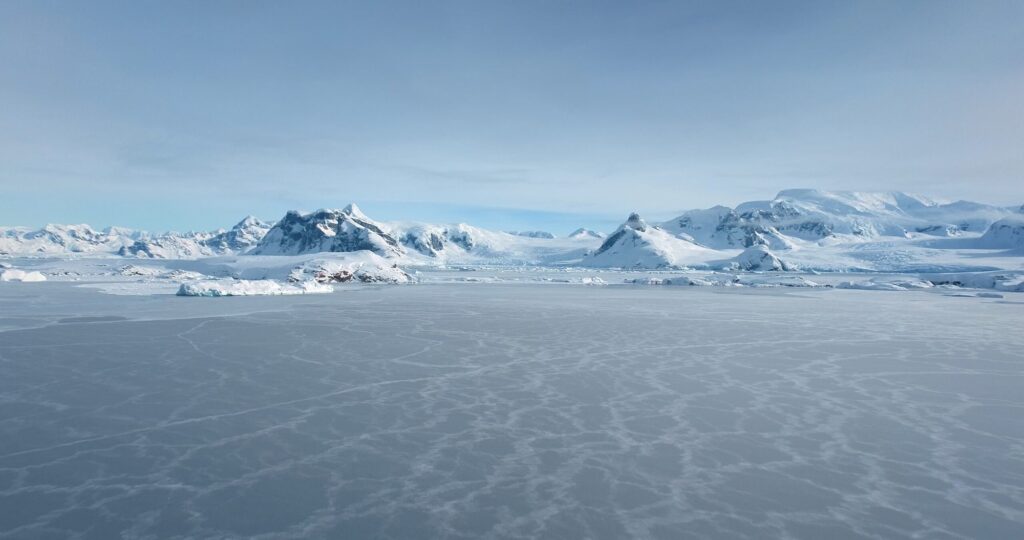
Across the coldest places on Earth, a quiet yet powerful transformation is unfolding beneath the surface. As glaciers shrink, sea ice thins, and once-solid ground softens, dormant microorganisms are springing back to life. These microbes, long subdued by extreme cold, are becoming increasingly active, potentially accelerating climate change and impacting human life far beyond polar regions.
A comprehensive international review led by McGill University has illuminated this phenomenon. The research compiles data from polar, subpolar, and high mountain regions worldwide, revealing that rising temperatures are boosting microbial activity in frozen soils, ice, and snow. As these organisms ramp up their metabolism, they decompose ancient organic material, releasing greenhouse gases such as carbon dioxide and methane into the atmosphere, further fueling global warming.
While these microbes may be invisible to the naked eye, their impact is significant. The cryosphere, Earth’s frozen regions, holds vast amounts of carbon that have been locked away for millennia. When ice melts and soils thaw, microbes gain access to both nourishment and warmth, fundamentally altering the landscape.
Why Thawing Ground Fuels Microbial Growth
For much of human history, frozen landscapes acted as natural freezers, keeping microbial life in a state of dormancy. Low temperatures and limited nutrients restricted their activity. However, the review found consistent patterns across numerous studies: in frozen environments, microbes are constrained by cold and scarcity of food. Once thawing begins, these limitations diminish.
As ice melts, nutrients flow more freely through soil and water, prompting microbes to respond swiftly. Their metabolism accelerates, allowing them to consume organic matter more rapidly. This process releases carbon that had been securely stored in frozen ground, akin to opening a long-sealed pantry.
“Cold-climate microbial ecosystems are poised for rapid change,” said Scott Sugden, a study co-author and doctoral student at McGill University. “These changes will have significant consequences not only for the global carbon cycle but also for human communities, food and income security, and toxin release.”
However, the effects are not uniform. Oxygen levels and moisture content play crucial roles. Some thawed areas become wetter, favoring methane-producing microbes, while others dry out. Methane is significantly more potent than carbon dioxide over short periods, adding complexity to the situation.
More Than Carbon at Stake
The review underscores that carbon is not the sole concern. As permafrost thaws, it can release harmful substances previously trapped in frozen soil, such as mercury. Once liberated, mercury can travel through meltwater into rivers and lakes, entering food webs and affecting wildlife and human populations far from the original source.
This means that changes in the Arctic or high mountains have far-reaching implications. Events in frozen regions can ripple outward, impacting water systems, ecosystems, and economies. Communities reliant on fishing, hunting, or clean water may experience these effects first.
Microbial changes also influence nutrient movement through landscapes, affecting plant growth, soil stability, and even coastal responses to warming. Newly exposed ground, where glaciers retreat, becomes a testing ground for emerging microbial communities. These early changes can determine how the land stores or releases carbon for decades.
Gaps in Knowledge Limit Climate Forecasts
Scientists have long recognized that physical changes, like melting ice, drive climate change. This review highlights the critical role of living systems. Yet, polar microbiology remains a relatively young field, with most baseline data dating back only about 20 years.
“Unlike other fields where you can look back at a documented species over centuries, we do not have that long time horizon,” Sugden noted. “Our first pieces of data come from the early 2000s.”
This limited historical record complicates long-term trend predictions. The review also points to practical research limitations. Many studies focus on accessible areas with research stations, leaving vast stretches of the Arctic and Antarctic understudied.
Extreme weather and prolonged winter darkness restrict fieldwork, while short-term funding often limits studies to a few seasons, making it challenging to observe slow but significant changes over time.
“We can’t demand millions of dollars to study every site,” said Christina Davis, a study co-author. “But if you’re a polar researcher, you could bring a thermometer to the field. These small, consistent data points can make a big difference.”
Why These Tiny Organisms Matter to You
Polar and alpine regions are warming faster than most of the planet. In some Arctic areas, temperatures are rising more than twice as fast as the global average. Given that these regions hold substantial amounts of frozen carbon, even minor biological changes can have outsized effects.
Microbes act as hidden drivers in this system. Their response to warming can amplify climate change through feedback loops that current climate models do not fully capture. If microbial emissions increase faster than anticipated, efforts to limit warming become even more urgent.
This research underscores that climate change is not solely about ice melting or sea levels rising. It is also about life adapting to new conditions, with responses that can shape the future in still-emerging ways.
Practical Implications of the Research
This study enhances our understanding of how climate change may accelerate through biological processes. By improving knowledge of microbial activity in frozen regions, climate models can become more accurate, guiding policy decisions, emission targets, and adaptation planning.
The findings also highlight risks to water quality, food safety, and community health from released contaminants like mercury. Enhanced monitoring can help protect ecosystems and the people who depend on them.
In the long term, understanding these microbial systems may aid researchers in managing or slowing harmful feedbacks. It also emphasizes the urgency of limiting warming now, before irreversible changes permeate Earth’s coldest regions.
Research findings are available online in the journal Nature.