




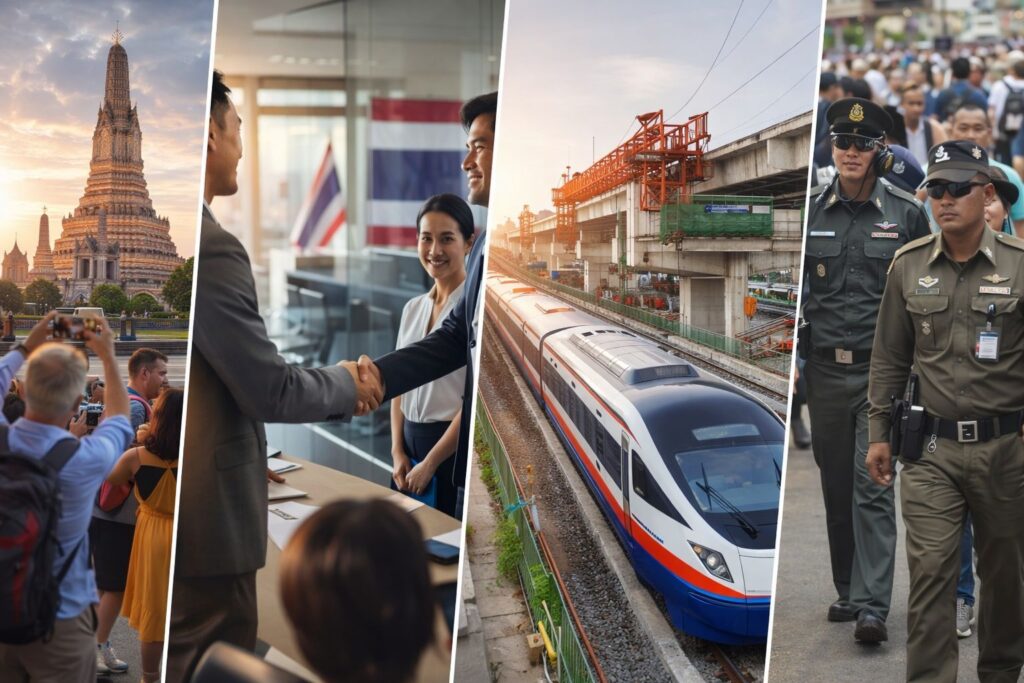
As Thailand approaches its 2026 general election, the future of the nation’s tourism industry has emerged as a focal point for investors, operators, and local communities. With tourism constituting a substantial portion of Thailand’s national income, the policies of the forthcoming government are poised to significantly impact foreign direct investment, public safety, and long-term infrastructure planning, particularly in rail transport.
Tourism officials emphasize that the election comes at a critical juncture. As international travel demand continues to recover, competition within Southeast Asia has intensified. Neighboring countries are expanding airports, upgrading rail links, and offering incentives to global investors. For Thailand, the pressing question is whether the next administration can provide consistent policy direction and restore confidence among stakeholders.
Investment and Infrastructure: Key Drivers of Growth
Foreign direct investment remains a crucial driver of growth in tourism-related sectors. Large-scale projects involving hotels, transport hubs, entertainment venues, and mixed-use developments are heavily reliant on regulatory clarity and political stability. Business groups have indicated that investors are closely monitoring the election outcome before committing capital, particularly in sectors linked to transport and urban development.
Safety concerns have also surfaced as a major issue. Although Thailand remains a popular destination, sporadic incidents and inconsistent enforcement have affected international perceptions. Tourism operators are advocating for stronger coordination between national agencies and local authorities to enhance standards in transport safety, tourist policing, and emergency response. They argue that visible improvements could directly boost traveler confidence and spending.
Rail and Air Travel: Expanding Horizons
Rail investment is another focal point of discussion. Plans to expand intercity and regional rail networks are seen as essential to spreading tourism beyond Bangkok and major coastal destinations. Improved rail links could shorten travel times, reduce congestion, and support secondary cities such as Chiang Mai, Khon Kaen, and Nakhon Ratchasima. Transport analysts suggest that rail development could also support sustainability goals by reducing reliance on road travel and domestic flights.
Meanwhile, air travel remains a cornerstone of Thailand’s tourism infrastructure. National and regional airlines are expected to expand routes if demand continues to rise. Airport capacity, slot management, and service quality are likely to feature prominently in post-election transport policy discussions, particularly as passenger numbers increase during peak seasons.
Adapting to Changing Trends in Hospitality
Hotel operators and hospitality groups are adapting to evolving trends. There is a growing demand for environmentally responsible accommodation and community-based tourism. Industry representatives assert that clearer government support for sustainable tourism standards would help Thailand maintain its competitive position while managing environmental and social impacts.
Political observers note that the election outcome will influence how swiftly these priorities progress. A stable government with a clear mandate could accelerate investment decisions and infrastructure projects. Conversely, uncertainty could delay reforms and discourage long-term commitments.
Looking Ahead: The Election’s Broader Implications
As voters prepare to cast their ballots, the tourism sector is watching closely. The policies introduced post-election will not only shape visitor numbers but also determine how tourism contributes to regional development, employment, and Thailand’s international reputation in the years ahead.
The announcement comes as Thailand seeks to balance economic growth with sustainable development. The election’s results will likely set the tone for the country’s tourism strategy, influencing everything from infrastructure investments to environmental policies.
According to sources, the election will be a defining moment for Thailand, with far-reaching implications for the tourism industry and beyond. As the nation navigates this critical period, stakeholders remain hopeful for a future marked by stability and growth.