
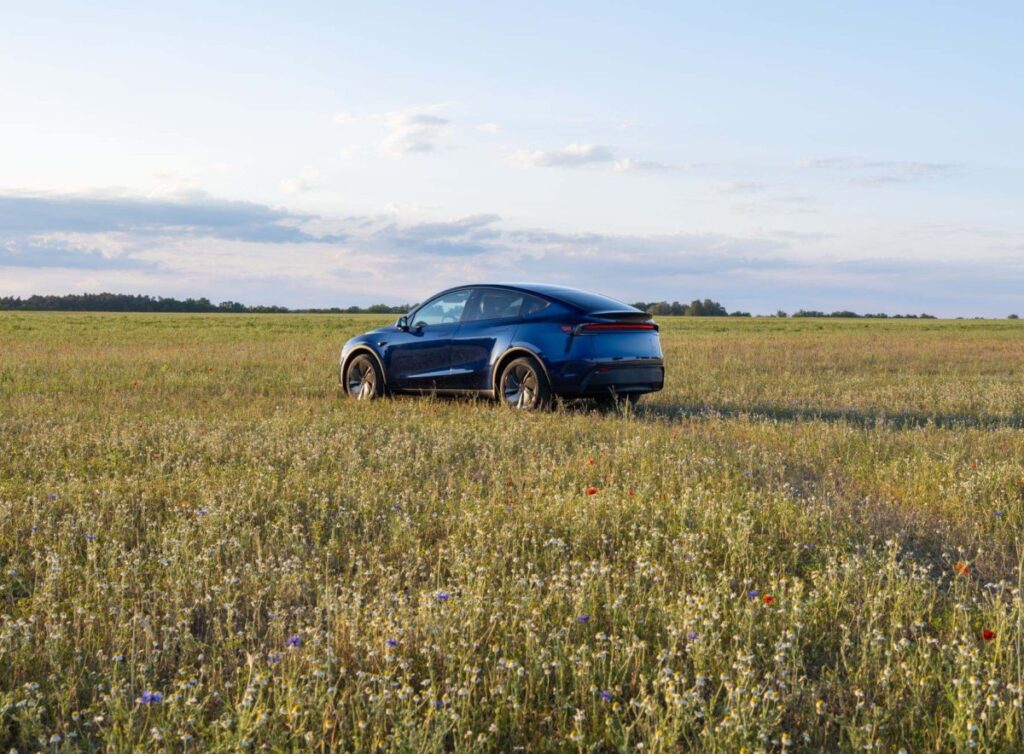
Tesla’s Model Y continues to solidify its position as a leader in the electric vehicle market, earning the prestigious title of 2026 Car of the Year from Drive, a leading automotive publication in Australia. This accolade marks a significant achievement for Tesla, highlighting the Model Y’s transition from a niche product for tech enthusiasts to a mainstream favorite among Australian car buyers.
The award from Drive evaluates each category winner to determine the vehicle that most significantly advances the automotive landscape for Australian consumers. For 2026, the publication was unequivocal in its choice, stating that the Model Y has “launched it into a new era.”
A String of Significant Accolades
This latest recognition is part of a series of accolades for Tesla’s popular models. Earlier this month, the Model Y was named the best electric vehicle of 2026 by Consumer Reports, while the Model 3 secured Edmunds’ Top Rated Electric Car award for the second consecutive year. Additionally, Tesla captured the top two spots in a major 2026 EV satisfaction study, indicating that owner satisfaction is at an all-time high.
Drive noted that the Model Y was already Australia’s best-selling EV in 2025, but recent updates have propelled it from “science-fiction motoring to real-world implementation.”
Why the Model Y is Topping the Charts
Drive’s judges were particularly impressed by the Model Y’s combination of cutting-edge technology and practicality. “The all-new Tesla Model Y takes the already much-loved EV benchmark to new heights,” the publication stated. Although the screen-only interior might initially seem daunting, Drive found it to be “surprisingly intuitive.”
The 2025 Model Y “Juniper” refresh was also highlighted as a pivotal enhancement. Features such as the new reflective rear light bar, panoramic glass roof, heated seats in both rows, and a dedicated rear entertainment screen have set new standards in design and comfort. Drive described these features as making the Model Y a “default choice for a reason.”
A key factor in the Model Y’s success is the accessibility of Tesla’s advanced driver-assistance software. Australian owners can now subscribe to Full Self-Driving (Supervised) on a monthly basis. Drive praised the software as “astonishingly clever,” noting that while it isn’t fully autonomous yet, it showcases the advancements in driver-assistance technology.
Effortless Electric Living
Beyond software, Tesla’s extensive Supercharger network across Australia enhances the “ease-of-EV lifestyle,” making the Model Y “efficient, quiet and easy to live with.” Drive concluded that “class-topping technology delivers an ownership and ease-of-EV lifestyle that is second to none.” By offering a technologically advanced vehicle at an accessible price, Tesla has crafted a winning strategy that continues to pay dividends.
As Tesla refines its lineup, legacy automakers face increasing challenges in matching this blend of value and innovation. For those considering the switch to electric, critics agree that the Model Y sets the current benchmark.
Tesla Cybercab Lead Quits Just Months Before Mass Production
In a separate development, Tesla is navigating a significant leadership transition as its ambitious Cybercab project nears mass production. Victor Nechita, the Vehicle Program Manager for the Cybercab, announced his departure after nearly six years with the company. His exit comes at a pivotal moment, with Tesla recently celebrating the first production Cybercab at Gigafactory Texas and gearing up for volume production in April.
Nechita’s Journey and Contributions
Nechita’s career at Tesla exemplifies a classic “climb the ladder” story. Starting as an intern on the Model 3 production line in 2017, he rose to lead the development of the Cybercab, Tesla’s first purpose-built autonomous vehicle. In a farewell LinkedIn post, Nechita reflected on the experience, expressing gratitude for the opportunity to work with a talented team dedicated to pushing the boundaries of efficiency, safety, and affordability.
State of the Cybercab Program
The Cybercab is designed to be the backbone of Tesla’s Robotaxi network, built specifically for autonomy with the goal of eliminating steering wheels and pedals in its final form. The vehicle is also set to feature wireless induction charging, a capability that recently cleared a regulatory hurdle with the FCC.
Tesla has been conducting extensive real-world testing in cities like Austin and Buffalo. With mass production slated for April, the program is in a critical phase of validating final production units. Nechita’s departure, while untimely, suggests that the development phase’s heavy lifting may be largely complete.
Tesla Seeks Local Approval to Test FSD in Jönköping, Sweden
Meanwhile, Tesla’s efforts to expand its Full Self-Driving (Supervised) capabilities in Europe are gaining traction. The company has applied to extend its FSD testing program to Jönköping, Sweden, following successful tests in other parts of the country. This move underscores the importance of real-world validation on European roads as Tesla prepares for broader regulatory approvals.
The Jönköping Application
According to Jönköpings-Posten, Tesla has reached out to the municipality for permission to conduct FSD tests on city streets. Sofia Bennerstål, Tesla’s Head of Public Policy for Northern Europe, confirmed the application and expressed satisfaction with the testing results in the region so far.
If approved, Tesla’s dedicated FSD testing team will conduct the road tests using a fleet of company-owned vehicles, ensuring safety with a driver behind the wheel. This approach mirrors Tesla’s testing strategy in other regions.
What’s Next?
Sweden is becoming a crucial testing ground for Tesla’s FSD ambitions in Europe, with multiple municipalities granting testing approvals. These structured pilot programs are essential for gathering localized data to train on specific European driving conditions, a prerequisite for meeting rigorous safety and regulatory standards before FSD can be widely deployed in Europe.