
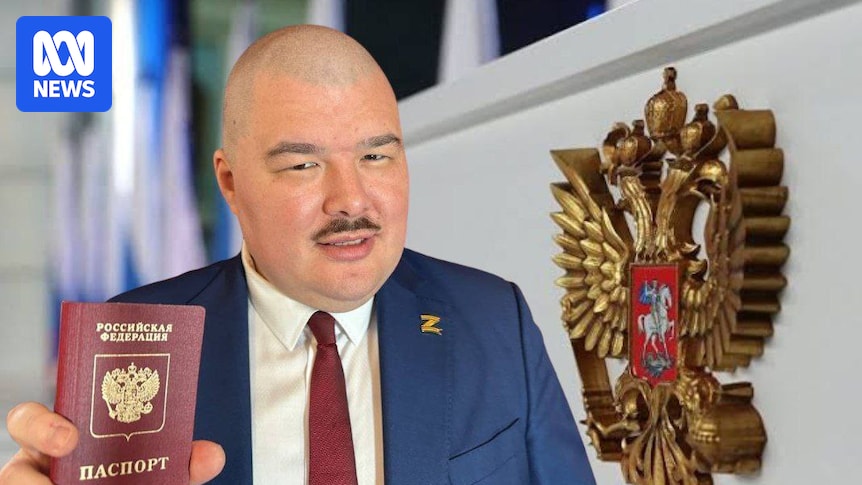
The pro-Putin activist known as the “Aussie Cossack,” Simeon Boikov, has made startling allegations against the Russian consulate in Sydney, where he has been residing for nearly three years. Boikov claims the consulate staff are subjecting him to “prison-like conditions” in an effort to force him out. His remarks come amid a personal milestone, as his wife is due to give birth to their first child in December.
In an interview with the ABC, Boikov expressed his dissatisfaction with his living conditions, stating he feels “locked in” and is constantly under surveillance. He also mentioned being denied visitors and the opportunity to christen his soon-to-be-born son within the consulate premises. “I’ve never felt welcome in this building for one day,” Boikov lamented, describing the atmosphere as consistently tense and hostile.
Background of Boikov’s Asylum
Boikov has been residing in the consulate since December 2022, following an assault on a pro-Ukraine protester in Sydney. At the time, he was on parole after serving a four-month sentence for breaching a court order related to an orthodox priest’s trial. Convicted of the assault in absentia, Boikov sought refuge in the consulate to avoid arrest.
Despite the challenging conditions, Boikov remains resolute about not leaving the consulate, fearing a return to the Australian prison system. “If I have a medical emergency and I need to call a doctor, don’t call the ambulance because I’m not going to leave,” he stated emphatically.
Political and Legal Complications
The tensions at the consulate have drawn political attention. John Ruddick, a NSW Libertarian Party parliamentarian, recently requested a welfare check on Boikov, citing his role in exposing a paedophile priest and the extended duration of his consulate stay as reasons for leniency. However, the Russian consul general, Zarina Gabieva, denied the request, citing “current security restrictions.”
Ruddick, who has been an ally of Boikov since the activist’s involvement in anti-lockdown protests, expressed his disappointment over the refusal. “We’ve got a lot of political differences, but I’ve got mates with political differences and he’s one of them,” Ruddick told the ABC.
Propaganda and International Repercussions
From within the consulate, Boikov continues to disseminate pro-Russian propaganda, supporting Russia’s actions in Ukraine via platforms like Telegram and YouTube. A joint investigation by the ABC and the Organised Crime and Corruption Reporting Project (OCCRP) revealed that a Russian-backed organization has been funding Boikov’s legal expenses and lobbying for his Russian citizenship.
The Australian government imposed sanctions on this organization, Pravfond, for supporting “individuals and entities attempting to influence public opinion abroad, including in relation to Russia’s illegal and immoral invasion of Ukraine.”
Boikov claims that while he has backing from high-ranking officials in Moscow, his grievances are with lower-level bureaucrats whom he accuses of being “pro-Western.” He argues that these individuals are more interested in Western postings than supporting Russian interests.
Future Prospects and Diplomatic Tensions
The ongoing situation with Boikov highlights the complex interplay between international diplomacy and individual asylum cases. The Russian consulate has not commented on Boikov’s allegations, leaving many questions unanswered about the future of his stay and the diplomatic relations between Russia and Australia.
As Boikov awaits the birth of his child and continues his stay at the consulate, the situation remains tense. The broader implications for diplomatic protocols and asylum practices are yet to be fully understood, but the case undoubtedly adds a layer of complexity to the already strained relations between the two nations.