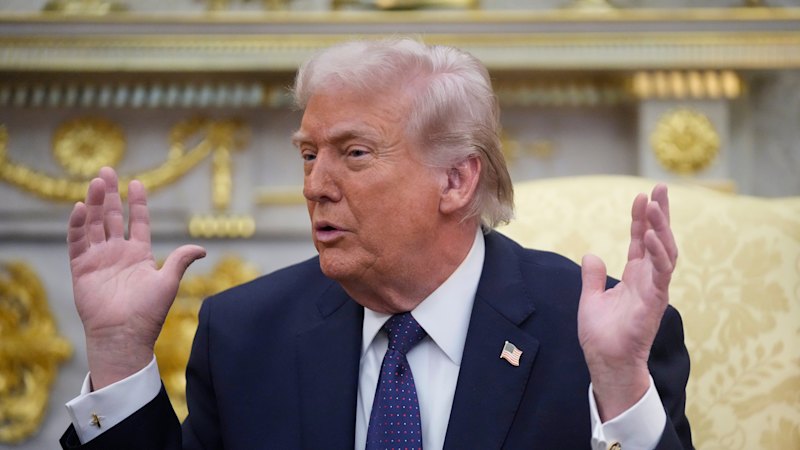

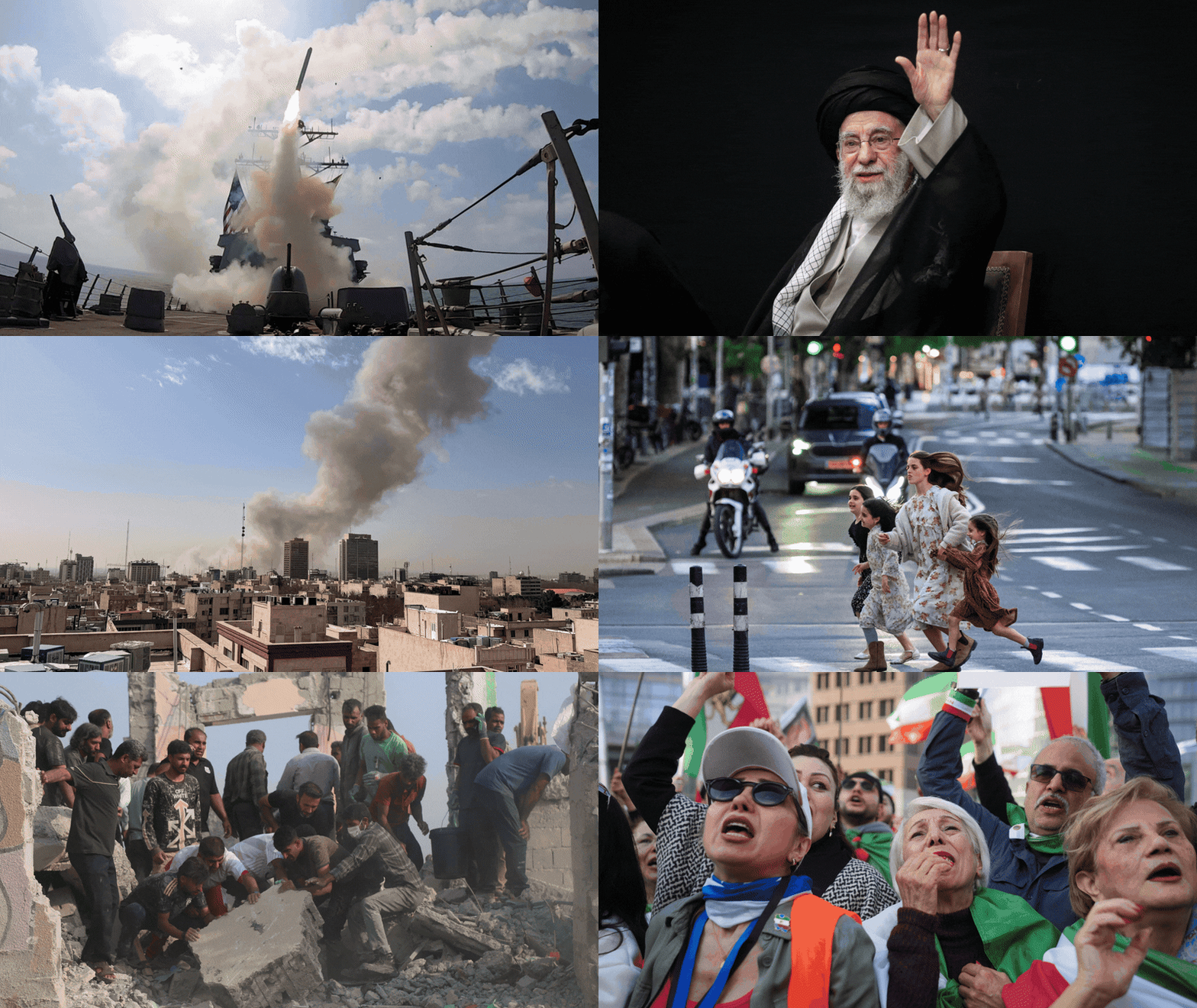
In a dramatic escalation of tensions in the Middle East, US President Donald Trump has warned of further military strikes with unprecedented force following the death of Iran’s Supreme Leader Ayatollah Ali Khamenei. The situation has rapidly deteriorated, with retaliatory strikes impacting nations across the region, including a significant assault on Tehran by Israeli forces.
Lee Caldwell, a drone engineer who recently relocated from Brisbane to Saudi Arabia, found himself caught in the crossfire while visiting friends in Dubai. “We seem to be right under the missile flight path as we have been seeing tons of intercepts right above us,” Caldwell reported. “The whole house shakes when [the missiles] hit, then we hear the shrapnel on the roof. It sounds like someone throwing handfuls of gravel.”
As explosions continue to rattle the area, Caldwell and his friends have been advised to remain indoors, avoiding public spaces such as shopping malls. They are stocking up on essentials, uncertain of when they might safely leave the area, as approximately ten missiles per hour soar overhead.
Regional Repercussions and Military Maneuvers
The Israeli military has confirmed a series of strikes aimed at dominating the skies over Tehran, following the significant assault that resulted in the death of Khamenei. Israeli military spokesperson Lieutenant Colonel Nadav Shoshani stated that numerous targets remain, including military-industrial production sites. “We have the capabilities and the targets to keep going on for as long as necessary,” Shoshani declared.
Despite the aggressive military actions, Israel has not yet considered deploying ground forces to Iran. This comes amid calls from US President Trump and Israeli Prime Minister Benjamin Netanyahu for Iranians to seize the opportunity to overthrow their leaders.
Meanwhile, the international community has reacted strongly. North Korea and Russia have condemned the attacks, with Russian President Vladimir Putin labeling the killing of Khamenei as a “cynical” murder that violates international law. In a message to Iranian officials, Putin expressed his condolences and emphasized Khamenei’s role in fostering Russian-Iranian relations.
Impact on Global Energy Markets
The conflict is poised to disrupt global energy markets significantly, reminiscent of the upheaval caused by Russia’s invasion of Ukraine. The Middle East, particularly nations like Qatar, is a crucial hub for liquefied natural gas (LNG) exports. The Strait of Hormuz, through which 20% of the world’s LNG passes, is now largely impassable, according to ship-tracking data.
Asian buyers, heavily reliant on Qatari LNG, are scrambling for alternative sources. “Any naval activity in the Strait of Hormuz will be particularly bullish, as will any developments with Qatari LNG production,” noted Tom Marzec-Manser, director of Europe LNG and gas at energy consultancy Wood Mackenzie.
“There is no replacement,” Anne-Sophie Corbeau, a researcher at Columbia University’s Centre on Global Energy Policy, stated. “Will prices spike more in Asia or in Europe? Europe is less exposed, but has low storage levels. It also depends on how much is diverted to Asia.”
Aviation and Shipping Disruptions
The conflict has also led to significant disruptions in aviation, with major Gulf carriers suspending flights to and from Australia. Virgin Australia, Qatar Airways, Emirates, and Etihad Airways have all announced suspensions, affecting numerous flights and leaving passengers in limbo. Virgin Australia has offered affected passengers options for booking changes, travel credits, or refunds.
In the maritime sector, a small oil tanker named Skylight was targeted off Oman’s coast, marking the first reported attack on shipping near the Strait of Hormuz since the conflict’s escalation. The attack, which injured four crew members, underscores the increasing risks to shipping in the region.
As the situation continues to evolve, the global community watches with bated breath, aware that the implications of this conflict could ripple far beyond the immediate region. The potential for further escalation remains high, with significant consequences for international relations, energy markets, and global security.