
The ongoing conflict in the Middle East has intensified with Iran launching its longest-range attack yet, targeting a joint US-UK air base on the island of Diego Garcia. This development comes amidst heightened tensions as the region grapples with the ramifications of these military actions.
US President Donald Trump has issued a stern warning to Iran, threatening to “obliterate” Iranian power plants unless the Strait of Hormuz is reopened within 48 hours. This strategic waterway is crucial for global oil shipments, and its blockade has already begun to impact international markets.
Impact on Global Supply Chains
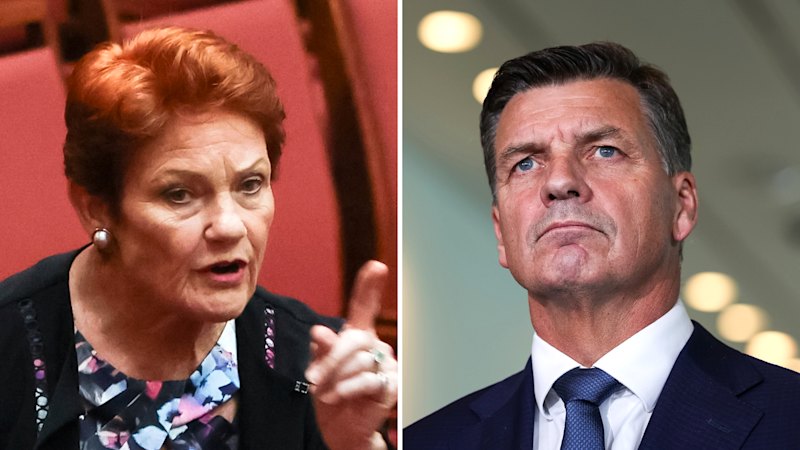
The blockade of the Strait of Hormuz has led to significant disruptions in the supply of essential commodities. Australian Energy Minister Chris Bowen has acknowledged potential “bumps in supply” of fuel, although he sees no immediate need to invoke emergency powers for fuel rationing.
Meanwhile, disruptions in fertiliser supplies are predicted to drive up global food costs. The Middle East accounts for a substantial portion of global phosphate fertiliser trade, and the ongoing conflict threatens to exacerbate existing shortages.
According to the Fertiliser Institute, the Middle East is responsible for about a fifth of global trade in key phosphate products.
Regional and International Reactions
Indian Prime Minister Narendra Modi has made an urgent plea to keep shipping lanes open, emphasizing the importance of maintaining regional stability. India, heavily reliant on Middle Eastern imports for its energy needs, is particularly vulnerable to the ongoing crisis.
Japan is also considering military action, with Foreign Minister Toshimitsu Motegi suggesting the deployment of mine-sweeping operations in the Strait of Hormuz, contingent on a ceasefire.
US and Israel’s Diverging Strategies
Middle East analyst Rodger Shanahan notes a growing divergence in the strategic agendas of the US and Israel. While both nations are aligned against Iran, their objectives are not entirely congruent, leading to a complex geopolitical landscape.
“Washington’s traditional allies have found it difficult to provide other than rhetorical support, and this is rather lukewarm,” Shanahan observes.
Humanitarian Impact and Military Responses
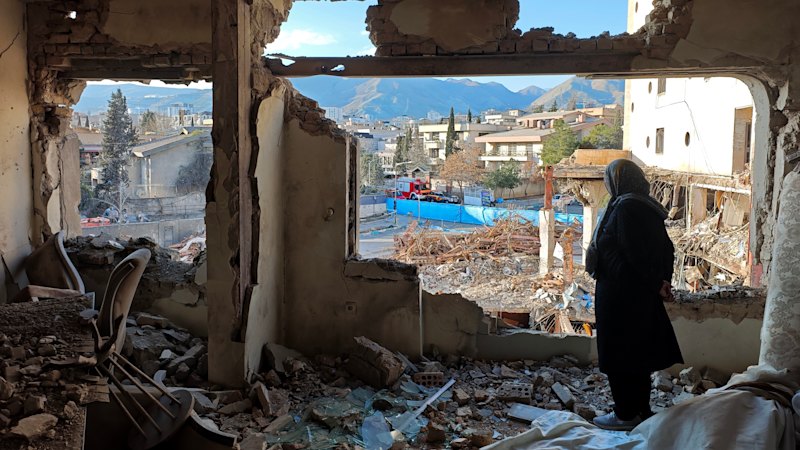
The recent Iranian missile strikes on the Israeli towns of Arad and Dimona have resulted in over 100 injuries, with Israel investigating the failure of its air defense systems. The strikes have raised concerns over the security of critical infrastructure, including Israel’s nuclear facilities.
In response to potential threats, Iran has warned that any attacks on its energy facilities would lead to retaliatory strikes against US and Israeli infrastructure in the region.
“If Iran’s fuel and energy infrastructure is attacked, all energy and information technology infrastructure belonging to the United States and Israel in the region will be targeted,” the Iranian military’s operational command stated.
Future Implications
The conflict in the Middle East is poised to have far-reaching implications, affecting global energy markets, food security, and geopolitical alliances. As nations navigate this complex landscape, the potential for escalation remains high.
With the US and Iran exchanging threats and the international community urging restraint, the coming days will be critical in determining the trajectory of this conflict. The world watches closely as diplomatic efforts continue in the hopes of averting further escalation.
As the situation evolves, the global community remains on edge, anticipating the next moves from the key players involved in this high-stakes geopolitical chess game.