


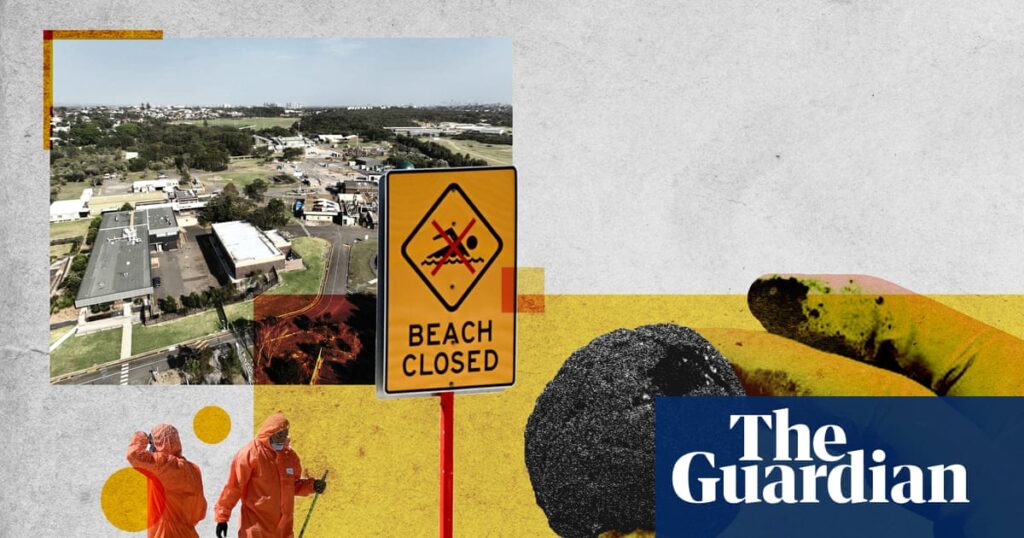
A massive fatberg, potentially the size of four Sydney buses, has been identified within Sydney Water’s Malabar deepwater ocean sewer. This blockage is believed to be the source of the debris balls that closed several Sydney beaches in late 2024 and early 2025. The discovery raises significant concerns about the city’s wastewater management and the potential environmental impact.
Sydney Water officials have acknowledged the difficulty in assessing the exact size of the fatberg due to its inaccessible location. Addressing the issue would necessitate shutting down the outfall, which extends 2.3 kilometers offshore, for maintenance. This action would require diverting sewage to a “cliff face discharge,” resulting in the closure of Sydney’s beaches for months, according to a confidential report obtained by Guardian Australia.
Understanding the Fatberg Phenomenon
The term “fatberg” refers to a congealed mass of fats, oils, and grease (FOG) combined with other debris, which can obstruct sewer systems. The report, produced for the New South Wales Environment Protection Authority (EPA), outlines that FOG accumulation in an inaccessible area between the Malabar bulkhead door and the decline tunnel likely led to the release of debris balls.
The initial appearance of these “poo balls” on Coogee Beach on October 15, 2024, was attributed to a brief power outage at the plant, halting “raw sewage pumping” for four minutes. This incident, followed by a rapid increase in flow, may have dislodged part of the fatberg. A similar event occurred in January 2025 due to wet weather, further contributing to the debris problem.
Environmental and Operational Challenges
The report highlights the challenges faced by Sydney Water in managing the fatberg crisis. The bulkhead door, typically submerged, can only be accessed under specific conditions, making maintenance efforts risky. In April 2025, Sydney Water removed 53 tonnes of accumulated FOG, including debris balls, from accessible areas, but the larger mass remains elusive.
Unlike many global cities, Sydney primarily relies on primary treatment for its sewage, straining out solids but not employing secondary treatments like settlement tanks or disinfection. This approach contrasts sharply with Singapore, where sewage is treated to a level that allows for recycling into the drinking water system.
“The current best thinking is that concentrations are so high in the system that there has been a significant increase in accumulation,” the report states, “and that FOG is now escaping wherever possible, often in wet weather events through hydraulic relief structures.”
Global Comparisons and Local Solutions
Fatbergs are not unique to Sydney. In 2017, London faced a similar crisis when a fatberg weighing as much as 11 double-decker buses blocked a section of its sewage network. New York City spends approximately $19 million annually on fatberg removal, emphasizing the global nature of the problem.
In response, Sydney Water plans to continue cleaning accessible areas and initiate campaigns to discourage the disposal of FOG down the drain. Additionally, a trade waste program targeting food businesses is in development, with an estimated 12,000 operations potentially lacking waste approvals.
The state water minister, Rose Jackson, announced a “Malabar system investment program” estimated at $3 billion over the next decade. This initiative aims to reduce the volume of wastewater requiring treatment and discharge through the Malabar deep ocean outfall.
Looking Ahead: A Call for Modernization
Experts like Jeff Angel from the Total Environment Centre advocate for a fundamental shift in Sydney’s wastewater management. “The outfalls are old school technology, and our sewerage system needs to be modernized,” Angel asserts. He emphasizes the need for higher treatment levels and increased recycling efforts to reduce ocean dumping and conserve water resources.
Guardian Australia previously reported Sydney Water’s plans to invest approximately $32 billion over 15 years to enhance the city’s sewerage system. However, the continued discharge of waste into the ocean remains a contentious issue.
The EPA is collaborating with Sydney Water to establish a program for removing built-up FOG from the Malabar bulkhead area. As part of the environment protection licence review, the agency is considering the build-up in consultation with a wastewater expert panel, with licence variations expected by mid-February.