

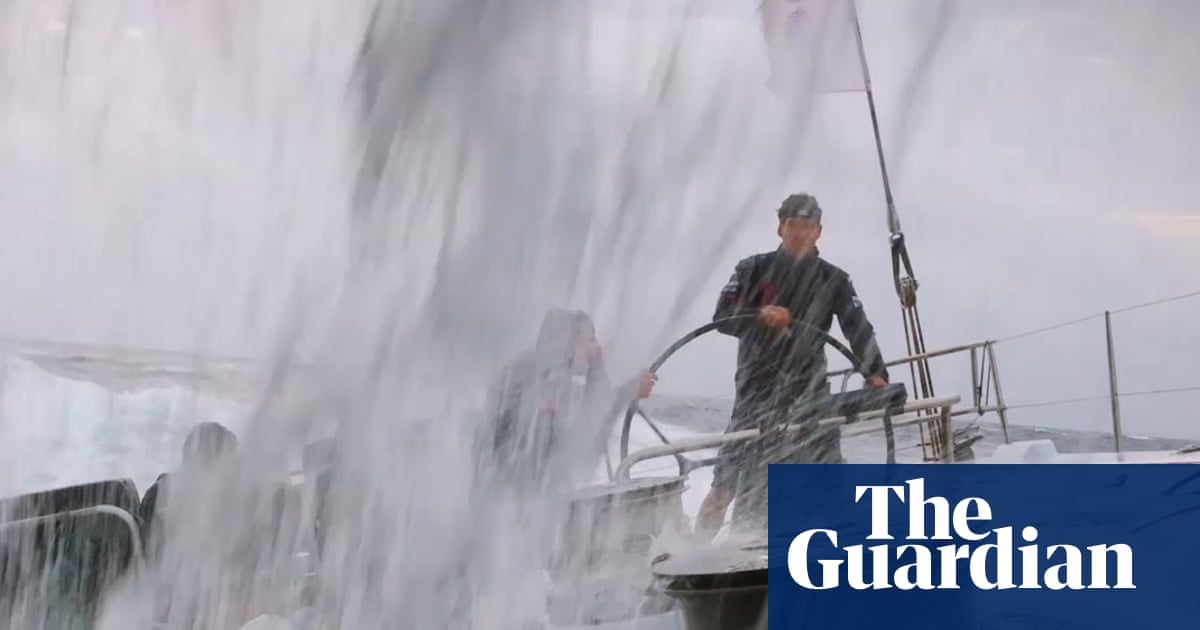
Each Boxing Day, as Australia shakes off its Christmas stupor, attention shifts from Melbourne’s MCG to Sydney’s harbor, where a fleet of carbon-fiber titans tear toward the heads. Within 48 hours, these vessels enter Bass Strait, a stretch of water so treacherous it can transform an elite sport into a primal fight for survival.
In the final days of 2025, the Sydney to Hobart yacht race marked its 80th anniversary. However, for some families, the year that matters most is 1998. That was when a violent east coast low—essentially a southern cyclone—collided with the fleet. It generated freak waves, sank five yachts, and claimed six lives. Among those lost was John Dean, a sailor with a big smile and a relentless love for the ocean. He left behind a traumatized wife and two suddenly rudderless teenage sons, Nathan and Peter.
The 1998 Tragedy: A Turning Point
Viewed today, the grainy newsreels of the 1990s seem to sharpen the hollowed-out expressions of two close-knit families waiting at the dock for news of the Winston Churchill’s fate. While the nation watched the rescue helicopters, the Deans were watching their world collapse in real time with another family, the prominent Winning clan, at their side. Patriarch John “Woody” Winning’s cousin Richard was winched to safety from the craft he owned and skippered. But the body of Woody’s best friend, John Dean, was never found.
Now, a documentary titled True South, set for theatrical release on 5 March, captures the journey those sons took 25 years later, as they returned to the race that took their father. Directed by Dave Klaiber and produced by Will Alexander, the film is less a traditional sports documentary about the 2022 race and more of an autopsy of Australian masculinity, grief, and the enduring bonds between a band of brothers.
Documenting the Journey of Healing
Alexander, founder of the independent creative studio Heckler, has known the Dean boys and the Winning family for most of his life; their fathers shared a close friendship and Alexander would become the connective tissue for True South.
“When ’98 happened, Nathan was only 17,” Alexander recalls. “It shattered that whole tight-knit community.”
The Winston Churchill began taking on water on the afternoon of Sunday, 27 December during the 1998 race. By early evening, the nine-member crew was forced to abandon ship. The first life raft was located, and the four on board were rescued relatively quickly, but the second raft, carrying another five crew, drifted for more than 24 hours in 27-meter seas before a rescue helicopter reached it on Monday evening. When the battered second raft was finally found, only two men had survived the ordeal. John Dean, along with James Lawler and Michael Bannister, perished; Dean’s body was never recovered. And the lives of each of their families were violently knocked off course.
“You grow up pretty quickly,” says Nathan, the elder of the Dean brothers. “I still remember it like it was yesterday. [As] soon as I found out he was gone, a switch in my head just turned on, and it was like, ‘right, you’ve got to get on with life’.”
Return to the Sea and the Legacy of Loss
Peter Dean eventually returned to the familiar waters of local skiff racing and in 2018 he even returned to the Sydney to Hobart race on board the Winning Appliances yacht to mark the 20th anniversary since his father’s death. But Nathan abandoned the sea entirely for decades, turning his energy to rugby.
Meanwhile, their childhood friend Herman Winning was reinventing himself, in line with his family’s white goods empire. In 2005, he launched Appliances Online, Australia’s first major e-commerce brand for white goods, pioneering the digital landscape off a 1800 number and a couple of mates and trucks.
Despite the business’s billions in turnover, the documentary’s one-on-one interviews reveal a man still searching for his father’s approval, a validation he hoped to finally secure by leading John Winning and the Dean brothers back to the Bass Strait. And he knew the only way he was going to get all three men back into the race was to get a bigger boat.
In Antigua, Herman tracked down Comanche, a 100-foot super-maxi regarded as the most powerful racing yacht in the world. Andoo Comanche, as it was to become, weighed 30 tons and traveled at 30 knots. It needed a 24-person crew and a support team around it. (“It’s a Formula One team on the water,” Alexander says.)
Safety Overhaul and the Continuing Risks
A coronial inquiry into the 1998 tragedy led to a comprehensive overhaul of safety regulations for offshore racing, with the Cruising Yacht Club of Australia introducing mandatory Sea Safety and Survival Training (SSST), personal PLB (locator) beacons for every sailor, and real-time AIS tracking.
But the ocean remains an indifferent master. In 2024, two more sailors, Roy Quaden (55) and Nick Smith (65), lost their lives. Both sailed on different yachts but were fatally struck by rigging on the first night at sea, as gusts of up to 50 knots battered the fleet. Almost one-third of the 108 starters did not cross the finishing line that year.
Alexander never did manage to convince potential backers that True South was not just a film about a bunch of rich white guys on a boat. He ended up funding the $3.5 million project himself, securing Sigrid Thornton as narrator and Elena Kats-Chernin to compose the score along the way. The film has since secured a national theatrical release and a deal with Netflix.
“It was never just about a yacht race,” he says. “I wanted to make a documentary about an emotional journey, about the trauma these guys had been sitting on for 25 years and what it actually takes to go back and face it.”
At the last known coordinates of the Winston Churchill, the Dean brothers tossed a wreath into the water. The gesture had not been part of the documentary’s original script. “My mother just gave me a wreath [at the start of the race],” Nathan says. “She said we should throw it off when we got as close as we could to where the boat went down.”
Along with the wreath, the crew poured a bottle of Bundaberg rum into the sea, the favorite drink of their father, whose body was never recovered. But Nathan took something back, too.
“We don’t have a grave for dad,” Nathan said. “So I filled the empty rum bottle up with Bass Strait water … My son has one beside his bed; I have one beside mine.”
The Andoo Comanche went on to win line honors in 2022, but for Nathan, the prize was finally bringing a piece of his father home.