



In 2016, while staying at a luxury hotel in Mauritius, I was enticed by the prospect of swimming with wild dolphins. The idea seemed idyllic, so my partner and I eagerly signed up for the experience. However, what awaited us was far from the serene encounter we had envisioned. Upon reaching the bay, we were met with a chaotic scene: dozens of boats crammed with tourists all vying for a glimpse of the dolphins. The boats would race to get ahead of the pod, allowing tourists to jump in the water en masse, only to repeat the process over and over. It was an unsettling experience, both for us and, seemingly, for the dolphins.
Fast forward to the present, and I decided to give dolphin swimming another chance, this time in Australia. In Perth, I headed to Shoalwater Bay at Rockingham, where Perth Wildlife Encounters is the sole operator licensed to conduct dolphin swims. The experience promised to be different, focusing on respecting the dolphins’ natural behavior.
From Chaos to Respectful Engagement
The morning was bright and sunny as I joined a group of visitors at the jetty for our 8 a.m. departure. Perth Wildlife Encounters, founded in 1989 by Terry Howson, has built a reputation for responsible wildlife tourism. Howson’s journey began with a personal fascination with the local dolphin pod, leading to a business that has since garnered numerous tourism awards.
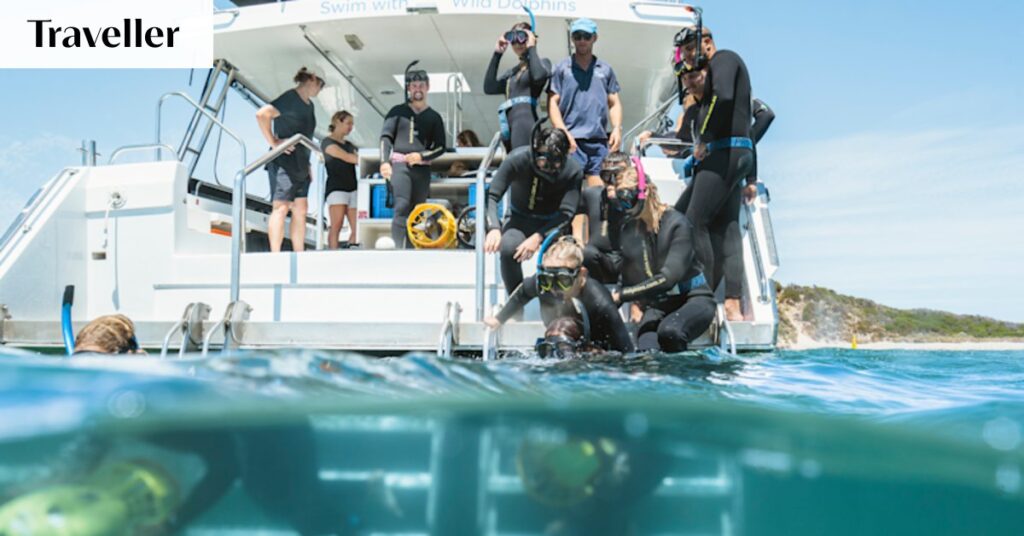
Onboard, we were fitted with wetsuits and briefed on the day’s plan. Our guide, Jackson, explained the dolphins’ “fission-fusion” society, where pod structures are fluid, with groups frequently merging and separating. This understanding set the tone for a respectful encounter, emphasizing that the dolphins would come to us, not the other way around.
A New Approach to Wildlife Tourism
It wasn’t long before we spotted a small pod. However, Jackson, observing them through binoculars, noted they were feeding and chose not to disturb them. The contrast with my previous experience was stark. The focus was on patience and respect, allowing the dolphins to initiate interaction.
Eventually, another pod approached our boat. We were divided into color-coded groups and instructed to float in the water, holding onto the strap of the person in front. This controlled approach ensured minimal disturbance to the dolphins. As I entered the water, the dolphins swam around us, engaging playfully. It was a magical experience, enhanced by the knowledge that the animals were participating by choice.
The Impact of Responsible Tourism
After several rounds of swimming, we enjoyed a lunch of sandwiches, fruit, salad, and antipasto onboard. The dolphins continued to entertain us, riding the boat’s wake and leaping through the air. This experience was a testament to the possibility of engaging in animal tourism responsibly, with mutual enjoyment for both humans and wildlife.
“It’s a lesson that engaging in animal tourism responsibly is possible, provided the animals are respected. They can even enjoy it.”
Practical Information
The dolphin swim operates daily, weather permitting, at a cost of $299 per person from Rockingham. Transfers from Perth are available at an additional cost. While the dolphin swim is closed during winter, wildlife cruises continue to operate. For more information, visit dolphins.com.au.
This experience highlighted the importance of responsible tourism practices, offering a model for how wildlife encounters can be conducted ethically. As tourism continues to grow, such practices are vital for the preservation of natural habitats and the well-being of wildlife.
The writer traveled as a guest of Tourism WA.