



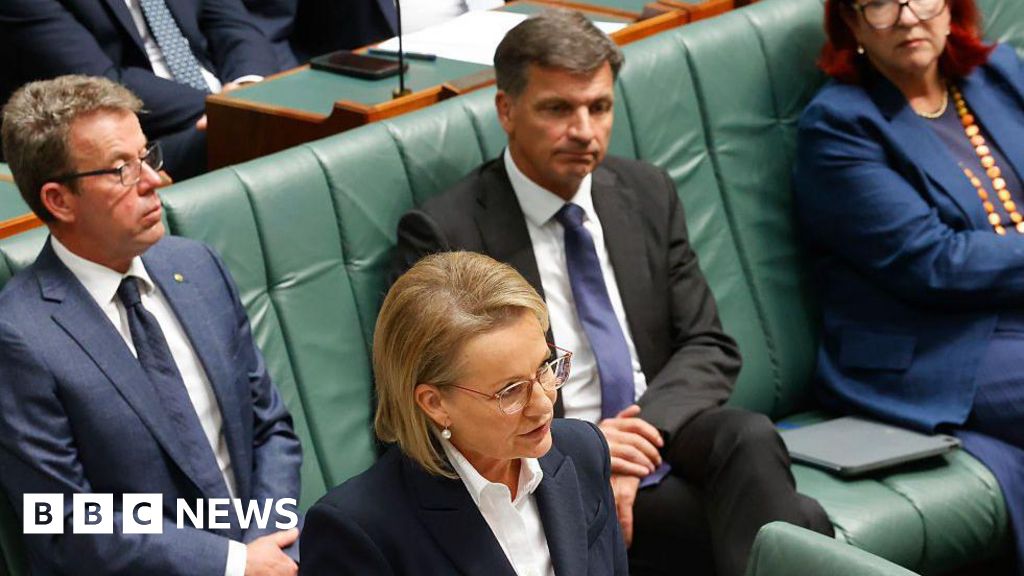
Australian opposition leader Sussan Ley, the first woman to head the Liberal Party, is facing mounting pressure following the resignation of her shadow defence minister, Angus Taylor. This development is expected to trigger a leadership challenge, as Taylor has been reportedly plotting to replace her.
The resignation marks a significant moment in Ley’s leadership, which has been fraught with challenges since she narrowly defeated Taylor in a leadership contest last year. Her tenure has been characterized by poor polling numbers and persistent infighting within the conservative Liberal-National coalition.
Internal Strife and Coalition Dynamics
The Liberal-National coalition, a political partnership dating back to the 1940s, has experienced two splits and reunifications under Ley’s leadership. These fractures have further weakened her position. Taylor, who belongs to the conservative faction of the party, as opposed to Ley’s moderate wing, announced his resignation from the party leadership team on Wednesday. He stated he would “continue to serve the Liberal Party” but criticized the current leadership.
“We have failed to hold a bad Labor government to account,” Taylor told reporters, emphasizing the need to “protect Australians’ way of life” and “focus on restoring their standard of living.”
He expressed doubt about Ley’s ability to lead the party effectively, suggesting that her leadership does not align with the party’s needs at this juncture. The question now is whether Taylor’s allies within Ley’s shadow cabinet will also resign, potentially destabilizing her leadership further.
Potential Leadership Challenge
According to local media, Taylor’s supporters are expected to call for a special party room meeting to propose a spill motion, which would put the party’s leadership up for contest. A victory for Taylor could end months of speculation regarding Ley’s leadership, which has been perceived as unstable.
The coalition recently reunited after its latest split, which was sparked by disagreements over hate speech laws following a high-profile attack at Bondi Beach last December. Ley’s push for these laws was met with resistance from her Nationals colleagues, highlighting the ongoing tensions within the coalition.
Public Opinion and Polling
Recent polls have shown the populist One Nation party, which secured only 6% of the national vote last year, overtaking the Coalition to become the second most popular party behind Labor. Ley’s personal approval ratings have also been disappointing, further complicating her leadership position.
Polls indicate a significant shift in voter sentiment, with One Nation gaining ground as the Coalition struggles to present a unified front.
The coalition has yet to reach a consensus on the reasons behind its devastating election loss to Labor, which resulted in the Liberal Party’s near obliteration in major urban centers. The aftermath of the election saw a temporary split within the coalition over climate and energy policies, including the contentious net-zero emissions by 2050 target, which the Liberals eventually abandoned under pressure from the Nationals and its right-wing faction.
Future Implications and Political Landscape
The Nationals, traditionally more conservative and based in rural areas, have been pushed further to the right in response to One Nation’s rising support. This shift poses a challenge for the Liberals, who need to appeal to centrist voters in urban areas to regain political ground.
Political analysts suggest that the current turmoil within the Liberal Party could have long-term implications for the Australian political landscape. As the party grapples with internal divisions and external pressures, its ability to present a cohesive and compelling alternative to the Labor government remains uncertain.
The coming weeks will be crucial for Sussan Ley as she navigates this leadership crisis. The outcome of any potential leadership challenge could redefine the future direction of the Liberal Party and its role in Australian politics.