

The number of pedestrians killed in Victoria in 2025 has reached a 17-year high, sparking concerns that the rising popularity of large SUVs and utes is reversing years of road safety improvements. As of Saturday, 51 pedestrians have lost their lives on the state’s roads this year, marking the highest toll since 2008, according to data from the Transport Accident Commission.
Based on a four-year rolling average, pedestrian fatalities have surged by 27 percent since 2015, while deaths among drivers and vehicle passengers have decreased by 10 percent. Overall road user fatalities stand at 285 for this year, one more than in 2024, continuing an upward trend that began during the COVID-19 pandemic.
Impact of Larger Vehicles on Pedestrian Safety
Melbourne University transport safety researcher Milad Haghani points to a growing body of evidence suggesting that the increase in vehicle size is contributing to the rise in pedestrian deaths nationwide. Haghani warns that Australia may be following in the footsteps of the United States, where pedestrian deaths reached a 40-year high in 2022 after a significant rise from an all-time low in 2009.
“If we don’t take action, we will just follow the same trajectory,” Haghani stated.
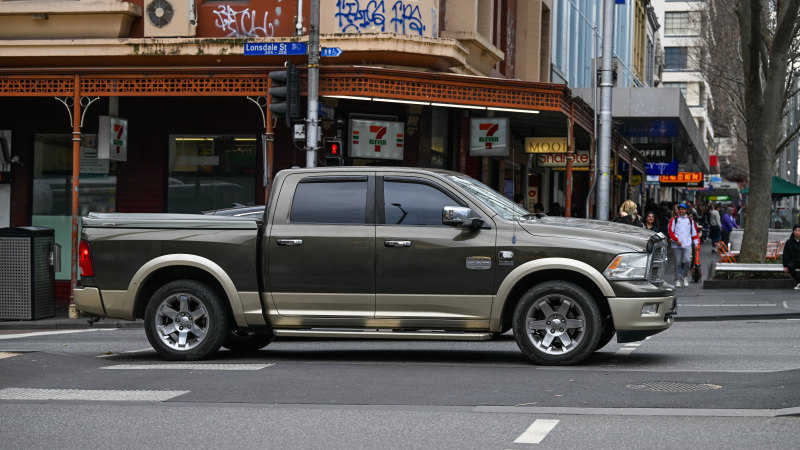
SUVs and light commercial vehicles, such as dual-cab utes, have become the preferred choice for Australian families, now accounting for over 80 percent of new vehicle sales. A recent UK review of 24 academic studies found that these vehicles are 44 percent more likely to kill an adult pedestrian or cyclist in a crash compared to sedans, and 82 percent more likely to kill a child.
The design of these vehicles, with heavier weights and high, blunt front-ends, poses additional risks to pedestrians and cyclists. Haghani explains that the design often results in impacts at the upper body, chest, or head level, increasing the likelihood of fatalities.
Authorities and Experts Call for Action
Victoria Police Assistant Commissioner Glen Weir acknowledges that both pedestrian and driver inattention contribute to serious crashes, but he also highlights the challenges posed by larger vehicles.
“They are large vehicles, designed for a certain specific task that are being used on roads that perhaps aren’t fit for that task,” Weir said. “So people need to adapt to the changing conditions of roads and vehicles.”
Weir emphasizes that the risk to pedestrians will grow as more residents move into urban areas, leading to increased pedestrian, cyclist, and scooter traffic on streets traditionally dominated by cars.
Haghani advocates for government intervention to curb the trend of consumers purchasing unnecessarily large vehicles, similar to initiatives promoting lower-polluting vehicles. However, he notes that current policies, such as the exemption of two-tonne American pick-up trucks from the 33 percent luxury car tax, inadvertently encourage the purchase of larger vehicles.
“There is incentive for people to not pay that extra tax and just pay towards the price of the car, and that means they get a bigger car,” Haghani said.
Haghani suggests that Victoria should consider implementing higher registration fees for larger vehicles, following the lead of other states.
Infrastructure and Design Solutions
Sarah Pilgrim, CEO of Victoria Walks, highlights that many modern vehicles have bonnets so high that drivers cannot see pedestrians directly in front of them.
“You’d think with vehicle technology getting safer, we should be getting less pedestrian deaths but we’re getting more, and definitely the bonnet heights are a part of that,” Pilgrim said.
Pilgrim calls for greater investment in infrastructure to ensure safe pedestrian crossings and advocates for lower speed limits around schools, shopping areas, and local streets.
Carla Hoorweg, CEO of the Australasian New Car Assessment Program (ANCAP), stresses the importance of good vehicle design in improving pedestrian survival rates in crashes. However, she notes that such design standards are not mandated in Australia, unlike in Europe and Japan.
Rural Road Challenges
Assistant Commissioner Weir notes that a significant portion of fatal road crashes this year occurred on rural roads, with 154 of the 285 fatalities happening on single-lane, non-separated sections of country roads. He attributes about 60 percent of fatal crashes to “single acts of non-compliance,” such as basic driving errors or inattention.
The rise in pedestrian fatalities in Victoria underscores the urgent need for comprehensive strategies addressing vehicle design, road infrastructure, and driver behavior to enhance safety for all road users. As authorities and experts call for action, the focus remains on adapting to evolving road conditions and vehicle trends to prevent further loss of life.