

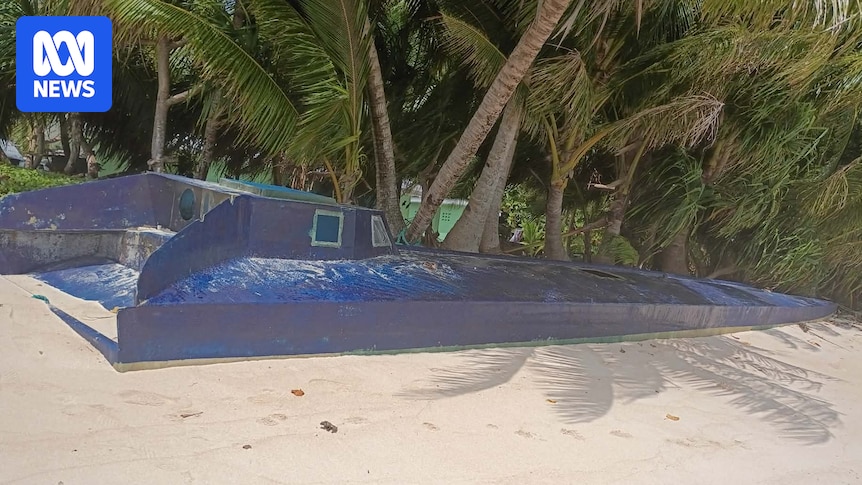
At least seven narco submarines have been discovered in Pacific waters near Australia over the past 18 months, with three more of these drug-running vessels reported washed up in the Solomon Islands and Marshall Islands in recent months. Experts suggest that these discoveries will become even more frequent as new figures reveal Australia’s demand for cocaine is among the highest in the world.
Last week, Solomon Islands police revealed a narco sub that washed ashore in Makira Province in the country’s southeast in December, bringing the number of discoveries in the Solomon Islands to four. The Australian Broadcasting Corporation (ABC) has confirmed that two narco subs have been found in the Marshall Islands, raising the total number of verified discoveries in South Pacific waters since August 2024 to seven. Local reports in the Marshall Islands suggest two additional subs have been found, potentially increasing the total to nine, though these have not been independently verified.
Growing Threat of Organized Crime
“There will be a lot more [narco subs and drug seizures],” said Professor Alexander Gillespie, an international law expert from the University of Waikato. “Organized crime will be drawn to where the profit is greatest, and the profits in the illegal drug market are highest in both Australia and New Zealand.”
The discoveries coincide with a surge in drug smuggling activity across the Pacific. French Polynesian authorities have seized more than 11.5 tonnes of cocaine in the past month, valued at $3.4 billion. Additionally, 2.6 tonnes of cocaine, worth $780 million, were seized in a remote village in Fiji in January. Authorities suspect these drugs were likely destined for Australia or New Zealand.
Last week, Australian Federal Police Commissioner Krissy Barrett stated that they believe “tonnes of illicit commodities” have been stockpiled in the Pacific “over many years.” Professor Gillespie noted that the record drug busts seen in the Pacific recently would have been considered “extraordinary” a few years ago. “Now almost every week or every month, you see another record being broken,” he said. “And you’re only seeing what’s getting washed up or getting caught, and that’s only ever a minority of the illegal market.”
Implications for Pacific Nations
Of the seven narco subs discovered, only one has been intercepted with drugs and people on board. A 2024 operation in international waters, 1,750 kilometers north of French Polynesia, resulted in the seizure of 3.7 tonnes of cocaine by the US Coast Guard. The men on board, from Ecuador, were sentenced in July last year, with reports suggesting the drugs were en route to Australia.
The two known narco subs in the Marshall Islands washed ashore at similar locations in recent months. “Same atoll, but different kind of location, I would guess, 30 miles [48 km] apart,” said Arthmen Laukon, a local of Arno Atoll where the subs washed ashore. Mr. Laukon expressed concern that the country, with a population of about 40,000, was being used as a drug route. “I am really concerned,” he said. “We see people are taking drugs here and there, we don’t know where they get their supplies from.”
Challenges in Law Enforcement
The increasing use of the Pacific as a major drug corridor is placing a strain on resources in small island nations. In French Polynesia, authorities have been dumping cocaine at sea and releasing the traffickers involved, citing a lack of resources to prosecute them. One of the drug vessels, the MV Raider, was caught with 4.87 tonnes of cocaine last month, but the ship and its crew were set free.
In the Solomon Islands, police and politicians held an inquiry last week into the impact of drugs on the country. The illicit drug issue is so new in the Solomon Islands that the country does not have legislation to convict people for the possession or trafficking of methamphetamine. Speaking at the inquiry, Solomon Islands Assistant Commissioner for Crime and Intelligence Patrica Leta said the four narco subs found in the country had no drugs on board, bar some “crumbs.” However, limited finances meant that only two of the four narco subs had been investigated by authorities.
Debate Over Extreme Measures
Speaking at the inquiry, Solomon Islands opposition leader Matthew Wale expressed a desire for more robust action against narco subs in the region. He praised the actions of the Trump administration, which has used drone technology to strike suspected “narcoterrorists.” “I like the bombing because we don’t have to spend police resources to bring them to the courts. Just kill them, send them to hell,” he said. When asked if Australia would consider similar measures, a representative from the Australian Federal Police declined to comment.
Professor Gillespie expressed skepticism about the effectiveness of such extreme measures. “The problem is it violates the most fundamental principles of human rights law and basic criminal law and basic civil liberty,” he said. He doubted that the actions of the Trump administration, or any administration considering it, would significantly impact the illegal drug trade. “Organized crime will be building loss into their models; they will expect to be losing a certain amount,” he said. “But the profits are so great they will still be oversupplying the market.”
Professor Gillespie warned that countries in the Pacific are considered “weak” and are targeted as they pose less risk. “This is going to get worse, the corruption will get more, and the crime and the death and the mayhem and the negative impacts will all just accelerate,” he said. “It’s not the drugs like cocaine that you got to worry about, it’s the next generation of opioids like fentanyl which are going to start making their way into the market.”