

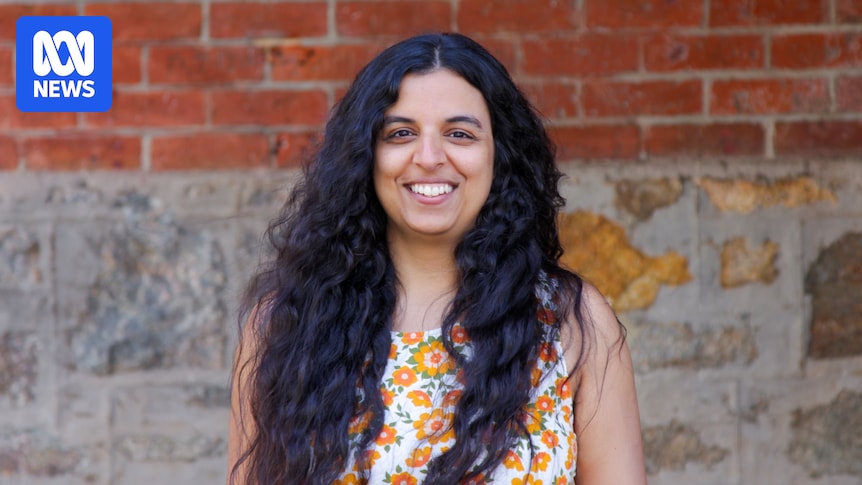
When Sukhjit Kaur Khalsa walked into her first open mic night in Perth, she had no idea she was stepping into a poetry slam that would eventually lead her to the prestigious Sydney Opera House, where she would candidly discuss her body hair. Inspired at 18 by American poet Sarah Kay, Khalsa was studying political science when she first felt the urge to express her political messages through spoken word poetry.
“I was looking for a way to make change and get my political message out there, but I didn’t want to wait,” she recalls. “Slam poetry seemed like a good way to do it quickly.”
It took a year for Khalsa to muster the courage to write her first poem, which she performed at that pivotal Perth open mic. The poem delved into her experiences as a Sikh woman who chooses not to remove her body hair for cultural reasons, yet often feels judged for it. “The poem was so niche and directed towards my community, I didn’t know how to translate that to this very mainstream, white audience, but I did it anyway,” Khalsa says.
This bold move propelled her into the national finals of the Australian Poetry Slam at the Opera House in 2014, igniting her career in the arts. Since then, Khalsa has been awarded an Order of Australia medal, become CEO of Perth’s independent theatre, the Blue Room, and released her debut book, Fully Sikh: Hot Chips and Turmeric Stains. And that’s just in the past two years.
The Journey to Artistic Fulfillment
Khalsa’s trip to Sydney was a turning point. Surrounded by poets and published authors, she realized, “You can do this full-time. You can be an artist.” This realization marked the beginning of her journey toward fulfilling a long-held ambition.
Even as a child, Khalsa was drawn to storytelling. At four years old, she wrote her first play, dictating it to her older sister. “They were always family parodies, with larger-than-life characters,” she remembers. “But within that, there was a deep issue that little me wouldn’t have known was a deep issue.”
As she matured, Khalsa began writing and performing observational poetry, often touching on her spirituality and early experiences of racism. Despite performing these poems at school, she felt shy until slam poetry compelled her to embrace her true self on stage. “I hated myself, hated my body hair, hated not belonging,” she admits.
“You can do this full-time. You can be an artist.” — Sukhjit Kaur Khalsa
With the momentum from the Australian Poetry Slam, she moved to Melbourne at 20, with just $500 in her pocket. This move was an escape from the perceived limitations of Perth’s arts scene, including its relative isolation and lack of opportunities for artists. In Melbourne, Khalsa landed her highest-profile gig yet on Australia’s Got Talent in 2016, which opened doors to international opportunities, including facilitating poetry workshops with Sikh communities in North America, Southeast Asia, and New Zealand.
From Poetry to Theatre
While in Melbourne, Khalsa was invited by Perth’s Barking Gecko Arts and Black Swan State Theatre Company to return home to create a spoken word production for young people. This project evolved over three years into the stage show Fully Sikh, which premiered in 2019 and earned her the WA Performing Arts Award for Best Newcomer. “It was the first Sikh play in Australia,” she states proudly.
The production was a cultural fusion, with audiences removing their shoes in the theatre and some even helping Khalsa cook a Punjabi meal. “It was a f***ing hard experience, but you need to do those fights, so the next theatre-maker can go: ‘No, that was done’ and create their own show,” she reflects.
The pandemic in 2020 prompted another career pivot for Khalsa, leading her to explore filmmaking and writing for the digital space. “There’s a lot of problem-solving and it’s not necessarily super creative,” she notes. “It’s actually logical and takes longer and more money.” This exploration inspired her to pursue producing, eventually leading her to the leadership role at Blue Room Theatre.
Educating and Inspiring Future Generations
Khalsa views her slam poetry as a means of educating audiences about Sikh identity in Australia. “It was like ‘Sikh PR’, saying ‘We’re not terrorists’,” she explains. However, her focus has shifted. Now, she sees her identity as an artist as encompassing more than her Sikh heritage and is working on screen projects, a rom-com musical, and new music. “I want to embrace fun,” she says. “I want to find joy in the mundane or even in chaos or when things aren’t perfect.”
Despite her evolving focus, Khalsa remains a role model for younger culturally and linguistically diverse artists and producers. “I’ve been aware of being a role model since the moment I went on Australia’s Got Talent,” she acknowledges. This sense of responsibility is something she brings to her role at Blue Room Theatre. “I just feel this responsibility,” she says. “There’s very few of us that have been given these opportunities. I just want to make the most of it.”
But Khalsa’s ambitions extend beyond her current role. “Why am I letting imposter syndrome and systemic barriers stop me from wanting to maybe be the arts minister one day?” she questions. “Those are the goals that inspire me to keep going.”